
For Australian accounting practices doing the admin by hand
What the chasing costs your practice in billable hours, and which part of it runs on its own.
A report on your own practice, showing which admin jobs only happen when somebody remembers, and what they cost you in billable hours.
 By Reece Rainer
spareday, Newcastle NSW
Last updated
13 September 2026
Read time
9 minutes
By Reece Rainer
spareday, Newcastle NSW
Last updated
13 September 2026
Read time
9 minutes
A passion-driven, good-hearted and reliable service provider with the competency of a genius when it comes to software engineering, AI technology and marketing.
He was able to take our rough ideas, from concept through to reality. The site has provided an influx of new members, helping to keep our club viable.
Excellent in all facets of web design with particular expertise in SEO and email marketing. Online visibility has skyrocketed since working Reece which translates as flawless customer relations, new leads and new customers.
The technical work is what clients pay you for. The chasing around it is not, and it still takes hours out of every week: the missing bank statement, the client who has not signed, the same six questions asked of every new engagement.
None of that needs your judgement. It needs somebody to remember, and in a busy practice nobody does it consistently in the weeks it matters most. What follows is which parts of it run on their own, what it will not touch, and the order worth doing it in.
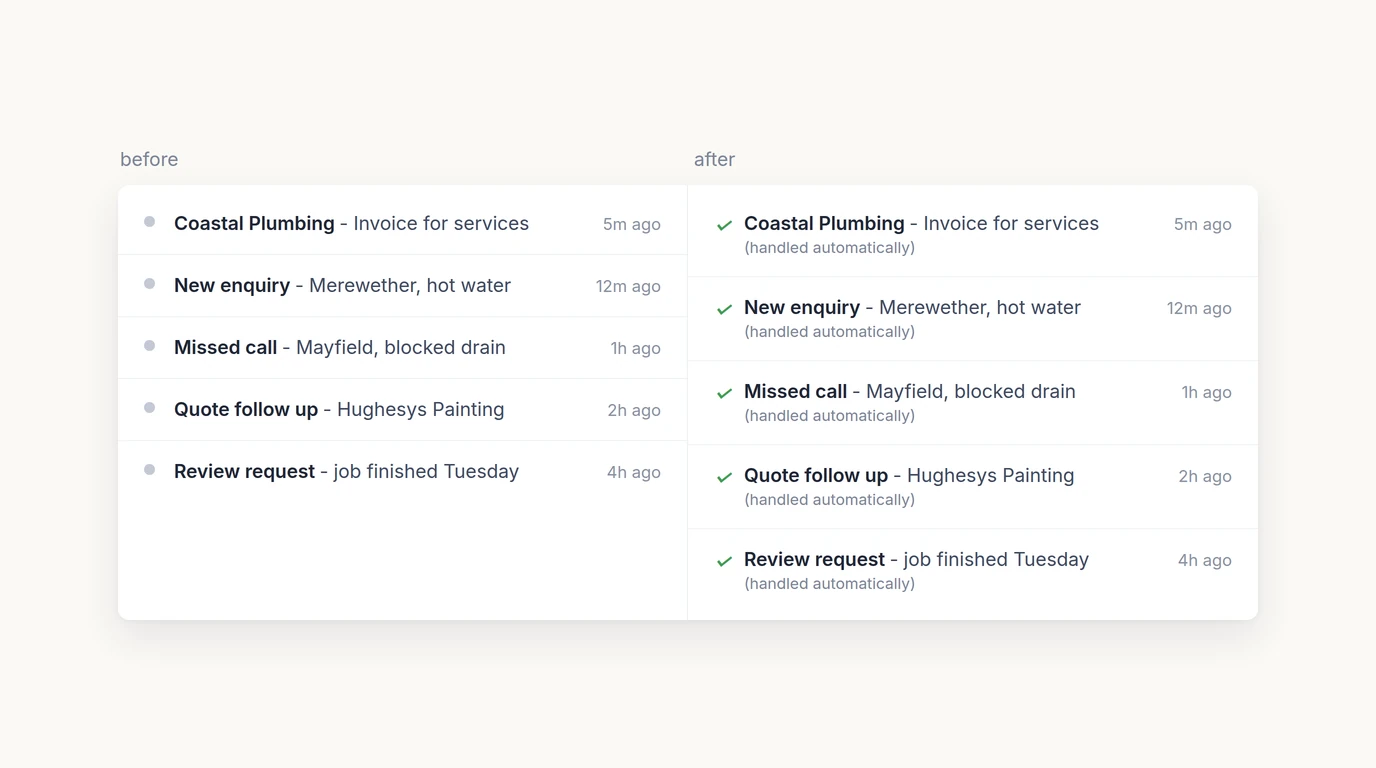
It handles the chasing and the collecting that sit around a file. Requesting documents, following up the ones that never arrive, sending the same onboarding questions, and telling clients where their return is up to.
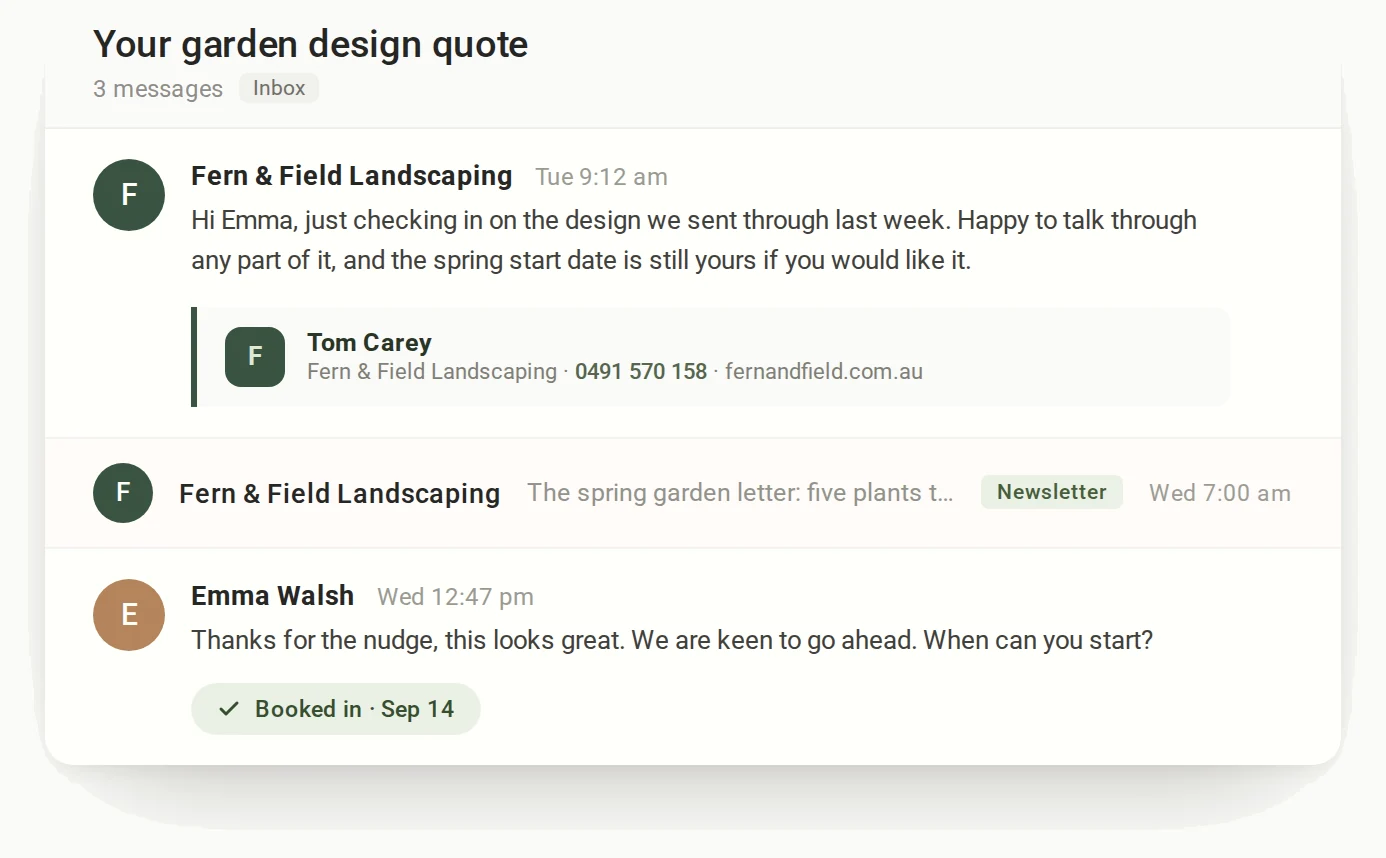
AI for accountants, in practice, means that layer of chasing and collecting rather than anything that touches the return itself.
Two different things get called AI, and only one of them matters here. The first is automation, which means a job that starts on its own: a client signs, so the document list goes out. The second reads what somebody wrote and answers it in your practice's words, which is what makes the follow up a conversation instead of a template nobody replies to.
Every one of those is work a practice already does. It happens in the week it should, instead of in the week somebody gets to it.
They go into chasing. A practice loses more time to following up documents and signatures than to any other single non-billable job, and it loses the most of it in the weeks it can least afford to.
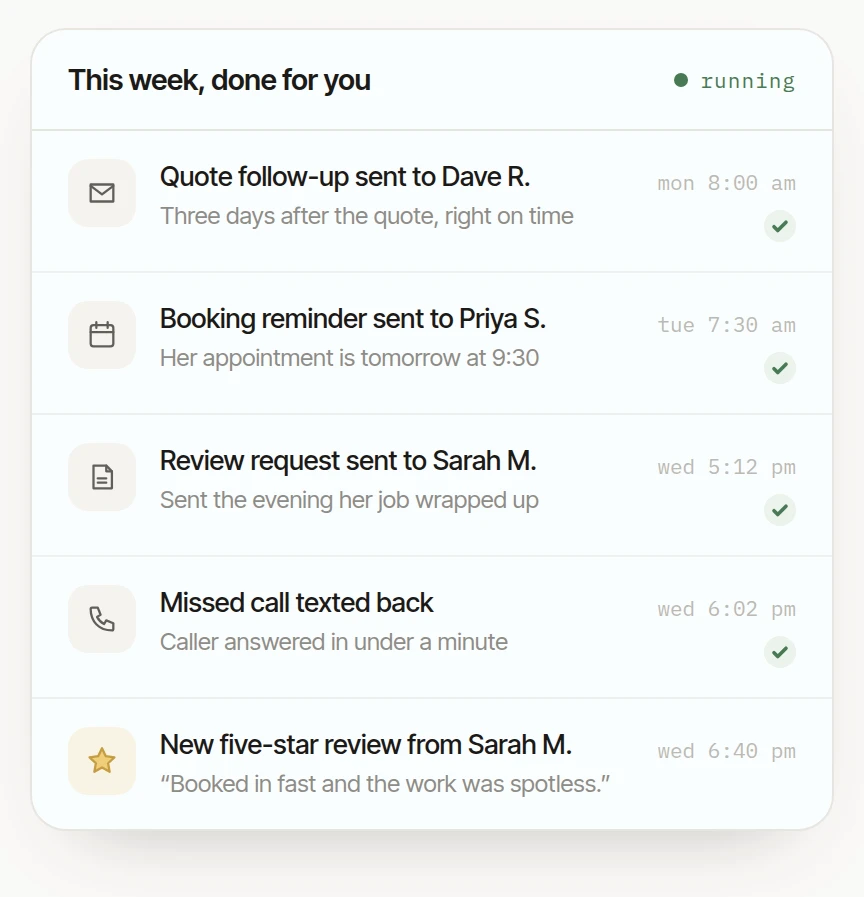
Watch what happens to a document request in a busy practice. It goes out on Monday. Half the clients send everything, a third send some of it, and the rest send nothing. Somebody has to work out which is which, and then write to each of them separately.
In a quiet month that is an hour. Through a lodgement period, across a few hundred clients, it is the reason the principal is still at their desk at nine at night. The work is not difficult and it is not billable, and it grows exactly when the billable work does.
The Australian Taxation Office's own online services for agents have been moving the profession toward digital-first workflows for years, and the practices that put structure around the chasing are the ones absorbing that without adding staff.
Nothing here asks you to change systems. The work happens in the tools your practice already pays for, and the value is in the handoffs between them rather than inside any one of them.
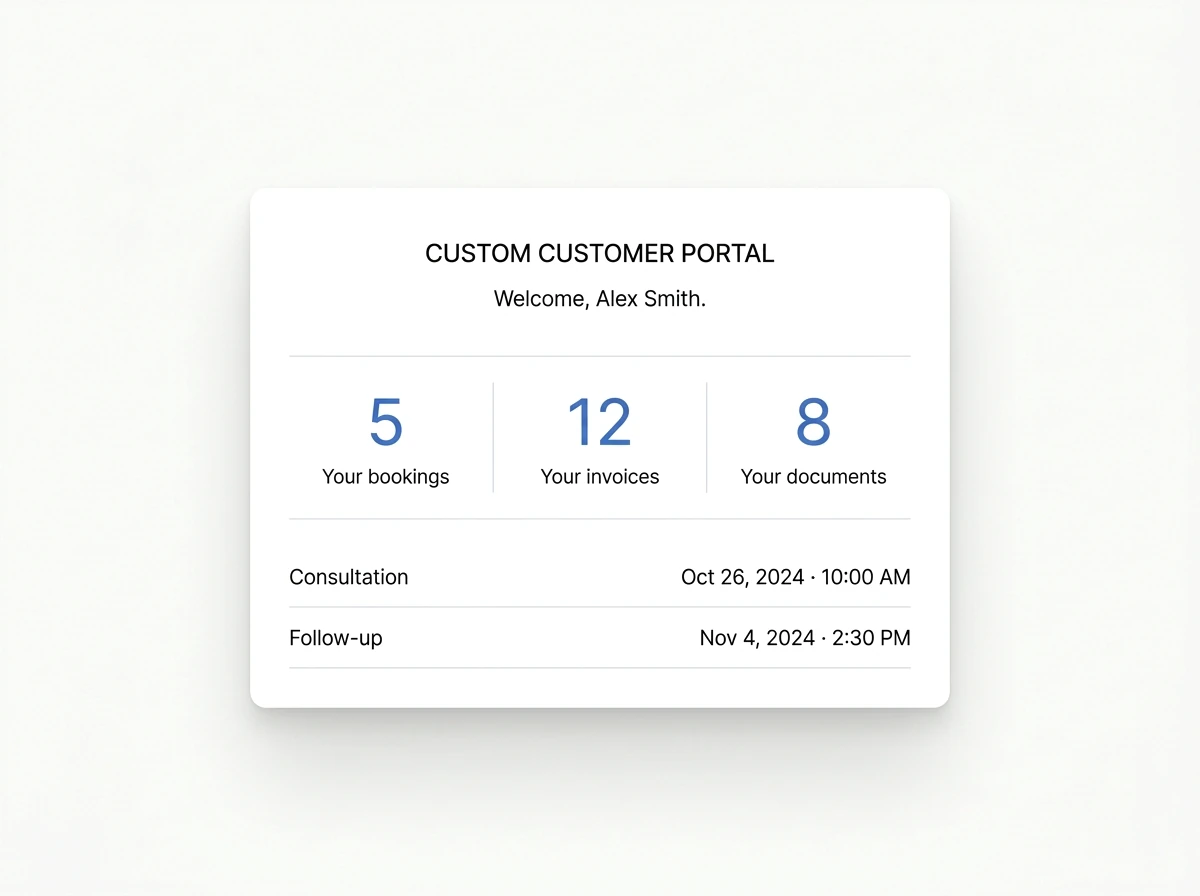
Your ledger, your practice management, your document capture and your engagement letters are all doing their own job properly. A bookkeeping practice hits the same wall a step earlier, in the reconciliation rather than the return. What none of them does is the moving of information from one to the next, which is why a person is still doing that by hand.
Individually each of those takes a couple of minutes. Across a few hundred clients through a lodgement period they are most of the reason the week runs out. The audit maps them in your own stack and puts a number beside each one before anything is built.
It does not do the accounting. It makes no judgement call you would have to stand behind, it holds none of your accreditation, and it decides nothing about how a provision applies to a client.
This matters here, because the professional work is the thing you sell and it carries your name. The automation handles the layer around it and stops at the edge of anything requiring your opinion.
Where the work is genuinely repetitive and written down, it runs. Where it is not, it stops and waits for a person, and every run is logged so you can read what it did.
The jobs that only happen when somebody remembers go on a list, and the one costing the most billable time comes off it first. The wording gets approved before anything is built, and it runs watched before it runs alone.
The first one is the document chasing, because it is the one that costs the most in the weeks it matters. The next starts once that one is running.
Half a morning. What goes out, when, to whom, and what happens when a client sends half of it. Most practices have never had this written down anywhere.
A rough number goes beside each one. Document chasing through a lodgement period usually wins on its own, and it wins by a distance. Where more than one job looks worth doing, deciding the order is its own piece of work.
Every message goes out in your practice's name, so it gets written the way you would write it and signed off before it exists as anything but words on a page.
Your practice management and your ledger can already tell another system when something happens. Nothing gets replaced and nothing gets migrated.
For a fortnight, with a person approving each message before it sends. That fortnight finds the client situations nobody predicted, before a client meets one.
A job is finished when nobody in the practice is thinking about it any more. That is the signal to start the next one, rather than a date on a plan.
Writing down how the chasing actually happens takes longer than building it. The first job runs watched inside a fortnight, and each one after it is shorter because the connections already exist.
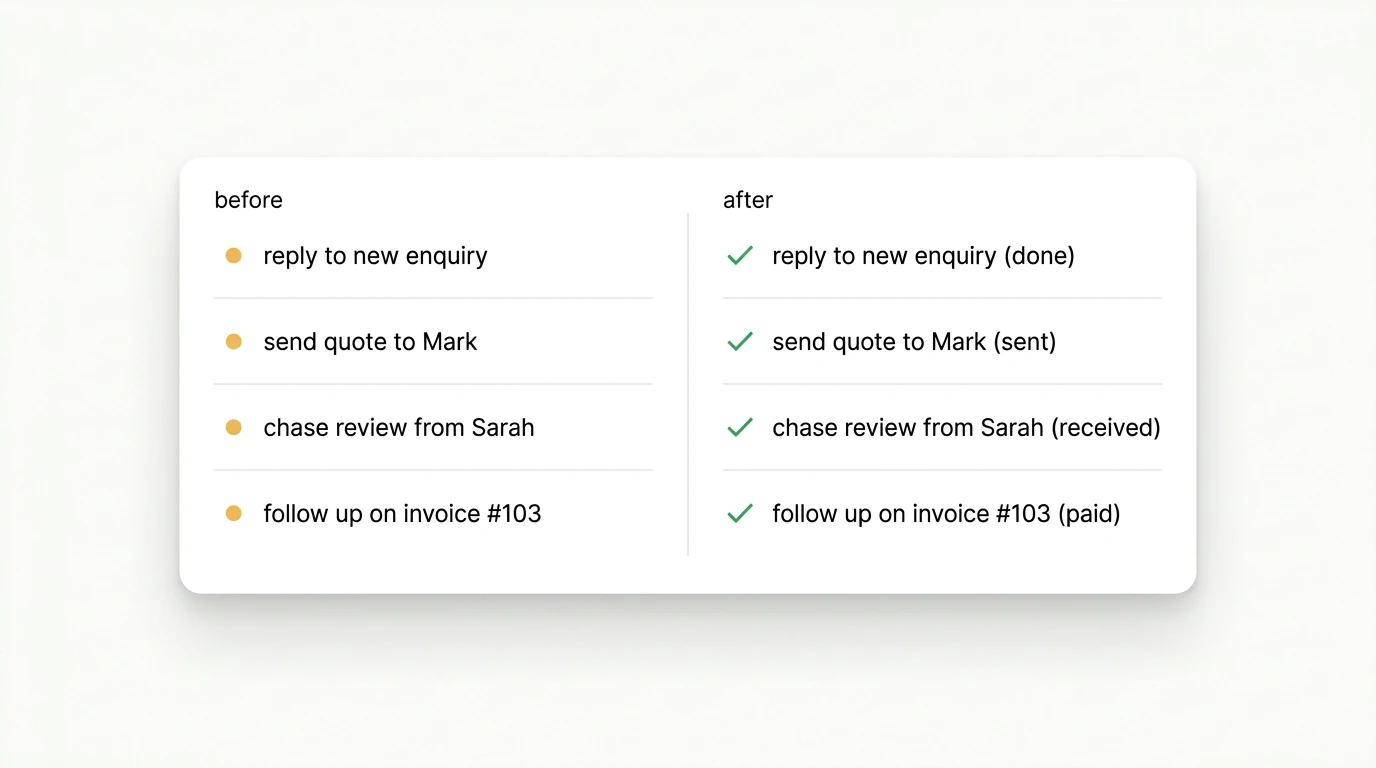
The first thing a practice notices is that the chasing stops being anybody's job. What follows that is a lodgement period where the documents arrive earlier, because the reminders went out whether or not anyone had time to send them.
Ask where it runs, whose accounts it uses, what happens to client data, and what you keep if you stop paying. Those four answers separate a build you own from a subscription you rent.
These are worth asking of anybody, including this one, so the answers given here sit under each question.
All of this can also be built in house, and plenty of practices do it well, the same way any small business can. The six steps above are the same either way.
If you do one thing after reading this, write down what your practice chased last lodgement period and how many times each client had to be asked. That list is what a first call would ask for. Ask for the free report and it comes back with it.
Related reading from us: the jobs that need remembering, the chasing before every BAS, AI Automation For Accountants, AI receptionist for accountants and written for the person deciding.
It handles the chasing and collecting around a file: requesting documents, following up the ones that never arrive, asking the same onboarding questions, and telling clients where their return is up to.
No. It makes no judgement call, it holds none of your accreditation, and it decides nothing about how a provision applies. Anything needing your opinion is flagged and routed to you.
It stays inside systems you control and is not handed to a public AI tool. The handling is agreed in writing before anything is built, under your Privacy Act obligations.
No. The build goes around what you already run, connecting your existing systems rather than replacing any of them.
Document chasing, because it costs the most billable time and it costs it in the weeks the practice can least afford to lose.
The writing down is the slow half. Once that is done the first job runs watched inside a fortnight, with a person approving each message before it sends on its own.
Yes. It runs on your accounts, in your name, and it keeps running if the arrangement ends. Keeping it working as the software around it changes is a monthly choice.
One monthly fee covering everything, month to month, with no lock-in contract. What it comes to depends on the practice, so the number gets given on the call.