
For practices answering the phone in July
What it takes off you in July, and what it will never go near.
A report on your practice's calls, showing how many needed an accountant and how many were a status update.
 By Reece Rainer
spareday, Newcastle NSW
Last updated
13 September 2026
Read time
4 minutes
By Reece Rainer
spareday, Newcastle NSW
Last updated
13 September 2026
Read time
4 minutes
He was able to take our rough ideas, from concept through to reality. The site has provided an influx of new members, helping to keep our club viable.
A passion-driven, good-hearted and reliable service provider with the competency of a genius when it comes to software engineering, AI technology and marketing.
He created a stunning website for us that captures and nurtures leads with an automated email marketing system, which has filled a huge gap in the business and saved a lot of time (and money!).
An accounting practice gets most of its calls in the weeks it can least afford them, which is every lodgement deadline and the whole of July.
This is what an AI receptionist does in a practice, what it will not touch, and how to decide whether it earns its place in a firm like yours.
Accounting work is seasonal and the phone follows it precisely. July and the weeks before each lodgement date produce several times the call volume of a quiet month, and they are the same weeks the practice is at capacity.
That coincidence is the whole problem. In February a call is a minor interruption. In the last fortnight before a deadline the same call pulls somebody off a return they are trying to finish, and there are twenty of them a day.
The callers are not being unreasonable either. They are ringing to ask whether their documents arrived, when their return will be done, and what they still need to send. All fair questions, all repeated by dozens of clients in the same fortnight.
So the practice ends up with its most experienced people answering the same four questions, during the only weeks of the year when their time is genuinely scarce.
Did you get my documents, when will my return be lodged, what else do you need from me, and how much will it be. Three of those four can be answered without an accountant, and the fourth should never be answered on the phone by anybody junior.
In a practice with a receptionist those calls get handled and nobody thinks about it. In a practice without one, and most small firms do not have one, they land on whoever is closest to the phone.
There is a second group of calls that matters more than the volume suggests, which is new client enquiries. Somebody who has outgrown their current accountant, or fallen behind, and is ringing three practices to see who picks up.
It gives no tax advice, quotes no fee, and says nothing about anybody's position or entitlement. It takes details, answers status questions, and hands everything else to a person. That boundary is what makes it usable in a practice.
This is not a cautious framing, it is the requirement. Work goes out under a registered agent's name, and a confident wrong sentence from a phone system is the kind of thing that becomes a complaint rather than a misunderstanding.
So what it is allowed to say is written with the practice and approved before anything is turned on. It is drafted the way a client letter is drafted, because it is the same thing arriving by a different route.
It answers on the first ring, identifies the caller, answers status questions from what the practice already knows, and puts everything else in front of the right person as a written summary within a minute.
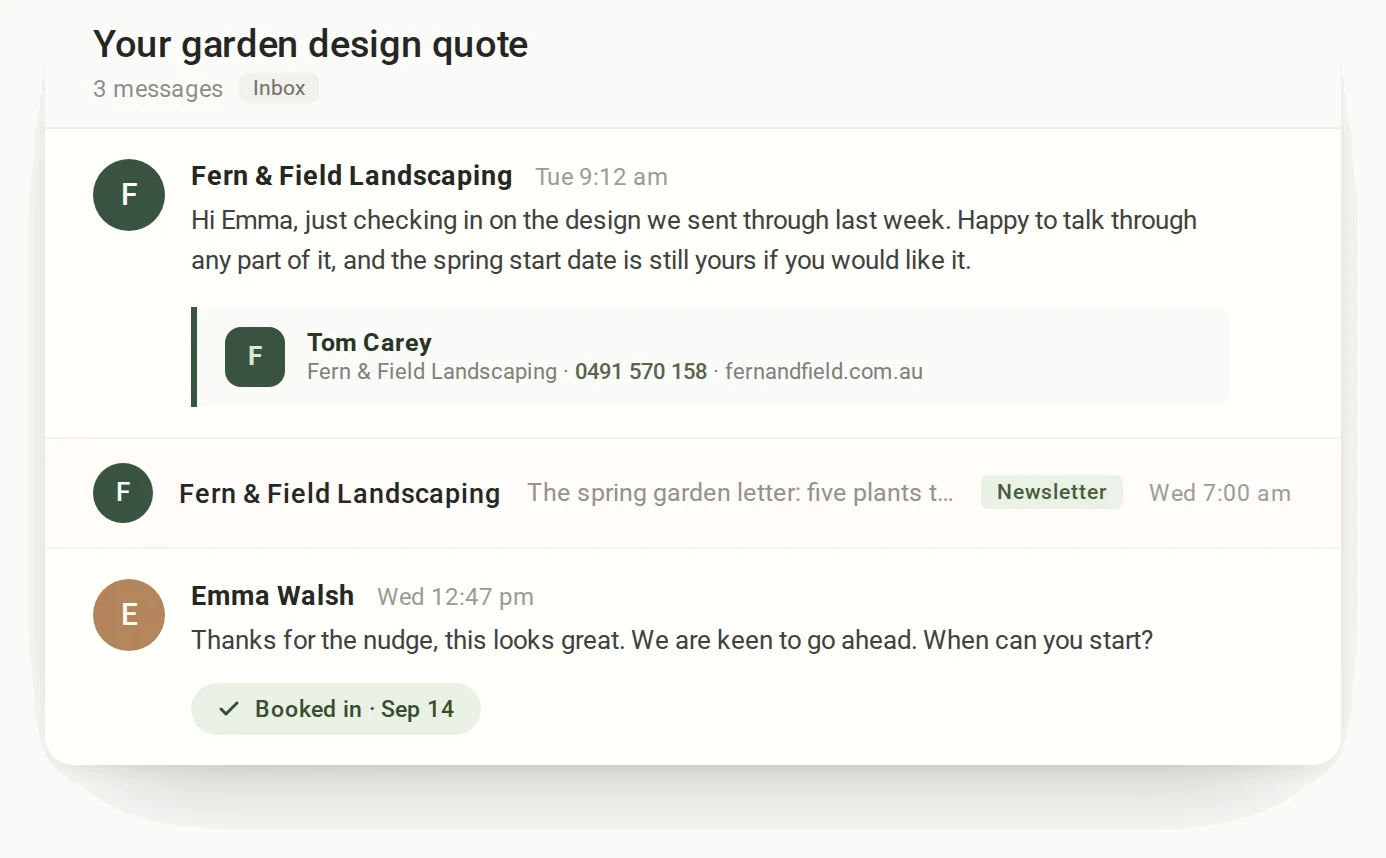
The change people notice first is that July stops being punctuated. Instead of forty interruptions across a day, there is a list of written summaries that somebody works through twice, and the returns get finished.
New enquiries change more than that. Somebody ringing a practice for the first time gets answered, gets asked the right five questions, and gets a callback booked, rather than deciding on the spot to try the next firm.
It runs on the practice's existing number and inside accounts in the practice's name. Client information does not end up in somebody else's platform, which is a question worth asking of anybody selling this.
If you do one thing after reading this, take a week in July and mark which calls actually needed an accountant. In most practices it is a minority, and the rest are being handled by the people with the least time to spare.
Related reading from us: AI Receptionist For Tradies, the two hours nobody can reach the phone, AI Automation For Accountants, AI for accountants and written for the person deciding.
No, and it is built so it cannot. Anything with tax in it is answered by an accountant calling back, and that boundary is written into what it is allowed to say.
Yes, where the practice's own system knows. That is a lookup rather than advice, and it is the single most common call a practice takes.
No. Not a range and not a starting point. What an engagement costs is a conversation with somebody who has seen the work.
Inside accounts in the practice's name. It is not handed to a public AI tool, and the handling is agreed in writing before anything is built.