
For Australian businesses doing a job by hand every single day
What gets built, what it runs on, and what it takes off your week.
A report on your own week, showing which jobs are done by hand every day and which of them are worth building around.
 By Reece Rainer
spareday, Newcastle NSW
Last updated
13 September 2026
Read time
8 minutes
By Reece Rainer
spareday, Newcastle NSW
Last updated
13 September 2026
Read time
8 minutes
A passion-driven, good-hearted and reliable service provider with the competency of a genius when it comes to software engineering, AI technology and marketing.
He was able to take our rough ideas, from concept through to reality. The site has provided an influx of new members, helping to keep our club viable.
Excellent in all facets of web design with particular expertise in SEO and email marketing. Online visibility has skyrocketed since working Reece which translates as flawless customer relations, new leads and new customers.
There is a point where the tools stop fitting. The job runs across three systems that were never meant to talk to each other, or it needs a step that reads something and decides, and nothing off the shelf does quite that.
That is where something gets built. What follows is what actually gets built at that point, what it runs on, and and the question underneath all of it: what you still have if you stop paying.
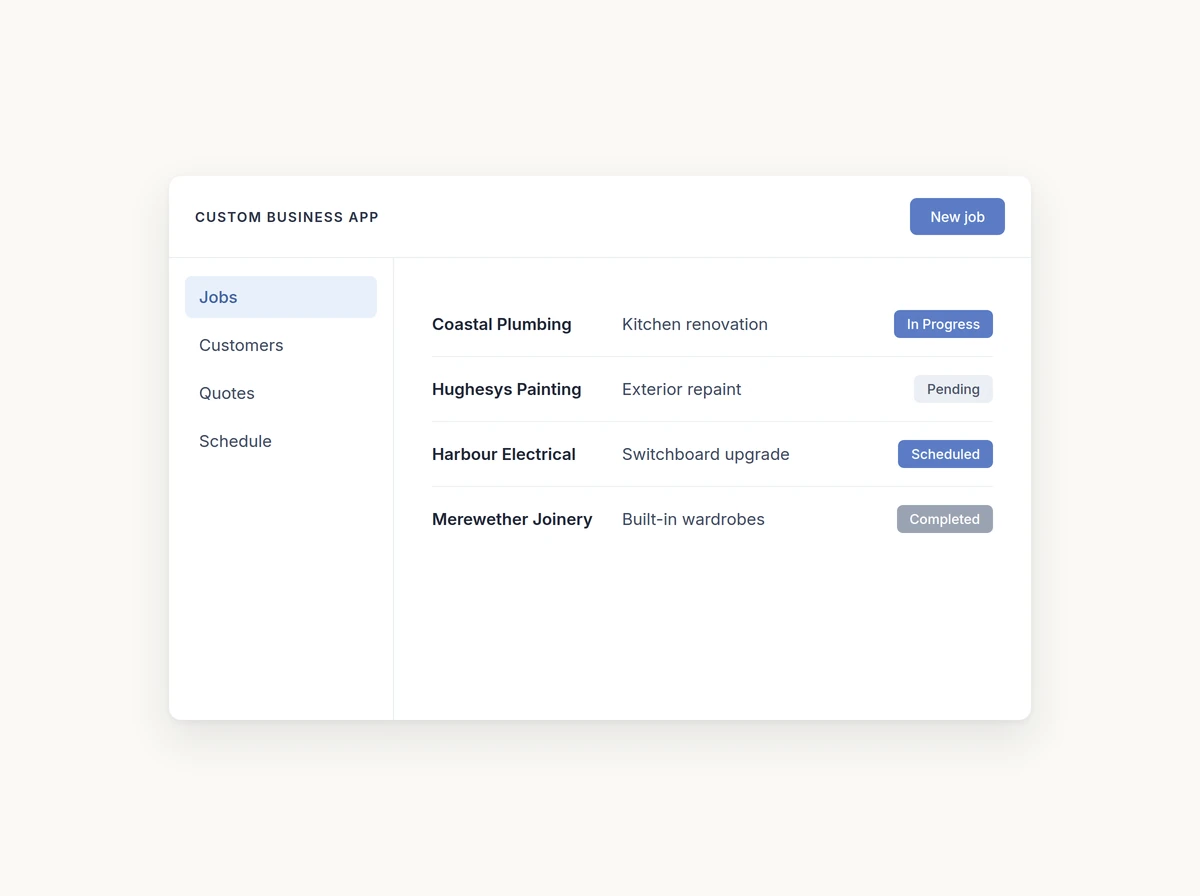
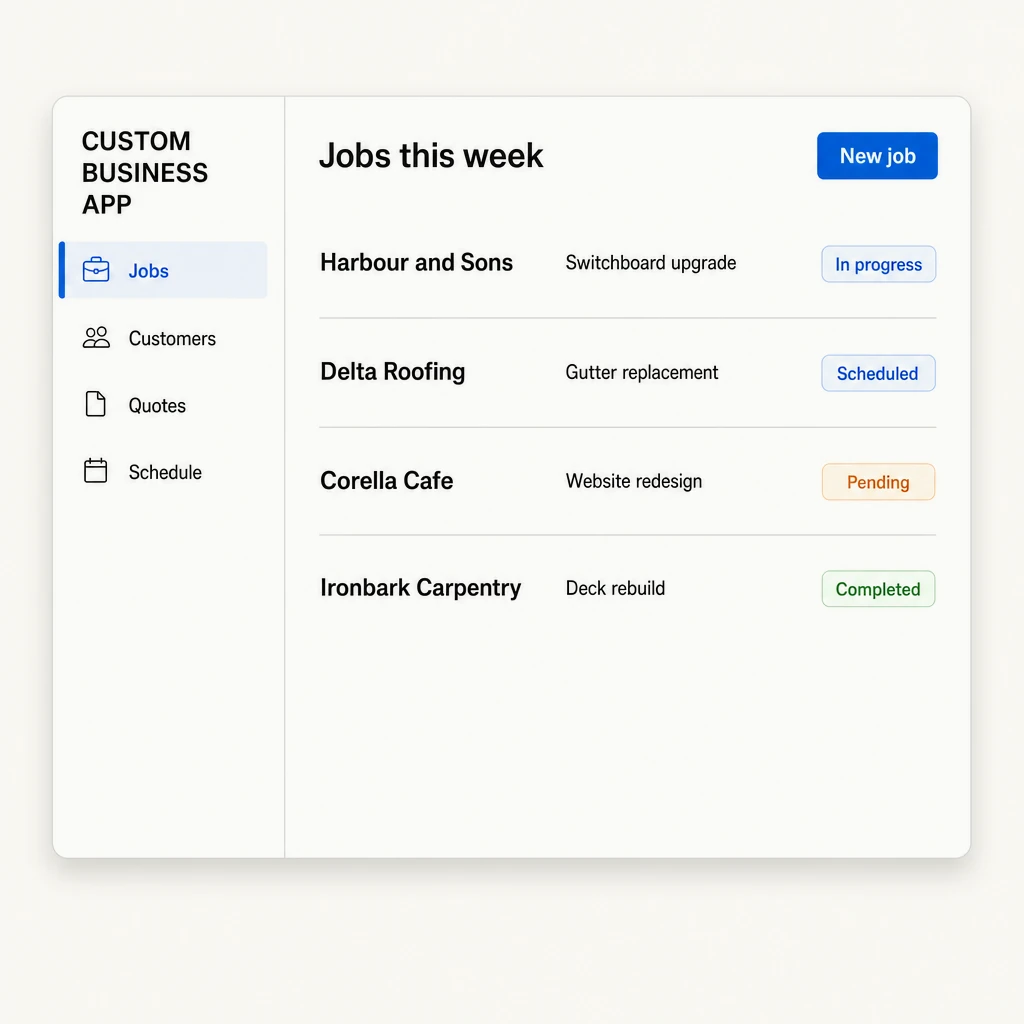
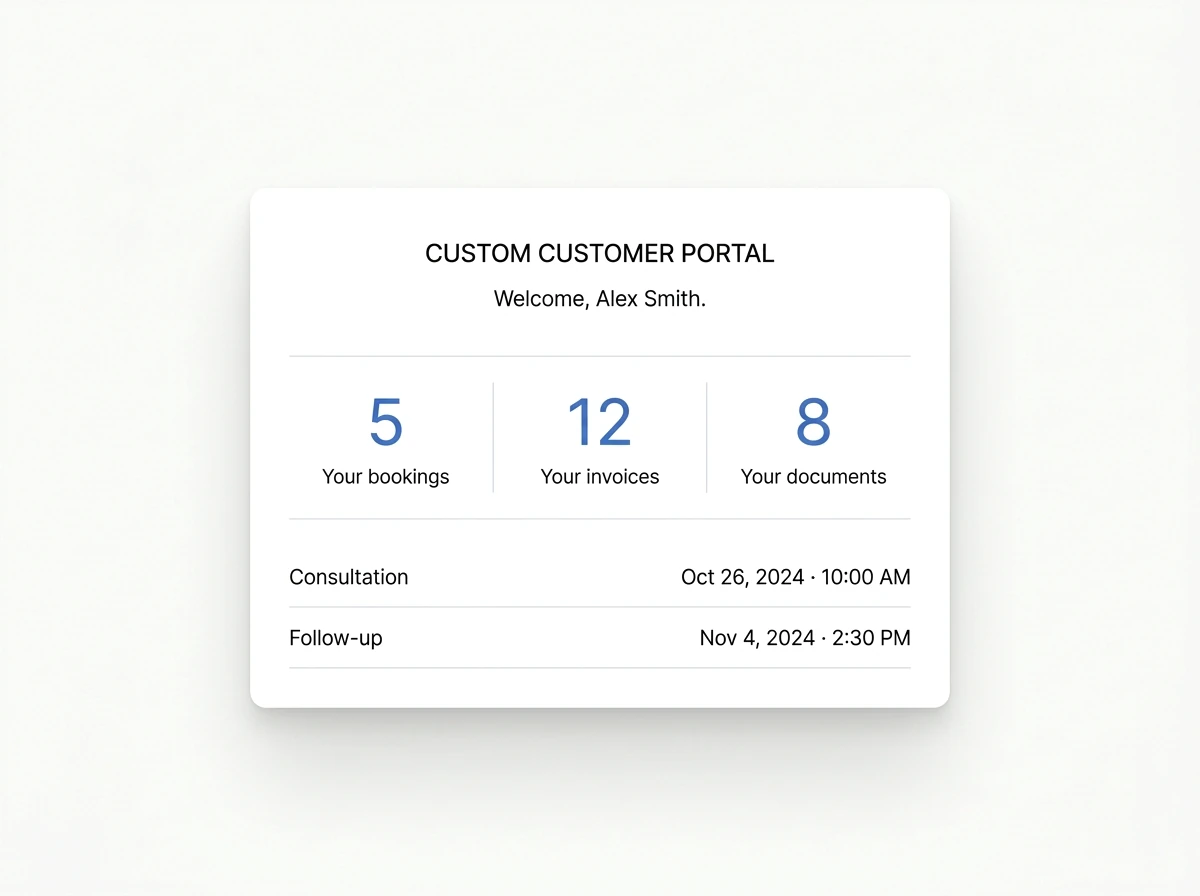
Assistants that answer from your own material, intake tools that ask the right questions and hand over a complete file, workflow builds that connect systems that do not talk, and reports assembled out of what you already record.
AI development services cover exactly that gap: the thing your existing tools leave a person doing by hand.
None of it is a product. Each one is built around how a particular business already works, which is the reason for building rather than buying. Where something on the shelf does eighty per cent of it, buying that is the answer, and that gets said.
The common thread is that every one of them replaces a person moving information between screens. That is the job worth building around, and it is nearly always the one nobody had thought of as a job.
Nearly always, where something exists that does most of it. A product has years of other people's problems already solved inside it, and a build starts from nothing.
This is the opposite of what a development business usually says, and it is still true. Most of what a business wants has been built already, and the version you can buy is cheaper, better tested and somebody else's job to keep working.
Building earns its place in one situation: the way you work is genuinely different from everybody else, and that difference is why customers use you. Where the gap is only habit, a product plus a change of habit does it.
Where none of those hold, the answer is to buy something and change how the work happens. That answer is free and it gets given.
The code, the data and the accounts it runs in. Software you cannot take to another developer is rented, whatever the invoice happens to call it.
This is the question that decides everything else, and it is the one most people ask last. A build that lives inside somebody else's platform stops on the day the paying stops, and everything you put into it goes with it.
Agree all four in writing before any money changes hands. Afterwards is when it becomes a negotiation, and by then the thing being negotiated over is already running your business.
It will not make a judgement call you would want to stand behind, and it will not know anything your business does not already record somewhere.
A build is only ever as good as what it can see. Where a step needs a fact nobody writes down, that fact has to start being recorded before anything can use it, and that is a change to how the business works rather than a feature.
Where a step needs judgement rather than a rule, that step calls a language model, which is the software behind tools like ChatGPT. It drafts, and the business decides whether a draft sends on its own.
The process gets written down, what already exists on the market gets checked, and the smallest useful version gets built and put in front of real work early.
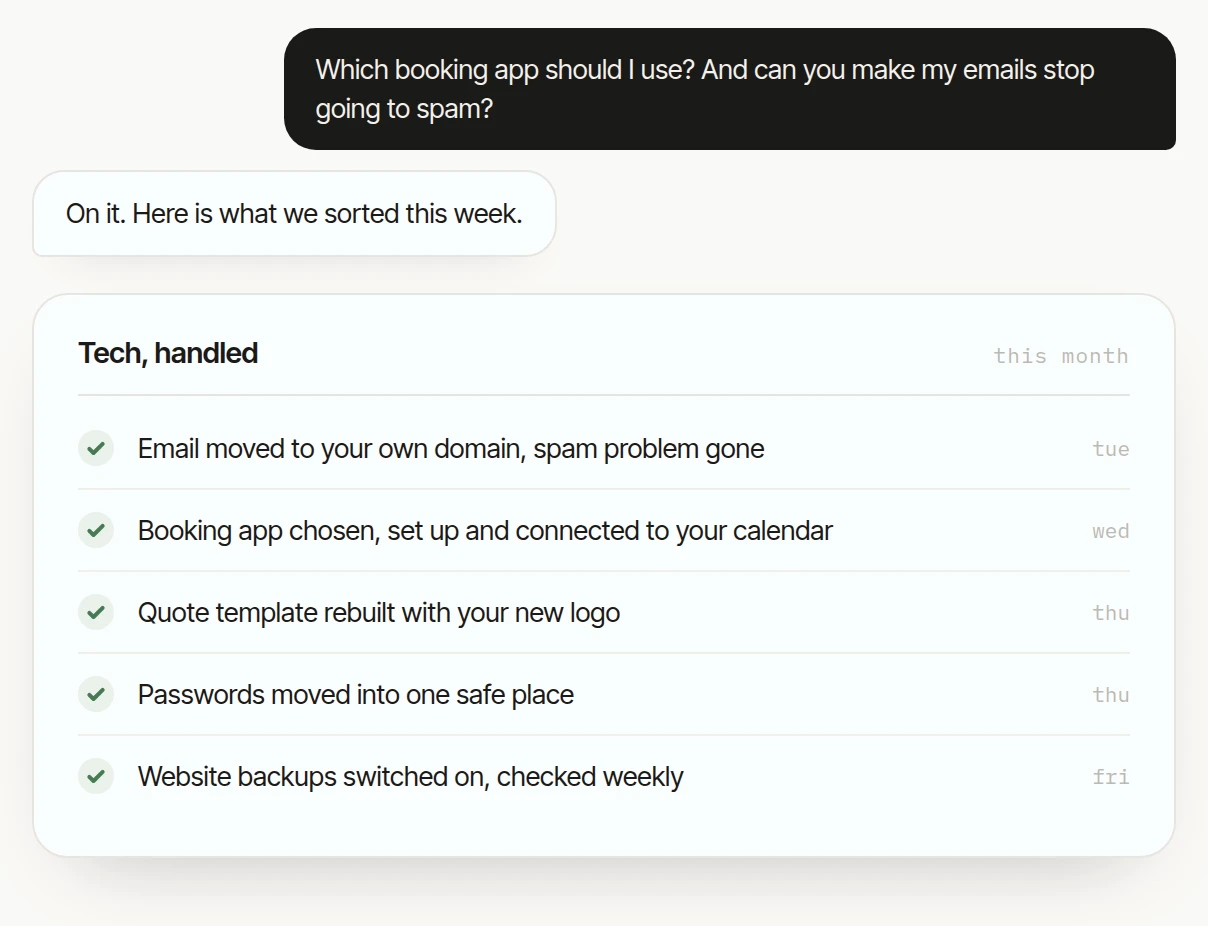
Projects that go badly are nearly always the ones that tried to do everything before anybody used any of it. The smallest useful version is not a compromise, it is the thing that stops that happening.
End to end, including what happens when something unusual turns up. This takes longer than anybody expects and it is what the build is measured against.
Properly, and with the intention of not building. Where a product does most of it, that is the recommendation and the work stops there.
The part that carries the value, and nothing else. It is in front of real work inside weeks rather than months.
With the people who will use it, on live jobs. That is when you find out what the written process left out.
For a fortnight, with a person checking what it does. Anything failing part way stops and waits rather than half finishing.
What gets added next comes from what people actually reach for, rather than from the list written before anybody had used it.
Longer than a website and shorter than the first estimate, where the smallest useful version goes first. Writing the process down is the slow half, every time.
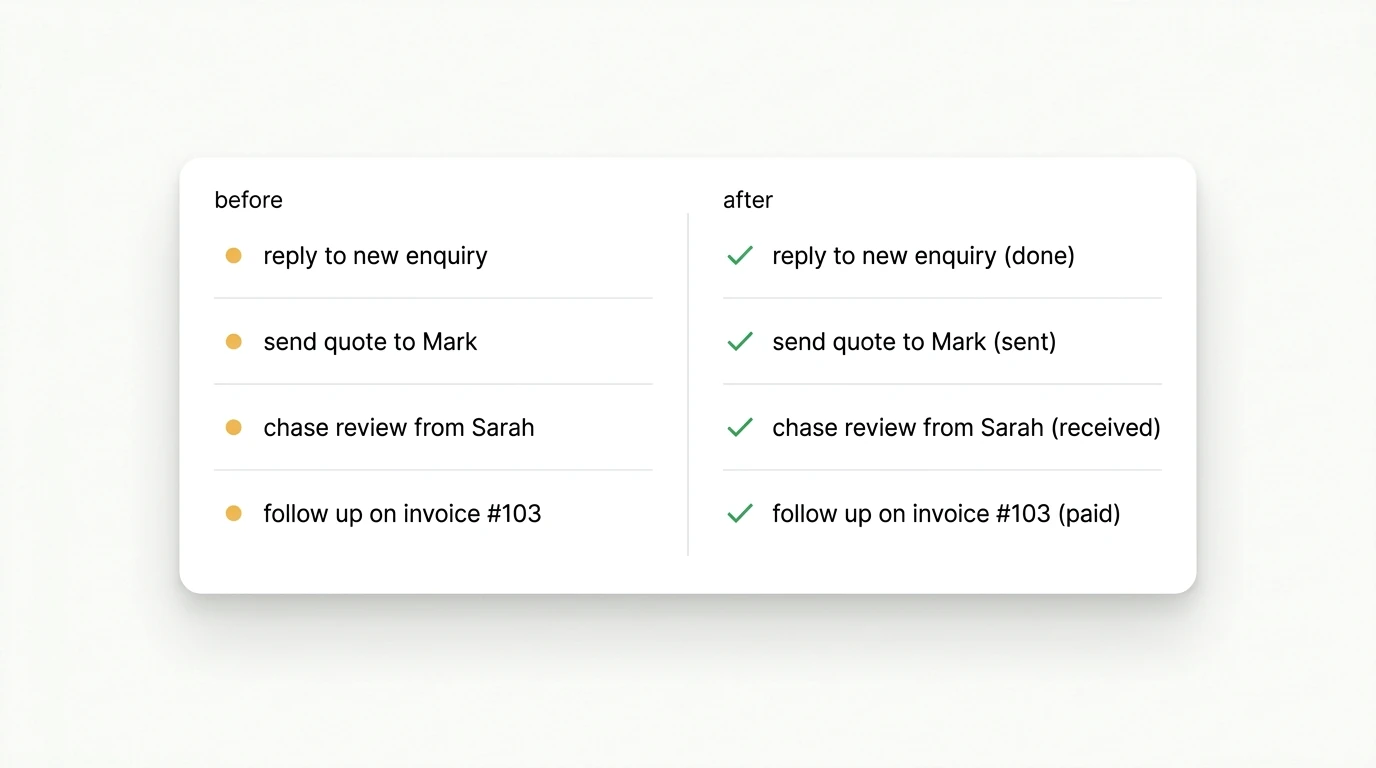
The projects that overrun are the ones that skipped the first step. The ones that finish early are the ones where somebody used a rough version in week three and said what was missing.
Ask whether you should build this at all, who holds the code, what a change costs afterwards, and what happens if the developer stops working. The first question is the one that saves the most money.

These are worth asking of anybody, including this one, so the answers given here sit under each question.
All of this can also be built in house, and plenty of businesses do it well. The six steps above are the same either way.
If you do one thing before paying anybody to build anything, write the process down end to end, including what happens when something unusual turns up. That document is what a first call would ask for. Ask for the free report and it comes back with it.
Related reading from us: AI automation services and the order the work happens in.
Assistants that answer from your own material, intake tools that hand over a complete file, connections between systems that do not talk, and reports assembled from what you already record.
Buy, nearly always, where something exists that does most of it. Building earns its place where the way you work is genuinely different and that difference is why customers choose you.
The code, the data and the accounts it runs in. Agree all three in writing before any money changes hands rather than afterwards.
It keeps running. Everything is on accounts in your name and the code is already in a repository you control, in a form another developer can pick up.
Longer than a website and shorter than the first estimate, where the smallest useful version goes first. Writing the process down is the slow half.
A rate and a rough time, given up front. This is the cost that arrives quietly in the second year of owning software.
Connecting two tools you already pay for, so a person stops typing the same information into both.
One monthly fee covering everything, month to month, with no lock-in contract. What it comes to depends on the build, so the number gets given on the call.