
For Newcastle businesses
Business process automation
in Newcastle.
Connect the repeated admin, approvals and handovers inside your business so your team can spend less time moving information by hand.
Tell us about your business and what you need.



How spareday helps
Make the next step in a job clear.
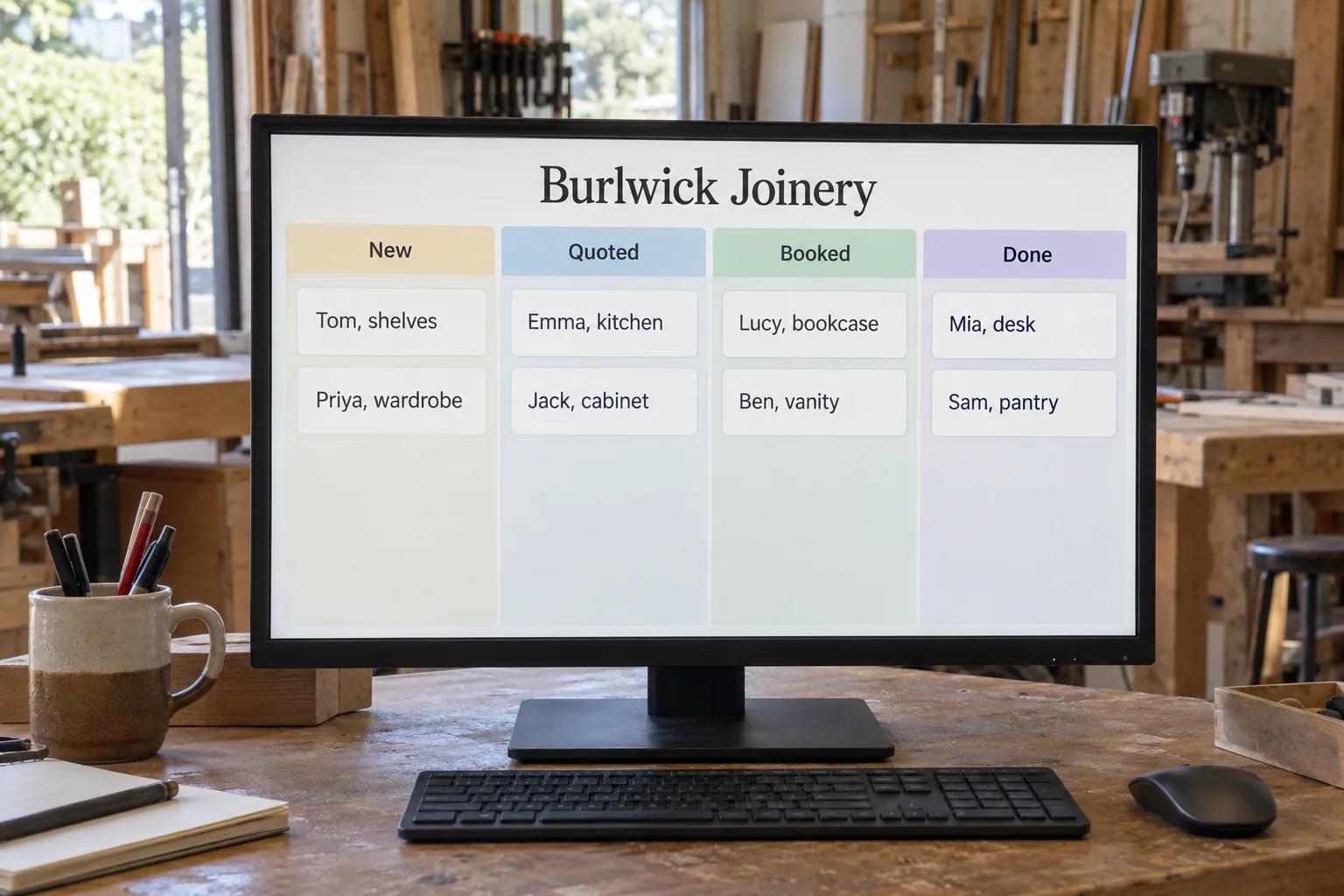
Business process automation uses software to move a task through agreed steps. That might mean creating a job from an approved quote, routing a request for approval or assembling a weekly report.
spareday works with businesses in Newcastle and the Hunter, as well as remotely across Australia. We review the process with the people who use it and connect the parts your existing tools can support.
What’s included
Build around the work your team already does.
Start with a repeated task that has a clear result. The scope includes how the task runs, how a person intervenes and how staff can see whether it finished.
- Information between systems
- Identify details entered more than once, then check how the systems can exchange them. Agree which record is authoritative when information changes.
- Approvals and handovers
- Route a request to the appropriate person, record their decision and start the next approved step. Keep decisions requiring judgement with the team.
- Routine documents and reports
- Use recorded information to prepare recurring outputs. Agree the format, recipients and checks on incomplete or inconsistent source records.
- Exceptions and failures
- Define what should happen when a required detail is missing or a connected tool is unavailable. Make the unfinished work visible to somebody responsible.
- Instructions and support
- Document the agreed process and how to pause or change it. Discuss access, ownership, third-party costs and ongoing maintenance as part of the scope.
How it works
Follow a real task before changing it.
Your team knows the exceptions that a process diagram can miss. We use that knowledge to agree a consistent way of working before building the connection.
- Walk through the job
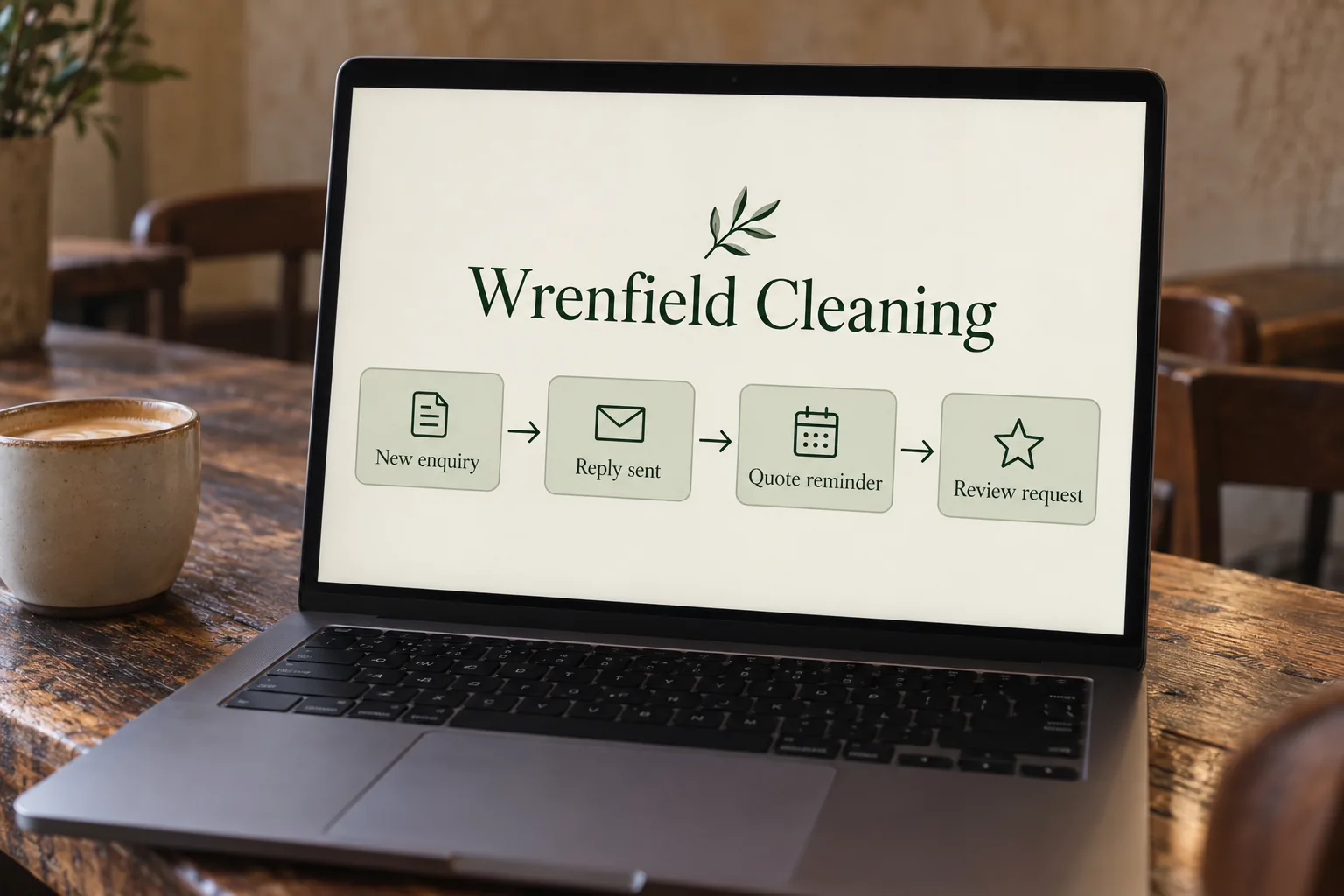
- Show what starts it, what gets copied and who receives the result. Include the cases that arrive incomplete or need a different approval.
- Simplify and agree
- Remove unnecessary steps where appropriate and agree how the remaining steps should work. Identify the person who can approve the process.
- Connect a complete workflow
- Build the agreed path from its starting event to its recorded result. Test duplicates, unavailable systems and a person taking over mid-process.
- Check it with the team
- Review initial runs against the agreed outcome. Explain what has changed and what remains manual before considering the next workflow.
Choosing a first process
Look at repetition, effort and consequences together.
Ask the people doing the admin what they copy between tools and what waits in an inbox. Record how often it happens and the effort involved. A frequent short task and a less frequent complicated task need different assessments.
The aim is a useful improvement your team can recognise. If the underlying process changes on every job, agreeing the process may come before automation. Where it is clear and repeatable, an existing software feature may already be enough.
For help choosing a project, see AI consulting and AI strategy consulting.
AI and custom software
Use the right kind of connection for the task.
A fixed rule can route an approval or copy an agreed field. AI can help interpret a written request, but its output still needs the checks appropriate to the job. AI for small business explains that broader context.
Our AI automation services cover customer messages and other workflows. AI receptionist services focus on incoming calls. If your team needs a purpose-built tool to use the process, custom software may form part of the scope.
You can read about spareday or start with the wider Newcastle services. The quote follows a discussion of your task and systems, with timing agreed around the actual work.
From clients
What clients say about working with spareday

“He created a stunning website for us that captures and nurtures leads with an automated email marketing system, which has filled a huge gap in the business and saved a lot of time (and money!).”

“He didn’t just build me a great website, he created an easy-to-manage system that allows me to make updates myself whenever I need to. He has spared me so much time doing all of this myself!”
“He was able to take our rough ideas, from concept through to reality. The site has provided an influx of new members, helping to keep our club viable.”

“Huge shoutout to Reece for building my website for Hughesys Painting Services. Since it went live my phone hasn’t stopped ringing.”
Official guidance
For independent background, read the official guidance on choosing digital tools and protecting your business online.
A few practical details
Before we get started.
Which business processes are suitable for automation?
Repeated work with identifiable inputs, steps and a result is a useful starting point. We also check the exceptions and the consequences of an error before recommending what should run automatically.
Do we need to replace our existing software?
That depends on what it supports. We first look at the tools you already use and the connections available. Any need for a different tool is discussed as part of the proposed scope.
Does process automation always need AI?
No. Many jobs use fixed rules. AI may be useful for interpreting information or preparing a draft, with a person checking decisions that need judgement.
What happens when an automation fails?
Failure handling is part of the design. We agree how an unfinished job is recorded, who is notified and how it can be reviewed or resumed without duplicating completed work.
What information helps with a quote?
Describe one task, the tools it uses and who approves the result. Include its frequency, any known exceptions and what you want to improve. Invented sample records are enough for the first discussion.

Who you’ll work with
Hi, I’m Reece.
I run spareday from Newcastle. Tell me what your business needs and what is already in place. I’ll work through the scope with you and explain the proposed work before you decide.



Find us
spareday in Newcastle.
12 Grey Street, Wickham, Newcastle NSW 2293.
Your next step
Tell us which admin task you want to improve.
Describe the process and the tools your Newcastle business uses. We’ll work through the scope and send a free growth plan, price included.
Or call 0485 017 387.