
For Newcastle businesses
AI automation
in Newcastle.
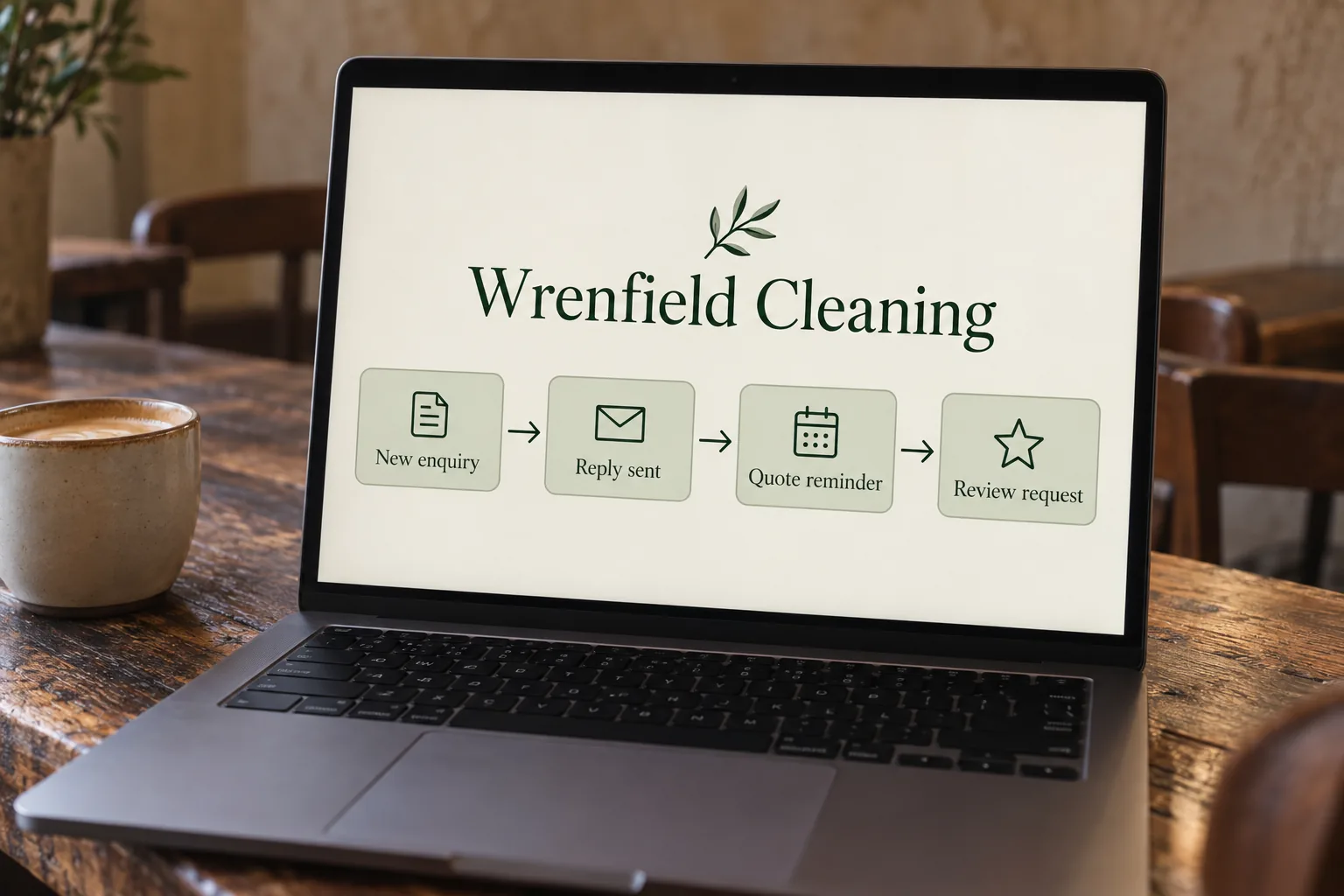
Connect the repeated jobs in your business, from enquiry follow-ups to appointment reminders, with clear rules for when a person takes over.
Tell us about your business and what you need.



How spareday helps
Give the repeat work a reliable process.
AI automation in Newcastle combines software that follows agreed steps with AI that can interpret a message or prepare a reply. The useful starting point is a specific job your business repeats.
spareday works with businesses in Newcastle to map that job, connect the tools involved and check the result. You supply the business facts and examples of a good reply; we turn the agreed process into working software.
What’s included
The job, the connections and the checks.
The scope depends on what you want to happen and which systems you already use. A reminder can follow fixed rules; interpreting an open-ended enquiry may need AI and a review step.
- Enquiry follow-up
- Route a new enquiry to the right person, send an agreed acknowledgement and keep track of whether it has been answered.
- Reminders and repeat messages
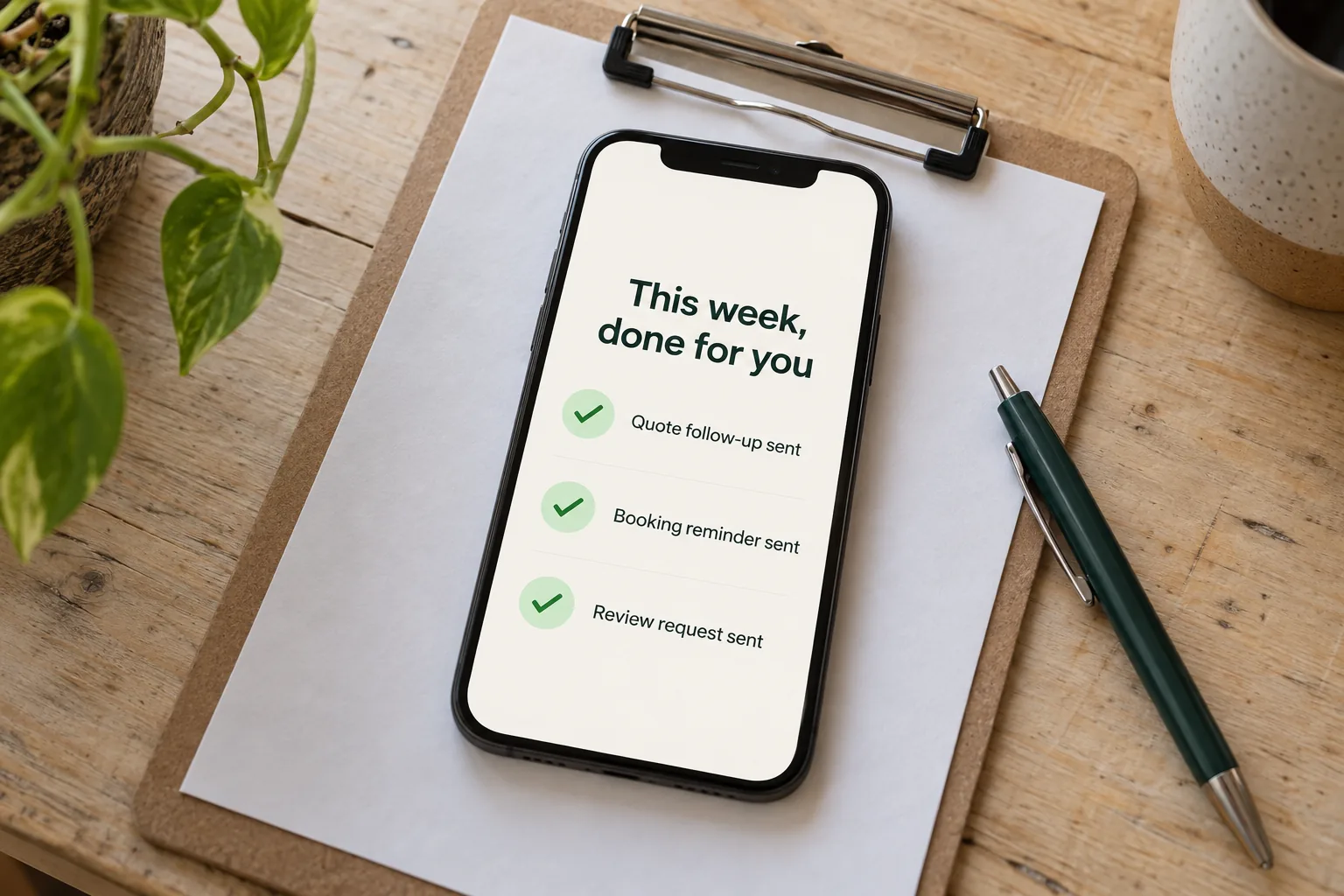
- Set the trigger, timing and stopping rules for quote follow-ups or appointment reminders.
- Connections between tools
- Check how information can move between your forms, calendar and customer records, including what happens when a connection fails.
- Business wording and limits
- Agree the facts an assistant can use, the actions it can take and the questions that need a person.
- Testing and ongoing review
- Check ordinary and unusual examples before use, then agree who reviews the activity and handles changes.
How it works
Start with one complete job.
A useful first project has a clear beginning, a result someone can check and a person responsible for exceptions.
- Map what happens now
- Show us the steps, tools and messages involved, including the parts people do by hand.
- Agree the behaviour
- Choose what starts the job, what it is allowed to do and when it must stop or ask for help.
- Build and test the connection
- Check repeated enquiries, missing details, changed appointments and unavailable systems before relying on the process.
- Review real use
- Compare the activity with the agreed outcome. Fix the wording or rules before extending the process to another job.
Choosing the first job
Match the automation to the work.
A missed call, an unanswered quote and a forgotten review request are different problems. Choose using your own records: how often does the task happen, how much attention does it take and what happens when it is missed?
For calls, compare phone answering with an AI receptionist. For requests after a completed job, see review generation. The wider AI for small business guide covers other uses.
Keeping control
Make the handover part of the process.
An assistant should identify itself clearly and answer from the business information you approve. Job-specific prices, unfamiliar requests and commitments outside its brief go to a person. Booking requires a checked connection to the calendar; otherwise the assistant collects a request for someone to confirm.
Decide who receives exceptions and what happens if that person is unavailable. Agree what customer information the system needs, who can see it and how long it is kept. Account access, running costs and the support arrangement belong in the scope before work starts.
For independent background on choosing and checking AI tools, see the Australian Government’s AI in business guidance.
From clients
What clients say about working with spareday

“He created a stunning website for us that captures and nurtures leads with an automated email marketing system, which has filled a huge gap in the business and saved a lot of time (and money!).”

“He didn’t just build me a great website, he created an easy-to-manage system that allows me to make updates myself whenever I need to. He has spared me so much time doing all of this myself!”
“He was able to take our rough ideas, from concept through to reality. The site has provided an influx of new members, helping to keep our club viable.”

“Huge shoutout to Reece for building my website for Hughesys Painting Services. Since it went live my phone hasn’t stopped ringing.”
Official guidance
For independent background, read the official guidance on AI in business and choosing digital tools.
A few practical details
Before we get started.
Does every automation need AI?
No. A fixed reminder or acknowledgement can follow ordinary rules. AI becomes relevant when a step needs to interpret varied messages; that step still needs clear limits and checks.
What should we automate first?
Choose a frequent, well-understood task with a result you can check. We review your current process and tools before recommending a starting point.
Can it send quotes or promise availability?
Only the actions agreed in the scope are enabled. Job-specific quotes stay with a person. Appointment availability requires a working calendar connection and checks before booking.
Can we keep our current software?
We check the existing tools first. Their available connections and permissions determine what can be joined; a replacement is a separate decision.
What do you need for a quote?
Describe the task, the systems involved and roughly how often it happens. A few examples with private customer information removed help explain the job.

Who you’ll work with
Hi, I’m Reece.
I run spareday from Newcastle. Tell me what your business needs and what is already in place. I’ll work through the scope with you and explain the proposed work before you decide.




Find us
spareday in Newcastle.
12 Grey Street, Wickham, Newcastle NSW 2293.
Your next step
Tell us which job keeps coming back.
Describe what you do by hand and the tools you use. We’ll discuss what is practical and send a free growth plan, price included.
Or call 0485 017 387.