
For Australian businesses wondering where AI actually fits
Which jobs in your business are actually worth automating, and what it costs to keep doing them by hand.
A report on your own week, showing which jobs only happen when somebody remembers, and what it costs you when they do not.
 By Reece Rainer
spareday, Newcastle NSW
Last updated
13 September 2026
Read time
8 minutes
By Reece Rainer
spareday, Newcastle NSW
Last updated
13 September 2026
Read time
8 minutes
A passion-driven, good-hearted and reliable service provider with the competency of a genius when it comes to software engineering, AI technology and marketing.
He was able to take our rough ideas, from concept through to reality. The site has provided an influx of new members, helping to keep our club viable.
Excellent in all facets of web design with particular expertise in SEO and email marketing. Online visibility has skyrocketed since working Reece which translates as flawless customer relations, new leads and new customers.
Most businesses looking at AI are not short of ideas. They are short of a reason to pick one. Everything sounds plausible, everything has a demonstration behind it, and none of it says which job in this particular business is worth handing over first.
That is the question, and it is a business one rather than a software one. What follows is what the deciding actually involves, what will not survive it, and how a decision turns into something running.
Looking at how the business really works, finding the jobs that repeat the same way every time, and deciding which of them are worth handing to software. Then building the ones that are.
AI consulting services, done properly, are that deciding job rather than the building one. The building follows it and is the easier half.
The tools are cheap and there are hundreds of them. What is scarce is knowing which job in your business is worth handing over, and that answer does not come out of a product demonstration. It comes out of watching a week of the business.
What comes back is a short list in the order worth acting on, with a rough cost beside each one. Not a strategy document, and not a list of everything technically possible.
A good tool aimed at the wrong job still has to be maintained by somebody. Most of the value here is in what does not get built.
The common failure is not picking a bad product. It is automating something that happens twice a month, or automating a process nobody had written down, so what gets built is a faster version of something that was already wrong.
The second common failure is starting with the most interesting job instead of the most expensive one. The interesting one makes a better demonstration. The expensive one pays for the work.
The Australian government's guidance on using AI safely in a small business makes the same point from the other direction: start from the problem, not from the tool.
The job has to be written down, the information it needs has to exist somewhere, and somebody has to own reading what it does. Where any of the three is missing, building goes badly.
This is the part that gets skipped, and skipping it is why so many automation projects quietly stop being used. A process that only lives in one person's head cannot be handed to software, because nobody can say what it is supposed to do.
Writing the job down usually takes longer than building it, and that is normal rather than a sign something has gone wrong. It is also the part that makes the build survive the first change to the software around it.
It will not make a judgement call you would want to stand behind, it will not fix a process nobody has written down, and it will not know anything about your business that is not recorded somewhere.
The honest limit is narrower than the marketing suggests, and knowing where it sits is most of what stops a build going wrong. Anything requiring a decision that carries consequences stops and waits for a person.
Where the work is genuinely repeatable and written down, it runs. Where it is not, it stops and waits, and every run is logged so you can read what it did.
Somebody sits with the work. The repeated jobs go on a list with an honest cost beside each, one comes off it first, its limits go down on paper, and it runs watched before it runs alone.
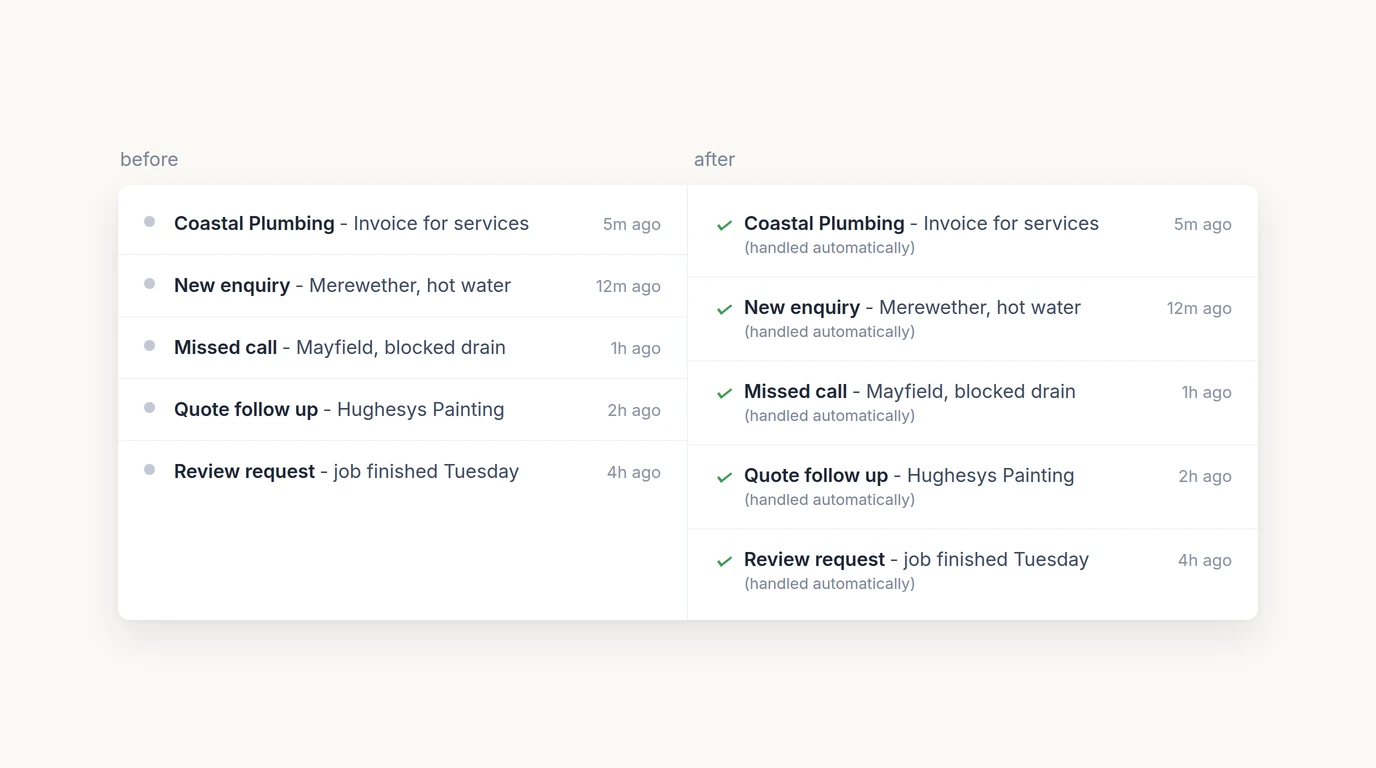
One job is set up and left running before the next starts, and the first one is the one costing the most rather than the one that demonstrates best.
A week of the business, looked at properly. Not a meeting and not a survey, because what people say they do and what actually happens are different.
A rough number beside each one, in hours or in lost work. That number is what decides the order rather than anybody's opinion.
Usually the one that stops happening when the business gets busy, because that is the one costing money in the weeks it can least afford to.
What it is allowed to say, what it must never say, and what it does when something unexpected turns up. This is written before anything is built.
For a fortnight, with a person approving each message. That fortnight finds the cases nobody predicted, in time to fix them.
A job is finished when nobody is thinking about it any more. That is the signal to start the next one, rather than a date on a plan.
The looking is short. Writing down how a job actually happens takes longer than anybody expects, and it is the part deciding whether the building works.
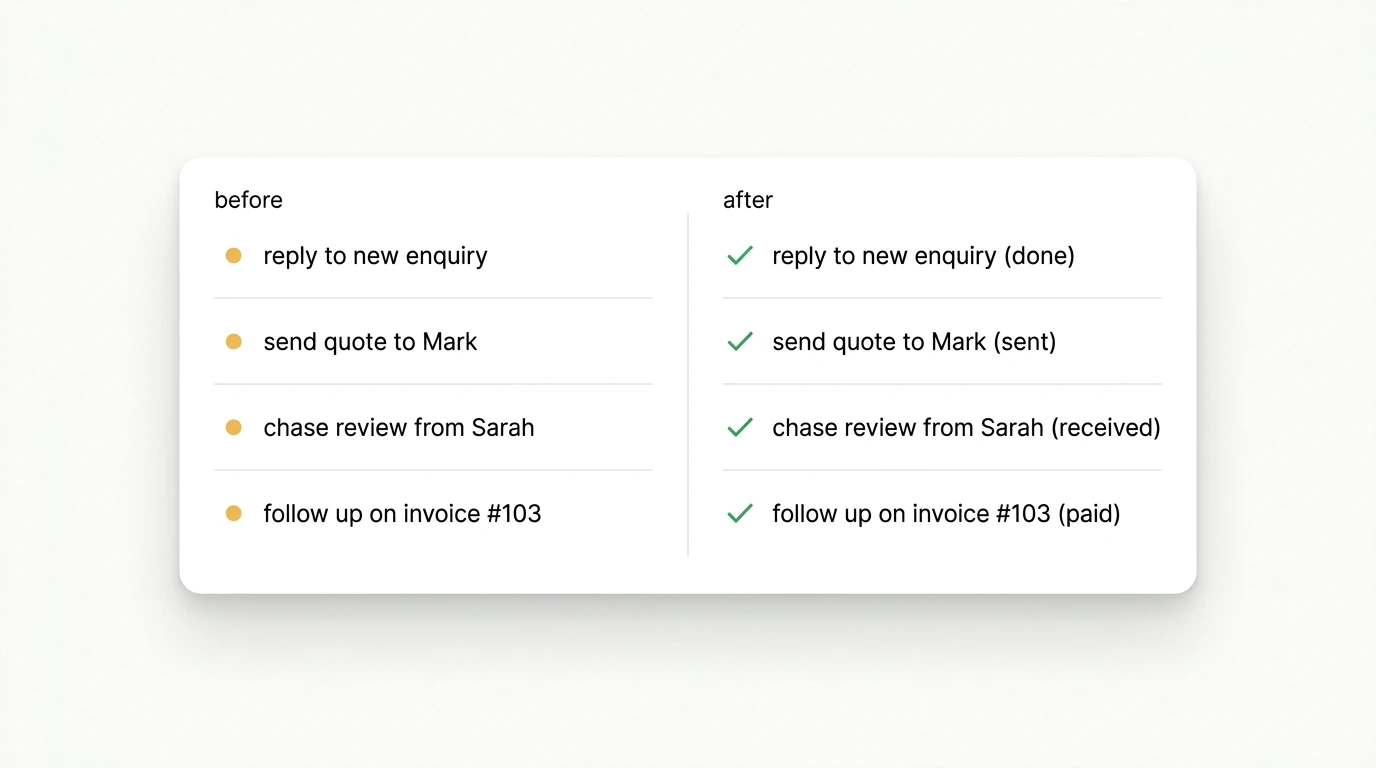
A single job takes about a week to build and a week to watch. A set of them takes a couple of months, and each one after the first is shorter because the connections already exist.
Ask what they look at before recommending anything, whether they sell the tools they recommend, who owns what comes out of it, and what they would tell you not to build.
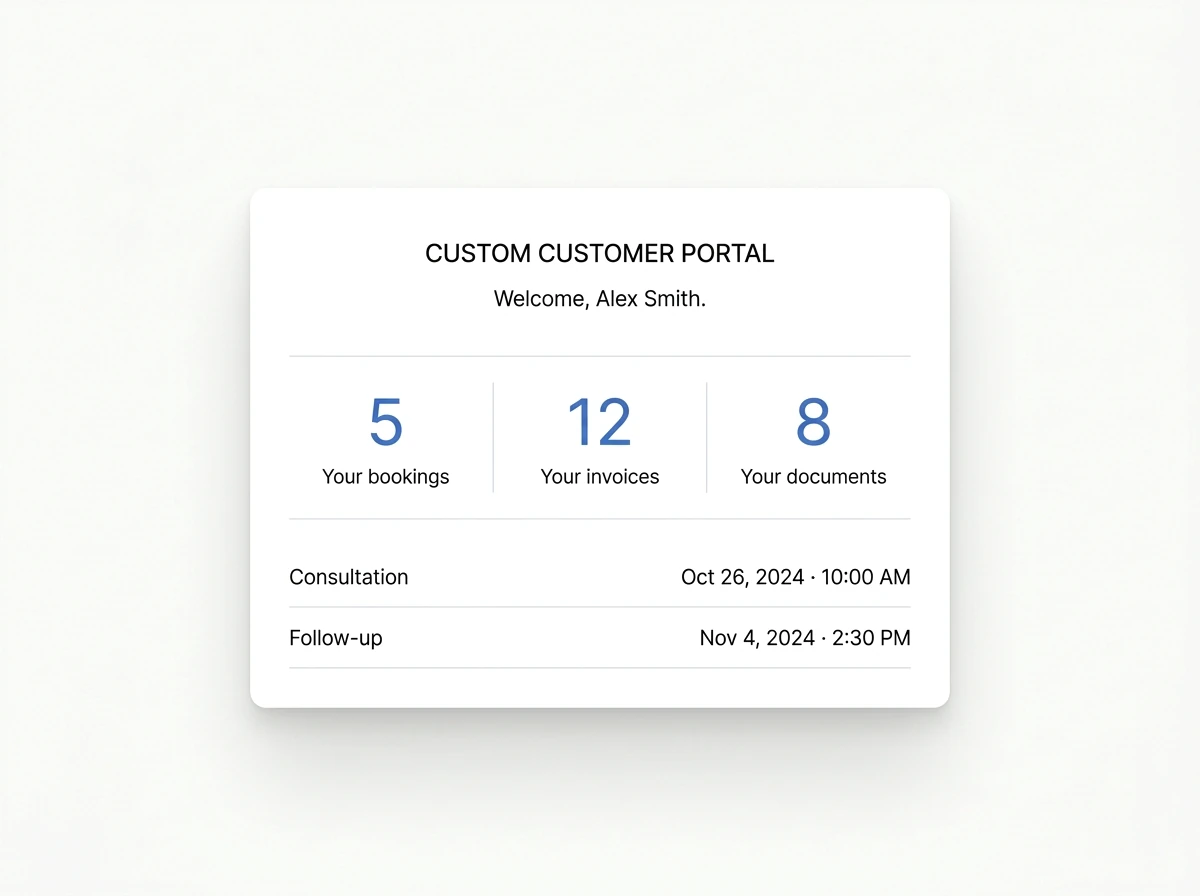
These are worth asking of anybody, including this one, so the answers given here sit under each question.
All of this can also be done in house, and plenty of businesses do it well. The six steps above are the same either way.
If you do one thing after reading this, write down the jobs in your week that only happen when somebody remembers, and put a rough cost beside each. That list is what a first call would ask for. Ask for the free report and it comes back with it.
Related reading from us: jobs that run without you and AI Consulting Australia.
Looking at how a business really works, finding the jobs that repeat the same way every time, deciding which are worth handing to software, and then building those.
An IT consultant keeps what you run working. This asks a different question: which of the jobs people do by hand should not be done by hand at all.
Yes, and often better, because the jobs are simpler and one person feels the whole cost of them.
It has to repeat often, happen the same way every time, and have no judgement call in the middle of it. How often a job comes up counts as much as how big it is.
The job has to be written down, the information it needs has to exist somewhere, and somebody has to own reading what it does.
The builds run on accounts you own rather than inside somebody else's platform, and what goes to any model is agreed in writing before anything is built.
Yes. It runs on your accounts, in your name, and it keeps running if the arrangement ends. Keeping it working as the software changes is a monthly choice.
One monthly fee covering everything, month to month, with no lock-in contract. What it comes to depends on the business, so the number gets given on the call.