
For Newcastle businesses
Google Maps SEO
in Newcastle.
See where your business appears and improve the information behind your local search presence.
Tell us about your business and what you need.



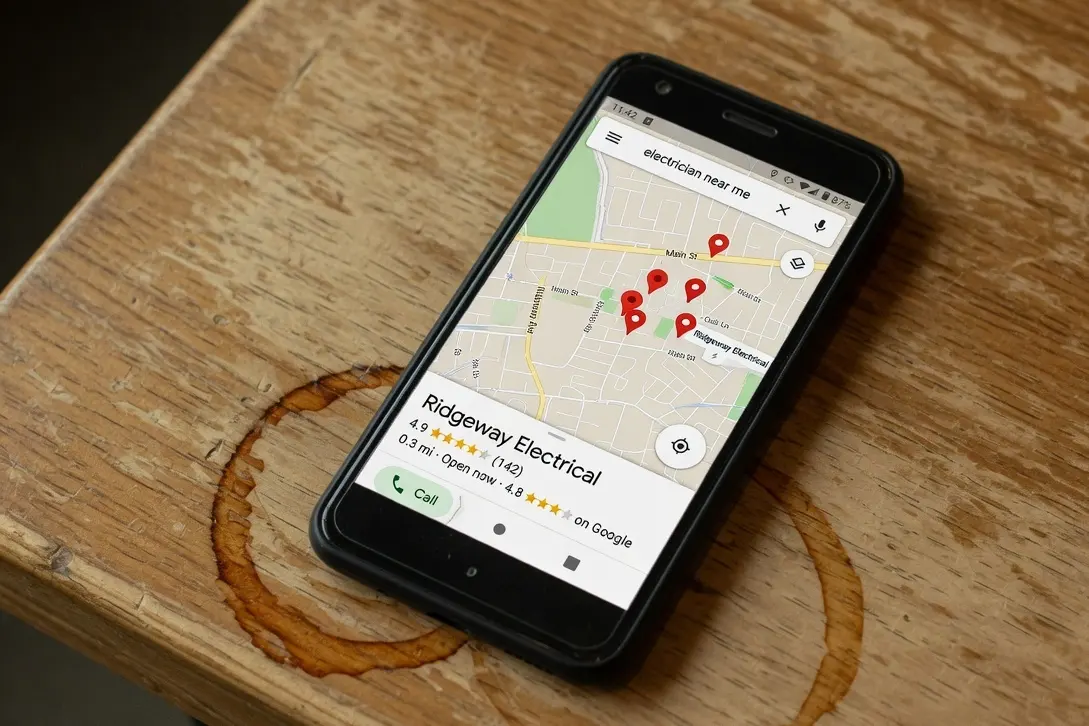
Google Maps SEO at spareday
Understand your visibility across Newcastle.
A business can appear prominently near its address and be harder to find a few suburbs away. Google Maps SEO looks at that pattern, then the work that may improve it.
spareday provides Google Maps SEO in Newcastle by measuring local searches, reviewing the Google listing and improving the supporting website and business information. We agree the services and areas to measure so each report answers a useful question about your business.
What’s included
A view of the map, backed by practical work.
- A baseline across your service area
- The same search checked from a set of locations, with your listing’s position recorded at each point. This is often called a rank grid.
- Searches chosen for your services
- Relevant phrases agreed before measuring, so a report on one service is not mistaken for visibility across everything you do.
- Google listing improvements
- Accurate categories, service details, hours, photographs and location settings through Google Business Profile optimisation.
- Supporting website and reputation work
- Useful service pages, genuine customer review requests and relevant local mentions considered together.
- Comparable reporting
- Repeat checks using the same locations and searches, with changes explained alongside customer enquiries.
How it works
Measure the starting point, then the changes.
Tell us where you are based and where the work is wanted. A location you can travel to and a location where Google already shows you are different things; the first measurement helps us see the gap.
- Set the search and the area
- We choose the service searches and map coverage with you. Those choices are recorded so later comparisons use the same basis.
- Check the profile and website
- We review the listing alongside the pages customers land on, identifying missing details and service information.
- Complete the agreed improvements
- The listing, pages and review routine are worked through in priority order. Relevant opportunities for local links are assessed as part of the wider search work.
- Compare visibility and enquiries
- We repeat the checks and review where positions changed. You help us understand whether the enquiries are turning into suitable work.
What the report means
A rank grid is a snapshot of several locations.
Each point shows what the measurement found for one search from one location. A strong result near the business and a weaker result farther away can reflect the distance factor. It does not, by itself, tell us whether a listing field is wrong.
In our 13 September 2026 study of Newcastle trades, we checked eight trades at 49 points. Of 416 businesses that reached the top three somewhere, 401 did so at a quarter of the grid or less. No listing was top three at every point.
That study captured six results per point on one day. Businesses deeper in the results were outside that observation, and the findings describe those eight trades and searches. They show why we measure several locations; they do not predict the result your business will achieve.
A useful comparison holds the search and grid steady. We also look at the dates and the work completed rather than treating one movement as proof that a particular edit caused it.
What can be improved
Build relevance without promising a radius.
Google describes local ranking in terms of relevance, distance and prominence. We can improve the information describing your business and work on its wider web presence. An accurate service-area setting is not a guarantee of appearing throughout that area.
A listing also needs to represent a real business accurately. We check the name and address against Google’s profile guidelines. Where a competing listing appears misleading, the evidence needs checking before any report is made; Google decides what action to take.
We cannot promise a top-three position or a date when a particular suburb will improve. The useful commitment is to a defined set of work and clear reporting, with the limits of each measurement explained.
From clients
What clients say about working with spareday

“Huge shoutout to Reece for building my website for Hughesys Painting Services. Since it went live my phone hasn’t stopped ringing.”

“He created a stunning website for us that captures and nurtures leads with an automated email marketing system, which has filled a huge gap in the business and saved a lot of time (and money!).”

“He didn’t just build me a great website, he created an easy-to-manage system that allows me to make updates myself whenever I need to. He has spared me so much time doing all of this myself!”
“He was able to take our rough ideas, from concept through to reality. The site has provided an influx of new members, helping to keep our club viable.”
A few practical details
Before we get started.
Why do I see a different result from my customer?
Local results depend partly on the searcher’s location. The search terms and time of the search can also differ. A rank grid helps compare the same phrase across several locations.
Will listing more suburbs make me rank there?
The service area describes where you operate. Adding a suburb does not promise a ranking there. We plan around genuine coverage, useful website content and the locations being measured.
What does the monthly report show?
The searches and map locations checked, positions at those points and a comparison with earlier measurements. We discuss those findings alongside the work completed and enquiries you received.
What do you need to prepare a quote?
Your Google listing link, website, main services and the places you want work from. If you already have a rank-grid report, send that too so we can understand what was measured.

Who you’ll work with
Hi, I’m Reece.
I’m Reece, based in Newcastle. I’ll help you make sense of where the business appears today and explain the work behind each local search report.




Find us
spareday in Newcastle.
12 Grey Street, Wickham, Newcastle NSW 2293.
Your next step
Tell us which areas matter to you.
Share your listing, website and main services. We’ll discuss your current visibility and the work to include in a free growth plan.
Or call 0485 017 387.