
For tradies with nobody on the phone
What it does, what it will not do, and how to tell if you need it.
A report on your own number, showing how many calls went unanswered last month and when they arrived.
 By Reece Rainer
spareday, Newcastle NSW
Last updated
13 September 2026
Read time
3 minutes
By Reece Rainer
spareday, Newcastle NSW
Last updated
13 September 2026
Read time
3 minutes
He was able to take our rough ideas, from concept through to reality. The site has provided an influx of new members, helping to keep our club viable.
A passion-driven, good-hearted and reliable service provider with the competency of a genius when it comes to software engineering, AI technology and marketing.
He created a stunning website for us that captures and nurtures leads with an automated email marketing system, which has filled a huge gap in the business and saved a lot of time (and money!).
Most trade businesses have thought about getting somebody to answer the phone and decided it costs more than it is worth. That maths has changed, which is the only reason this is worth reading.
This is what an answering service does for a small trade business, what it will not do, and whether you actually need one.
A human answering service is priced per call and makes sense at volume. For a one or two person trade business the cost never justified itself, so most simply put up with missing calls.
The result is a whole category of business that has known about its missed calls for years and correctly concluded that fixing it cost more than the calls were worth.
What changed is only the price of the answering, not the value of the calls. The calls were always worth catching.
That makes this a decision worth revisiting rather than a new idea. If you priced an answering service three years ago and walked away, you were right at the time.
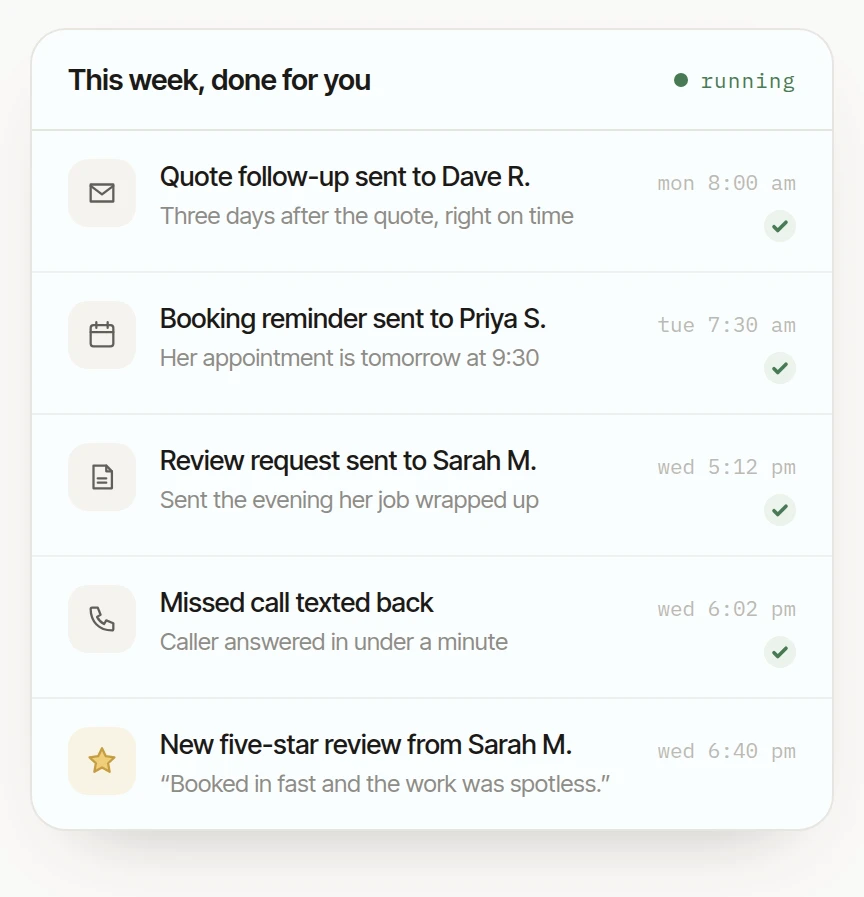
It answers in your business's name, finds out what the job is and where, takes the details, and either books it or passes the message to you straight away.
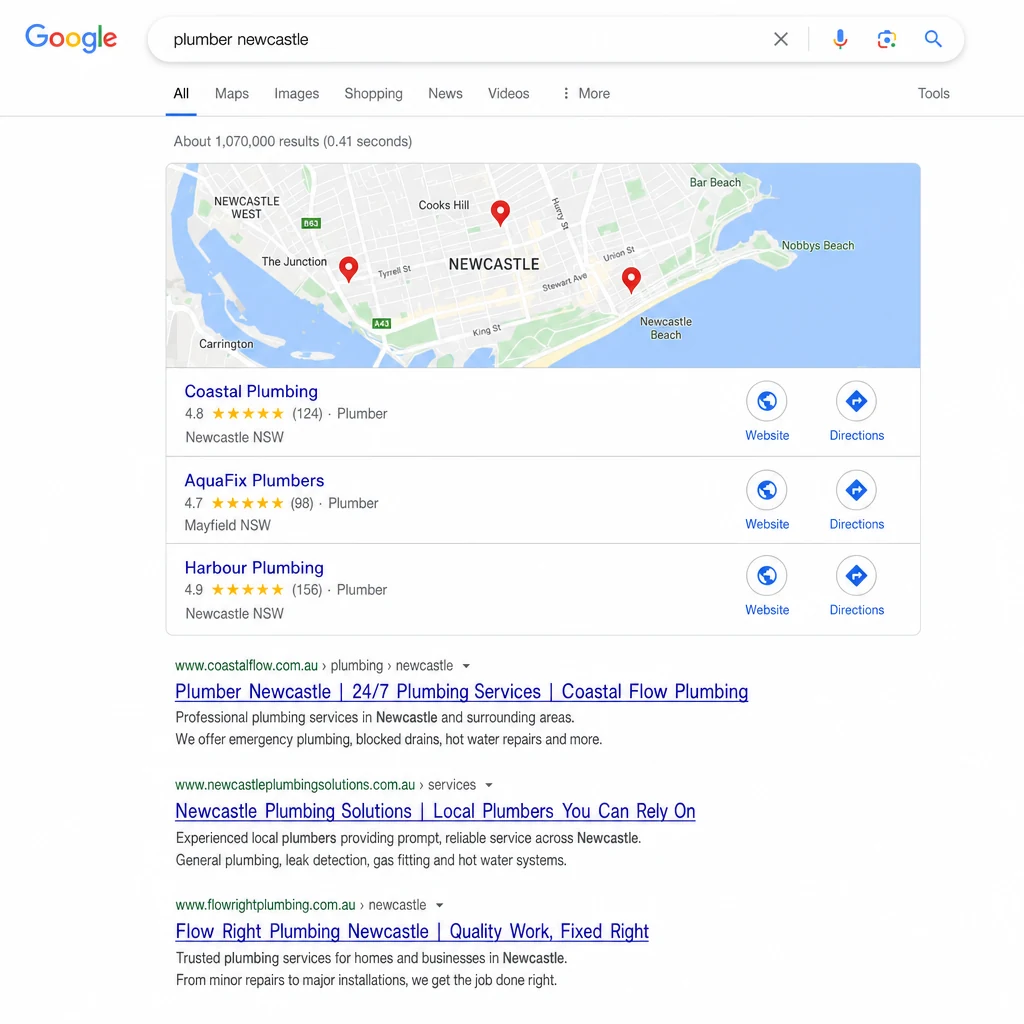
The answering is most of the value. A customer who reaches a voice does not ring the next trade, and that single behavioural difference is worth more than anything else in the feature list.
It knows what you do and, importantly, what you do not. A business that does not do commercial work, or does not go past a certain distance, says so instead of taking a booking that wastes everybody's morning.
It will not price work, it will not commit you to a time, and it will not handle a caller who needs a proper conversation. All of those become messages to you instead.
This matters because the failure mode of a bad answering setup is not a missed call, it is a customer who was told something wrong by something speaking in your name. That is a worse position than silence.
For trades the boundary is nearly always the quote. Explaining how you price is fine. Putting a number on an unseen job is not, and it causes an argument at the door.
Anything unusual gets passed through. That is deliberate: the point is to catch the ordinary calls, not to pretend a machine can run your business.
Only if you are actually missing calls. A lot of trades assume they are, and a smaller number check, and the check is free.
The simpler option is a text-back, which replies in writing to any call you miss and does nothing else. It is cheaper and less to run, and for many one-person trade businesses it is the right answer.
The case for a full answering service is volume and the kind of customer who will not deal in writing. Older customers and urgent callers often want a voice, and a text does not give them one.
Neither is worth anything if the phone is being answered. That is the first thing to establish, and it is the only part of this decision that is a fact rather than a judgement.
This used to be a service priced for businesses much larger than yours. The only thing worth checking now is whether you are missing enough calls to care.
Related reading from us: AI receptionist for mechanics, the call that came while you were on a board, AI Receptionist For Plumbers, AI receptionist for lawyers and the phone in the busiest month.
It is direct about being a machine rather than pretending to be a person, which callers deal with much better than the alternative.
No. It explains how you price and takes the details. A number given over the phone on an unseen job causes trouble later.
Yes, and for a lot of one-person trades it is the better fit. The difference is whether your customers will deal in writing.
Yes, it runs on your existing number and everything stays in your name.