
For Newcastle businesses
SEO
in Newcastle.
SEO for Newcastle businesses: service pages, technical fixes, local links and your Google listing, with a plain report each month.
Tell us about your business. We’ll check where you show up on Google now and send a free growth plan, price included.



How we work
What you can expect from us.
- Rankings checked across the city
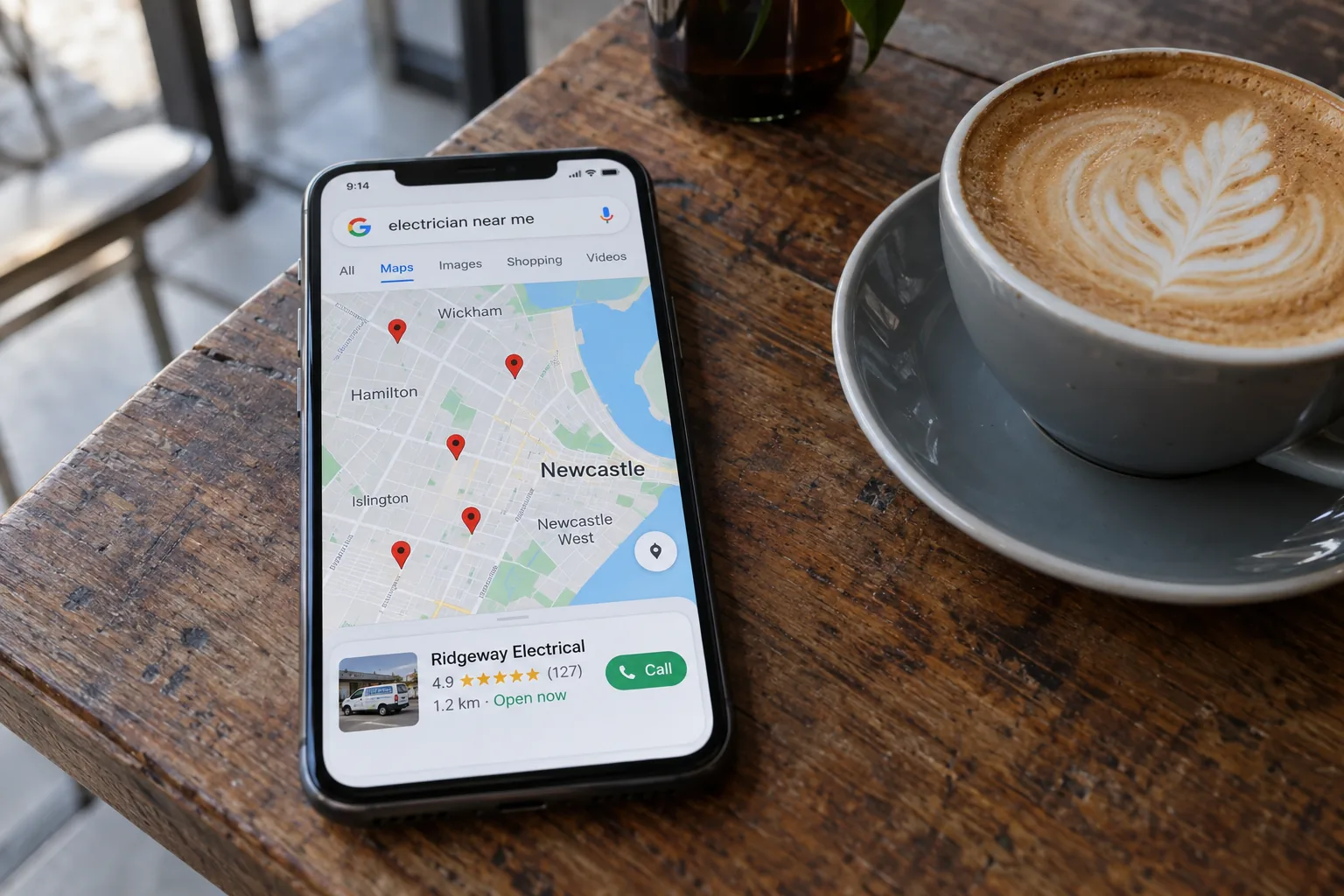
- We check where you show up from 49 points across Newcastle each week, because Google shows different results from suburb to suburb.
- One person, start to finish
- The person who looks at your site is the one who writes your pages and sends your monthly report.
- Website and Google listing together
- Pages, technical fixes, links and your Google listing are worked on as one job, so each supports the others.
- Based in Wickham
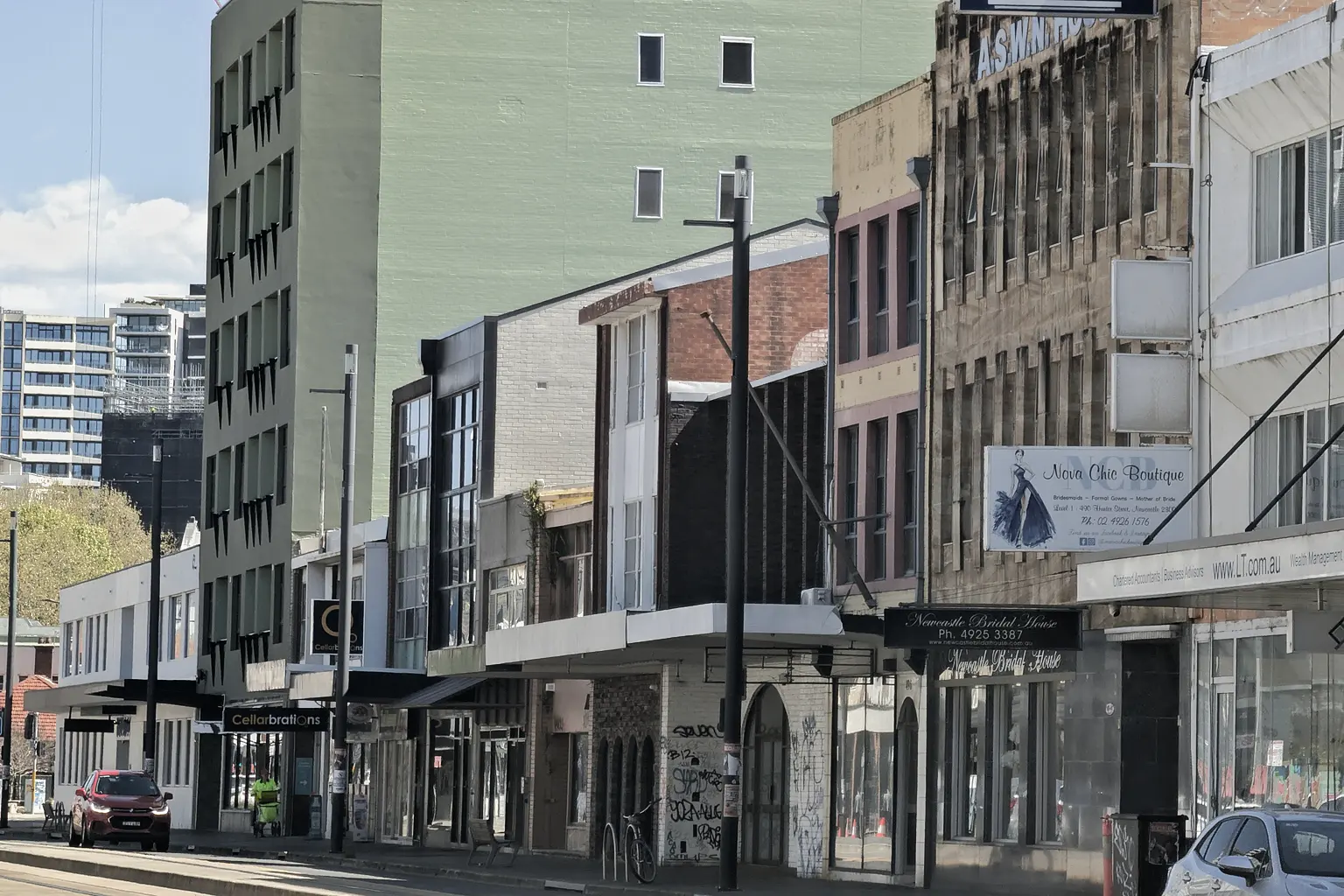
- Our office is at 12 Grey Street, a short walk from Hunter Street. We provide SEO in Newcastle, Lake Macquarie and the Hunter.
What we do
What we do each month.
We start with the searches that matter for your business, then work on the pages and fixes your site needs to show up for them.
- The searches your customers use
- What people type when they need your services, which of those searches lead to work, and who shows up for them now.
- A page for each service you sell
- Written for someone comparing businesses: what you do, where you work and how to get in touch.
- Technical fixes
- Broken pages, slow loading on phones and anything stopping Google from reading your site, found and fixed. There’s more on technical SEO.
- Links from relevant local websites
- Mentions from suppliers, associations, community groups and local publishers, each one checked first. More on link building.
- Your Google listing
- Services, photos and details kept up to date, and an easy way to ask customers for a review. More on your Google listing.
- Monthly reporting
- Where you rank for each search we’re working on, what we did that month and where your enquiries came from.
How it works
What happens after you get in touch.
It starts with a few minutes on our quote form, telling us what you do, where you work and the work you want more of.

- We look at how you show up now
- Your website, your Google listing and the businesses ranking above you for your main searches.
- You get a quote
- It sets out the searches we’d focus on, what comes first and the cost.
- Pages written and problems fixed
- We write and improve your service pages and fix what’s stopping Google reading your site. You confirm the services and areas you want to be found for.
- A report every month
- Where you rank, where enquiries came from and what we’re doing next. Here’s what an SEO agency does each month.
On the map and below it
Show up on the map and in the results under it.
Most local searches show a few businesses on a map, then ordinary website results. We work on both: your Google listing for the map, and your website for the results underneath.

There’s more on how the two fit together in local SEO and Google Business Profile optimisation.
Timing
What you’ll see, and when.
In the first month you’ll see the research, the first pages and the technical fixes. Rankings change more slowly, as Google picks up the work, and your monthly report shows where you sit for each search.
How long that takes depends on your competition and where your site starts, and we’ll give you our view when we quote. There’s more in how long SEO takes. Google Ads can run alongside SEO if you need enquiries sooner.
From clients
What clients say about working with spareday

“Huge shoutout to Reece for building my website for Hughesys Painting Services. Since it went live my phone hasn’t stopped ringing.”

“He created a stunning website for us that captures and nurtures leads with an automated email marketing system, which has filled a huge gap in the business and saved a lot of time (and money!).”

“He didn’t just build me a great website, he created an easy-to-manage system that allows me to make updates myself whenever I need to. He has spared me so much time doing all of this myself!”
“He was able to take our rough ideas, from concept through to reality. The site has provided an influx of new members, helping to keep our club viable.”
Official guidance
For Google’s own guidance, read its SEO starter guide and its advice on creating helpful content.
A few practical details
Before we get started.
Is SEO worth it for a Newcastle business?
Before we quote, we check how many people search for your services and who you’re up against. If SEO isn’t the right fit for your business, we’ll tell you. There’s more in is SEO worth it.
How much does SEO cost?
Your quote sets out the work and what it costs before anything starts. Advertising spend is separate. See what SEO costs in Newcastle for the factors involved.
How do you choose link opportunities?
We look for relevant industry and local websites, then assess the opportunity before preparing outreach. The useful question is whether the mention makes sense for your business and its customers.
What do you need from me?
Your service list, service areas, website access and any existing search reports. You confirm the facts about the business and help us understand which enquiries become suitable work.
How do I compare SEO agencies?
Ask which searches they’re aiming at, what gets built in the first month, who owns the pages and what the monthly report shows. We’ve listed other SEO agencies in Newcastle, and you can check spareday’s registration, address and reviews.

Who you’ll work with
Hi, I’m Reece.
spareday is my business, based here in Newcastle. You’ll deal with me from the first review of your website, and I’m the person you talk to each month about what’s working.




Find us
spareday in Newcastle.
12 Grey Street, Wickham, Newcastle NSW 2293.
Your next step
Tell us what you’d like to be found for.
Tell us about your business and the work you want more of. We’ll look at how you show up on Google now and send you a free growth plan, price included.
Or call 0485 017 387.