
For Australian trade businesses chasing quotes by hand
What an unchased quote and an unasked review cost you, and which part of it runs on its own.
A report on your own week, showing which quotes never got chased and which jobs never got asked for a review, and what that costs you.
 By Reece Rainer
spareday, Newcastle NSW
Last updated
13 September 2026
Read time
9 minutes
By Reece Rainer
spareday, Newcastle NSW
Last updated
13 September 2026
Read time
9 minutes
A passion-driven, good-hearted and reliable service provider with the competency of a genius when it comes to software engineering, AI technology and marketing.
He was able to take our rough ideas, from concept through to reality. The site has provided an influx of new members, helping to keep our club viable.
Excellent in all facets of web design with particular expertise in SEO and email marketing. Online visibility has skyrocketed since working Reece which translates as flawless customer relations, new leads and new customers.
You quote a job on Tuesday and hear nothing. You finish a good job on Thursday and nobody ever asks that customer for a review. Somebody rings at eleven while you are under a house and it goes to voicemail.
None of that is a failure of effort. It is a business with no free hands between seven and four, which describes nearly every trade business busy enough to be worth ringing. What follows is which of those jobs can happen on their own, what it will not do, and the order worth doing it in.
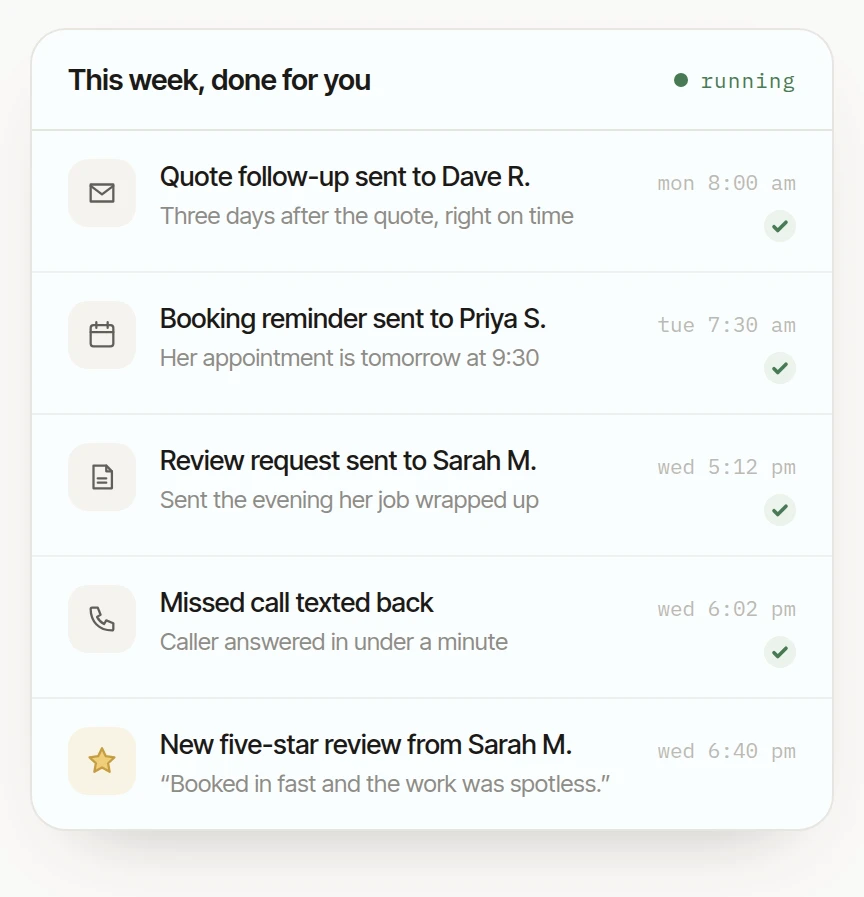
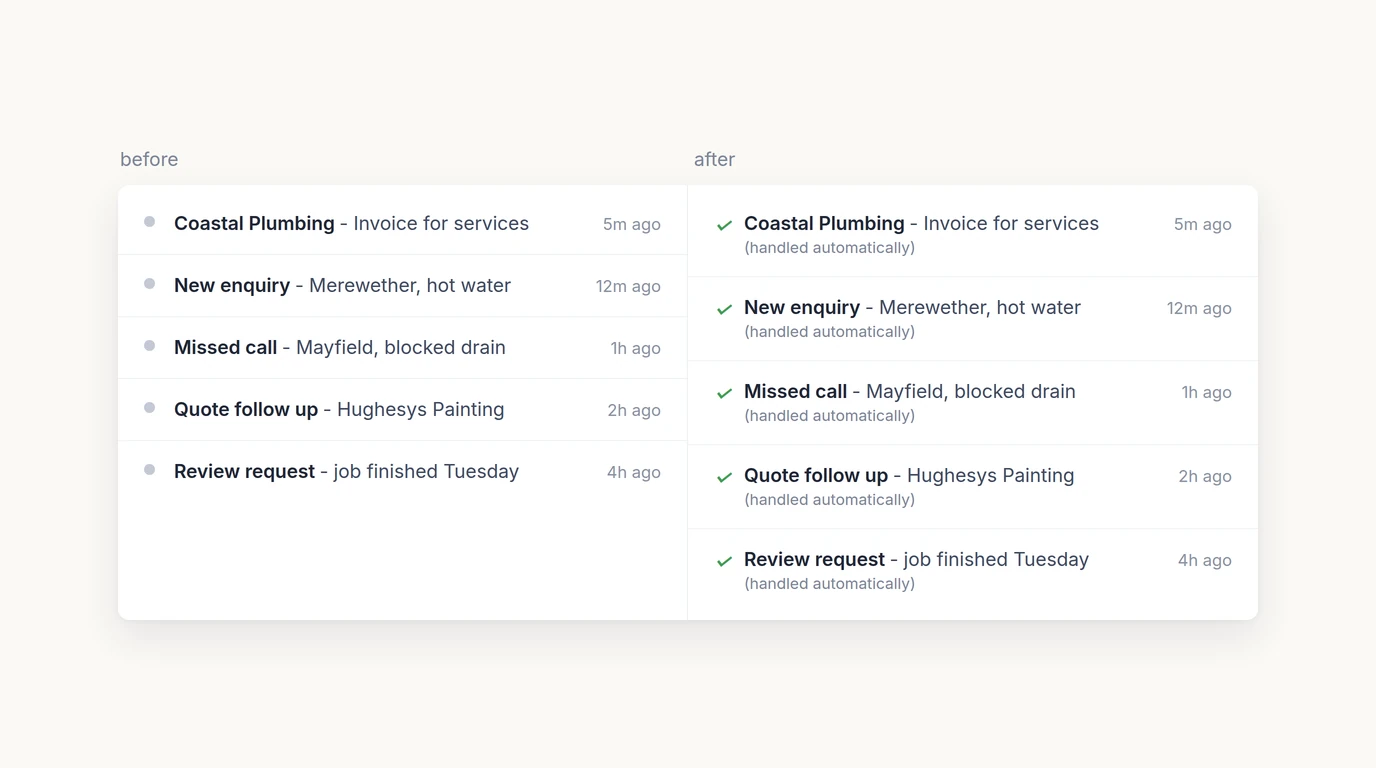
The quote that needs chasing, the missed call that needs a text back, the review nobody asks for, and the reminder that stops a no-show. Four jobs, and every one of them only happens now when somebody remembers.
AI for trades is those four jobs happening on their own, not a system you have to learn to drive.
Two different things get called AI, and only one of them matters here. The first is automation, which means a job that starts on its own: you mark a job finished, so the review request goes out. The second reads what a customer wrote back and answers in your words, which is what stops a follow up reading like a machine sent it.
Every one of those is work you already know should happen. It happens in the week you are flat out, which is the same week it would have earned the most.
A quote that never gets chased is a job that goes to whoever rang back. A missed call is a customer who is already talking to somebody else. Neither shows up as a mistake anywhere, which is why they keep happening.
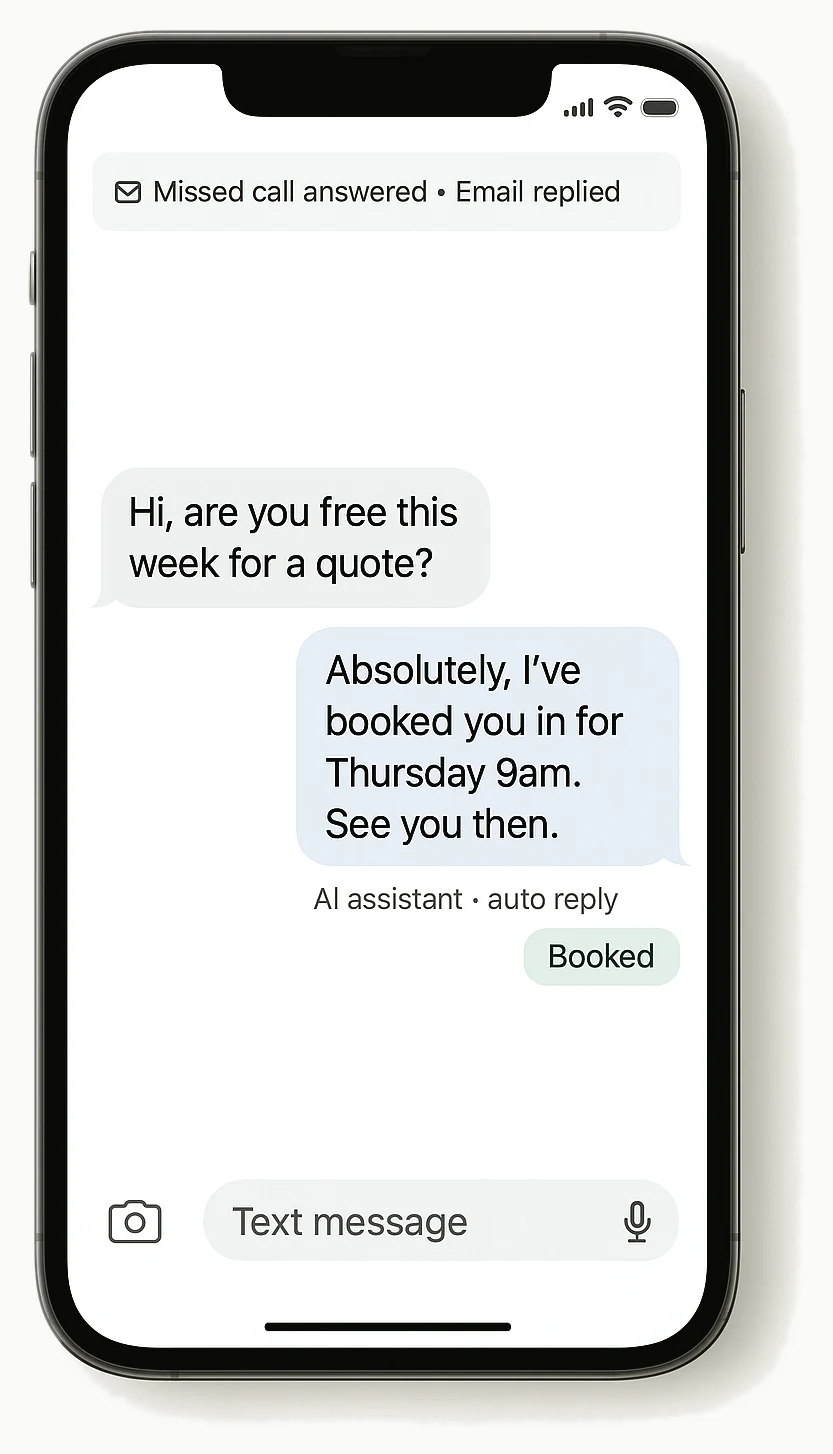
Watch what happens to an enquiry at a busy trade business. It arrives at eleven in the morning while you are on a job. You see it at six. You answer it the next day, and by then the customer has rung two other people and booked one of them.
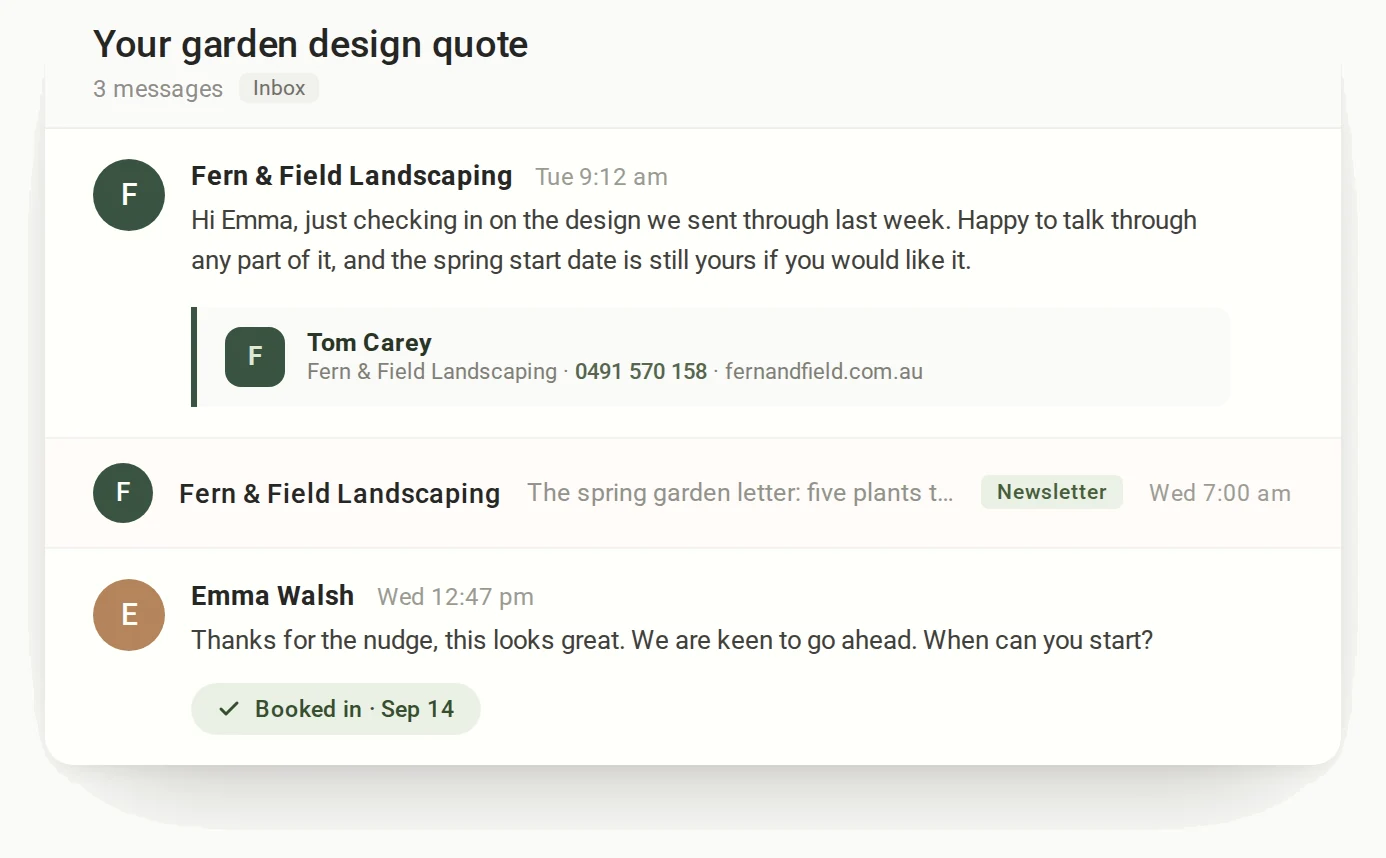
The same thing happens to quotes. Most people who ask for one are asking three businesses, and a fair share of them go with whoever followed up rather than whoever was cheapest. Nobody ever tells you that is why you lost it.
Master Builders Australia and the other industry bodies have been saying for years that the businesses growing are the ones with a system rather than the ones working the longest hours, and this is the cheapest system there is.
Nothing here asks you to change apps. If you run a job management app, this connects to it. If you run a phone and a notebook, it works from those instead.
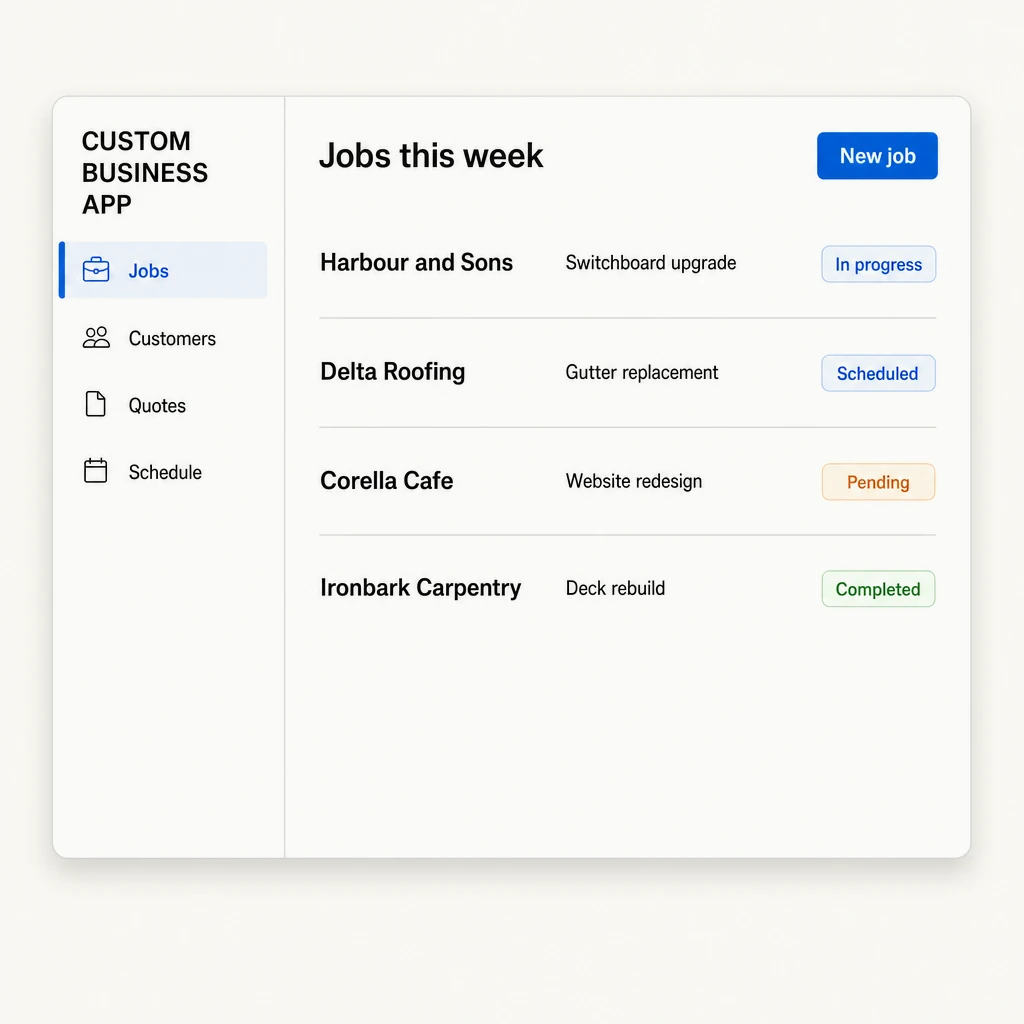
Your job app already knows when a quote was sent and when a job was marked finished. What it does not do is chase the customer on your behalf, which is why that still lands on you at nine at night.
Each one of those takes a couple of minutes to do by hand. Across a full week they are the reason the paperwork happens after dinner. The audit maps them in whatever you already run and puts a number beside each one before anything gets built.
It will not quote a job, it will not price anything, and it will not promise a customer a time you have not agreed. Anything a customer would hold you to stops and waits for you.
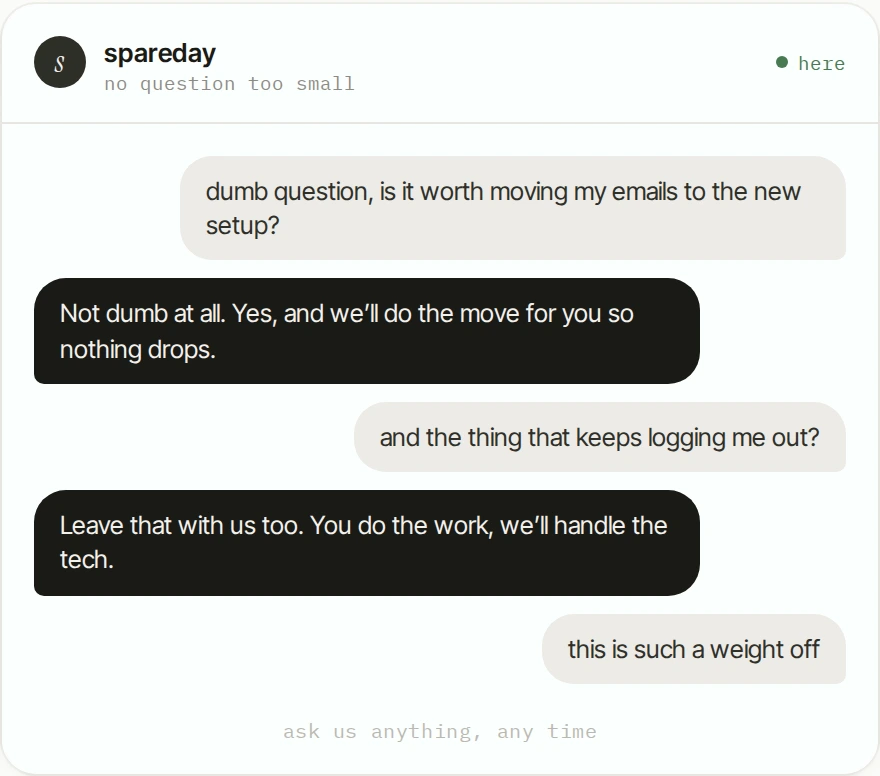
The versions of this that go wrong all do the same thing: they answer confidently with something that is not true. A price it guessed, a day you are not free, a job you do not do. That is why the wording is approved before anything sends.
Where the job is genuinely repeatable and written down, it runs. Where it is not, it stops and waits, and everything it sent can be read afterwards.
The jobs that only happen when somebody remembers go on a list, and the one costing you money comes off it first. The wording gets written before anything is built, and it runs watched before it runs alone.
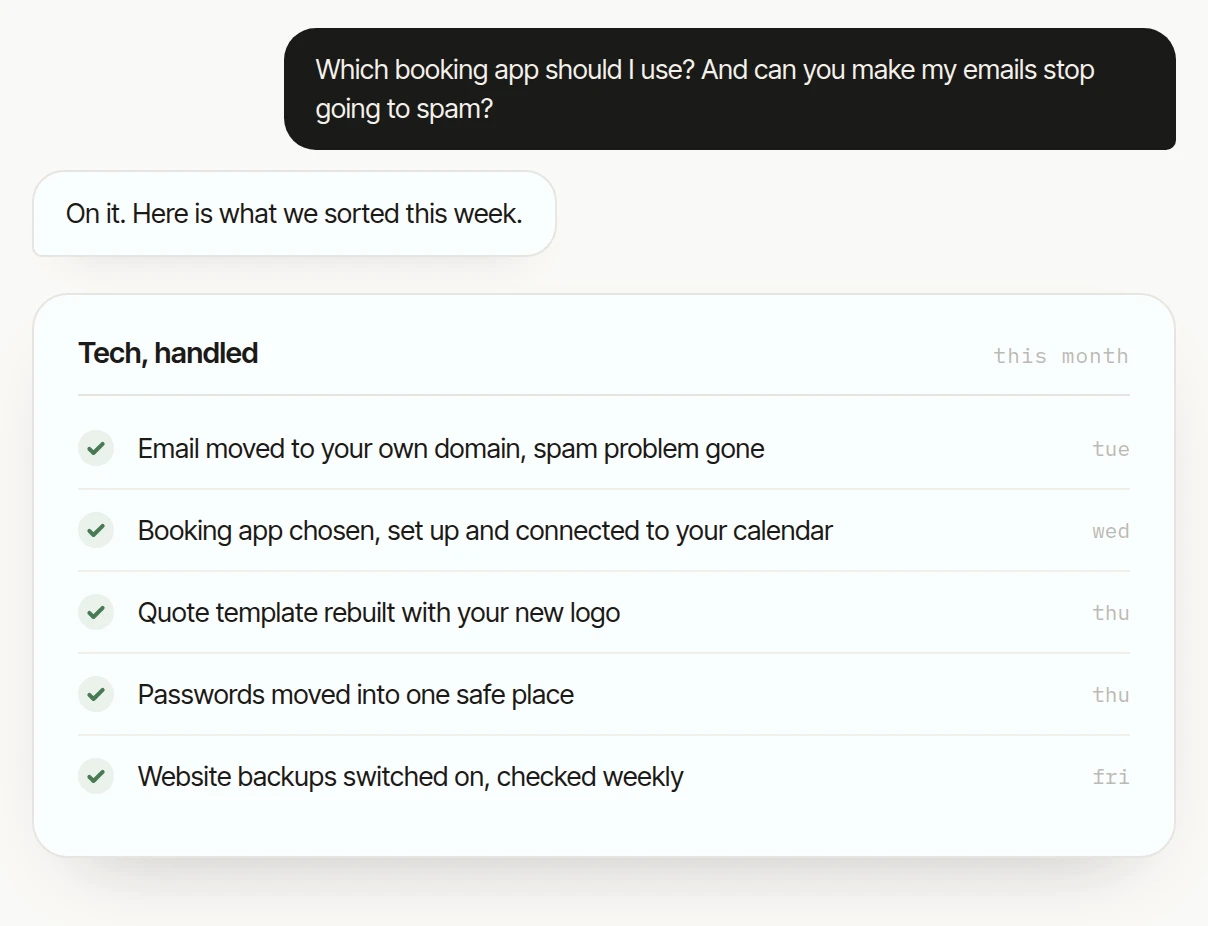
The first one is the quote follow up, because it is the one with money sitting on it. The next starts once that one is running.
About twenty minutes. It is usually the quote follow up, the review request, the missed call and the day-before reminder.
A rough number goes beside each. A quote follow up that wins back one job a month goes first.
The words are what the customer sees, so they are the part worth getting right. Said the way you would say it on the phone, not the way a company would write it.
For a week, with a person approving each message. That week finds the customers nobody predicted, before one of them meets it.
Most job apps can already tell another system when something happens. Nothing gets replaced and nothing gets migrated.
A job is finished when nobody is thinking about it any more. That is the signal to start the next one, rather than a date on a plan.
A single job takes about a week to build and a week to watch. The whole set takes a couple of months. The first thing you notice is that chasing quotes stops being something you do at night.
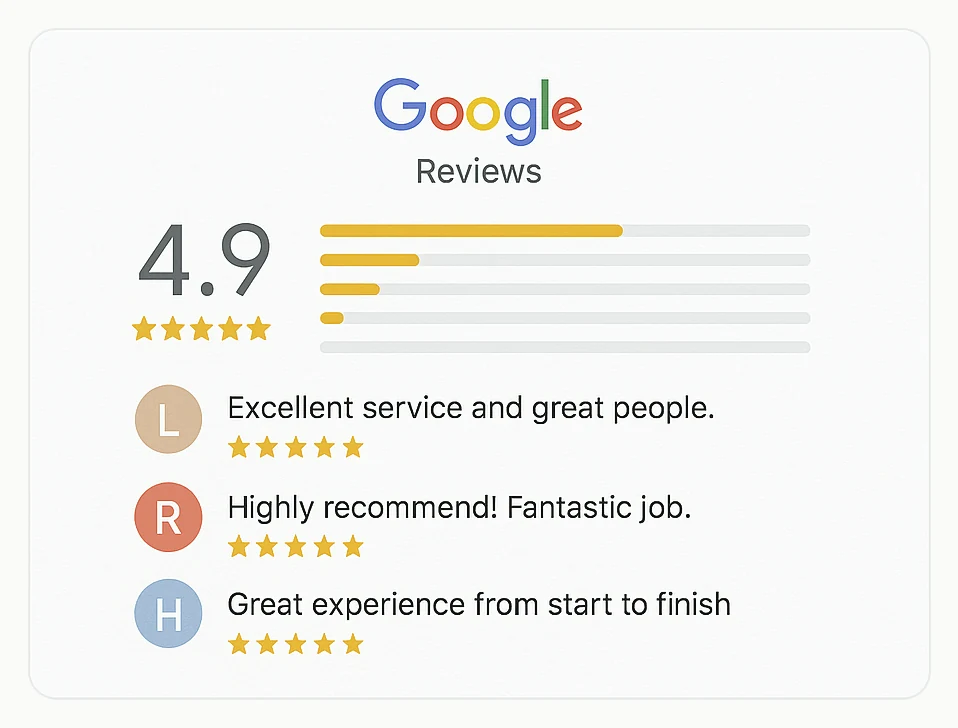
Reviews are the slow half, because they arrive at the rate you finish jobs. That is also why a business two years into it has a review count a competitor cannot catch up on quickly.
Ask whose number the messages send from, who owns the accounts, what happens when it breaks, and what you keep if you stop paying. Those four answers separate a build you own from a subscription you rent.
These are worth asking of anybody, including this one, so the answers given here sit under each question.
All of this can also be set up yourself, and plenty of trade businesses do. The six steps above are the same either way.
The quote that was sent and never answered is its own job, and quote follow up that happens on its own covers the timing and the wording.
If you do one thing after reading this, go back through the quotes you sent last month and count how many you never followed up. That number is what a first call would ask for. Ask for the free report and it comes back with it.
Related reading from us: AI for small business and AI for ecommerce.
The quote that needs chasing, the missed call that needs a text back, the review nobody asks for, and the reminder that stops a no-show.
No. The setting up is not your job. What you do is approve the wording, because the messages go out in your business's name.
They go out in your words, because you write and approve them first. Anything a customer would notice as automatic is worth rewording before it sends.
Most job apps can already tell another system when a quote goes out or a job is finished, so it connects to what you run rather than replacing it.
No. It never gives a price and it never promises a time you have not agreed. It takes the details and hands them to you.
At the rate you finish jobs. The setting up takes an afternoon and the count builds from there.
Yes. It runs on your accounts, in your name, and it keeps running if the arrangement ends. Keeping it working as the software changes is a monthly choice.
One monthly fee covering everything, month to month, with no lock-in contract. What it comes to depends on the business, so the number gets given on the call.