
For Australian dental practices
The moment that produces them, and the routine that keeps them coming.
A report on your own practice, showing where you sit against the other dentists nearby on review count, rating and recency.
 By Reece Rainer
spareday, Newcastle NSW
Last updated
13 September 2026
Read time
4 minutes
By Reece Rainer
spareday, Newcastle NSW
Last updated
13 September 2026
Read time
4 minutes
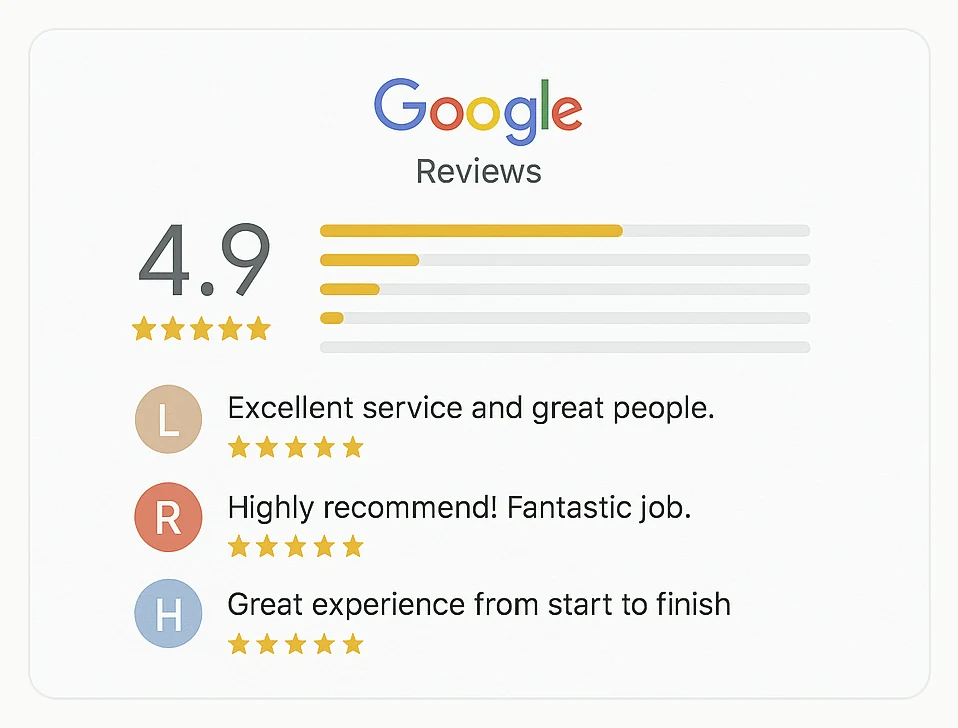
He was able to take our rough ideas, from concept through to reality. The site has provided an influx of new members, helping to keep our club viable.
A passion-driven, good-hearted and reliable service provider with the competency of a genius when it comes to software engineering, AI technology and marketing.
He created a stunning website for us that captures and nurtures leads with an automated email marketing system, which has filled a huge gap in the business and saved a lot of time (and money!).
A dental practice has more chances to ask for a review than almost any other business, and asks less often than almost any other business.
The reasons are specific to dentistry rather than to marketing, and once they are named the fix is straightforward.
Because the person best placed to ask is holding instruments, and the person at the desk is taking payment. The moment of goodwill and the moment of contact are handled by two different people.
In most service businesses one person does the work and takes the money, so the ask happens naturally at the end. A practice splits that, and the request falls into the gap between the chair and the front desk.
There is also a discomfort that is real rather than imagined. Asking somebody to review an experience they may have been dreading feels different from asking about a haircut, and clinicians tend to avoid it for that reason alone.
At the end of a course of treatment rather than after a single appointment, and while the patient is still in the practice rather than after they have left.
A patient who has just finished implants, orthodontics or a long restoration is at the high point of their relationship with the practice. A patient who has had a check-up has no particular feeling about it either way.
That timing is also what produces the reviews worth having. A review that describes finishing a real course of treatment does far more work than one that says the staff were lovely, because it names the treatment somebody else is searching for.
The clinician names it once, in their own words, at the end of treatment. The front desk sends the link the same day. Neither works nearly as well alone.
What makes it awkward is asking cold at the desk, from somebody the patient has not been dealing with, about an experience they have already mentally finished. What makes it natural is the person who did the work mentioning it while they are still talking about the work.
The wording does not need to be clever. Naming the treatment is the only part that matters, because it produces a review that names the treatment, and that is the review that helps somebody else find the practice.
Make it one person's job with a weekly number attached, and reply to every review that arrives. Practices that do this pass practices that do it in bursts within a few months.
The reason a routine beats a campaign is that Google is reading a pattern over time. Twenty reviews in a fortnight reads as a campaign, which it is, whereas one or two a week reads as an ordinary busy practice, which is what you want it to conclude.
Replying matters more than most practices expect and costs nothing. Google counts whether a business replies, and a patient reading later sees a practice that pays attention.
Negative reviews are worth replying to calmly and once. The reply is written for everyone who reads it afterwards, not for the person who left it, and a measured response usually does more good than the review did harm.
The practice with the most recent reviews usually wins the search, not the one with the most. That is a habit rather than a budget, which makes it the cheapest advantage available.
Related reading from us: Google reviews for physios, what actually works at a counter, Google Reviews For Lawyers, Google reviews for mortgage brokers and read for the people, not the equipment.
Fewer than most expect, and more recent than most have. Being level with the practices above you, with fresher reviews, does more than a large old total.
Yes. What is not allowed is offering anything in return, or choosing to ask only the patients you think will be positive.
Reply once, calmly, in public, without discussing anything clinical. The reply is for everyone reading it later.
Yes. Google counts how many there are, how recent they are, and whether the practice replies, and recency carries more weight than practices expect.