
For cafes letting other people write the listing
What works at a counter, and what will get them taken down.
A report on your cafe, showing where you sit against the others in walking distance on rating, count and recency.
 By Reece Rainer
spareday, Newcastle NSW
Last updated
13 September 2026
Read time
4 minutes
By Reece Rainer
spareday, Newcastle NSW
Last updated
13 September 2026
Read time
4 minutes
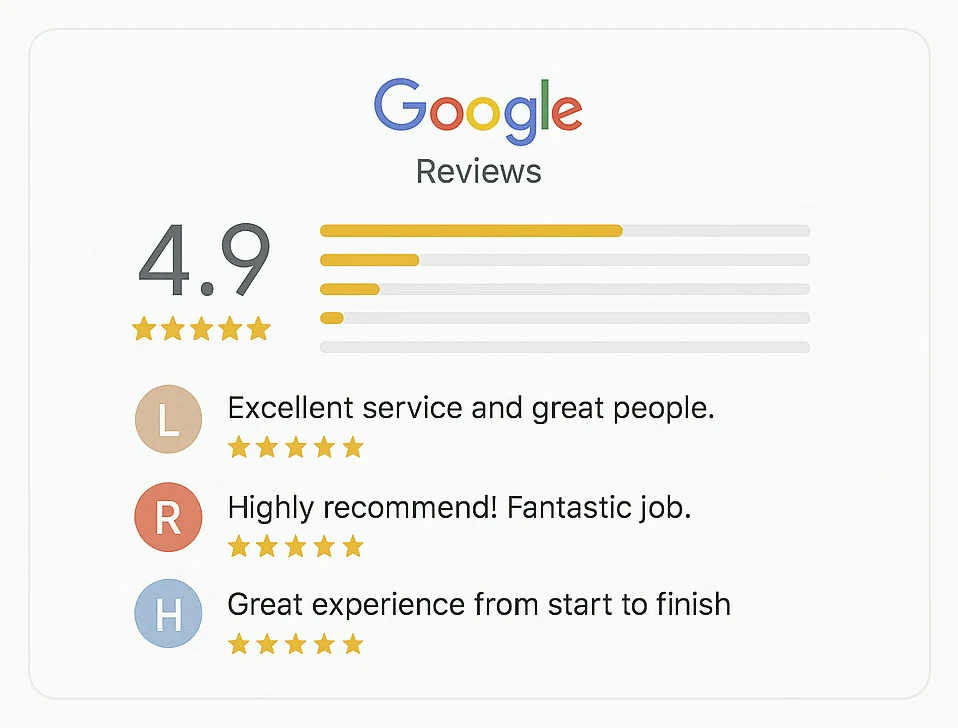
He was able to take our rough ideas, from concept through to reality. The site has provided an influx of new members, helping to keep our club viable.
A passion-driven, good-hearted and reliable service provider with the competency of a genius when it comes to software engineering, AI technology and marketing.
He created a stunning website for us that captures and nurtures leads with an automated email marketing system, which has filled a huge gap in the business and saved a lot of time (and money!).
A cafe serves more people in a week than most businesses see in a year, and almost none of them are ever asked to leave a review.
This is why a cafe's rating matters more than its review count, what actually works at a counter, and what will get reviews taken down.
Cafe decisions are made in the moment, in the street, on a map, by somebody who is already hungry. They open the map, look at a rating and a photo, and walk into whichever one clears the bar.
That makes the rating do almost all of the work. Nobody reads twenty reviews of a cafe. They glance at the number, glance at whether it is recent, look at a photo of the food, and decide inside about ten seconds.
The threshold is unforgiving too. In a street with several options, the difference between a 4.3 and a 4.6 is the difference between being considered and being skipped, and neither number tells you anything real about the coffee.
Volume matters differently here than in a trade. A cafe with 600 reviews and a cafe with 90 both look established. What separates them is the rating and whether the last few are from this month.
The moment a customer is happiest is the moment they are leaving with a coffee in their hand, and there is a queue behind them. There is no counter conversation available and no follow-up email, because a cafe does not have anybody's email.
Every other local business has a record of the customer. A physio has a file, a plumber has an invoice, a real estate agent has a CRM. A cafe has a card payment and nothing else.
So the standard playbook does not apply. There is no message to send later, which means the ask has to happen physically, in the shop, without slowing the queue down.
You can ask, you can put a sign up, and you can make it easy. You cannot give anybody a free coffee for it, you cannot ask only the customers who look pleased, and you cannot write them yourself.
The free coffee is the one every cafe reaches for and it is squarely against Google's policy. It also poisons the page: a run of reviews that all arrived in the same fortnight after a promotion is visible to anybody looking.
Staff writing them is the other common shortcut, usually with good intentions and usually from the same wifi. It is detectable, it gets the reviews removed, and it can take the profile with it.
The honest version is duller and works better. Ask everyone, make it take one tap, and accept that a small percentage will do it. A small percentage of a cafe's foot traffic is still a lot of reviews.
A card or a sticker at the point of payment with a code that opens the review box directly, and staff who mention it once while handing the coffee over. That is the entire mechanism, and the staff half is what makes it work.
The code on its own does very little. People do not scan things unprompted. The same card with one sentence from whoever is on the machine converts many times better, because the ask is human and the mechanism is instant.
What the sentence says matters less than that it is said at all, and that it is said to everybody rather than to the customers who smiled. Consistency is doing more work here than wording.
If you do one thing after reading this, look at the dates on your last five Google reviews. If they are spread across a year, nobody is asking, and a cafe's foot traffic means that is a large amount of free evidence going unused.
Related reading from us: Google Reviews For Dentists, what a client can actually judge you on and Local SEO For Cafes.
No. It is against Google's policy, it puts your existing reviews at risk, and a cluster of reviews arriving after a promotion is obvious to anybody reading.
No. They are detectable, they get removed, and they can take the profile down with them.
Reply once, briefly and politely, and move on. The reply is for the next person reading, not for the reviewer.
One sentence while handing the coffee over, and a code on the counter that opens the review box. It adds about two seconds.