
For gyms whose one star reviews are all about cancelling
Read for the people, not the equipment, and the one star that is always billing.
A report on your gym, showing where you sit against the others nearby on rating, count and recency.
 By Reece Rainer
spareday, Newcastle NSW
Last updated
13 September 2026
Read time
5 minutes
By Reece Rainer
spareday, Newcastle NSW
Last updated
13 September 2026
Read time
5 minutes
He was able to take our rough ideas, from concept through to reality. The site has provided an influx of new members, helping to keep our club viable.
A passion-driven, good-hearted and reliable service provider with the competency of a genius when it comes to software engineering, AI technology and marketing.
He created a stunning website for us that captures and nurtures leads with an automated email marketing system, which has filled a huge gap in the business and saved a lot of time (and money!).
Nobody reads a gym's reviews to find out about the equipment. They read them to work out whether they would feel stupid walking in.
This is what gym reviews are actually being read for, why the angry ones are almost always about billing, and how a gym asks without it feeling like a sales push.
Somebody deciding to join is asking whether they will be out of place. They are picturing a room full of people who know what they are doing, and they are reading reviews for evidence about the people, not the facilities.
This is why equipment lists convert so poorly and why reviews mentioning other members convert so well. A review saying nobody looked at me twice and somebody showed me how the machine worked is answering the actual question.
It also explains the pattern in every gym's reviews. The five stars are about a coach, a class, or a person on the desk. Almost none of them are about a squat rack, even in gyms whose entire marketing is about squat racks.
The consequence is that a gym's reviews are a description of its culture, written by its members, in public. That is either a large asset or a real problem, and the gym does not get to choose which.
Read any gym's one-star reviews and they are about billing. A cancellation that took three visits, a direct debit that kept going, a minimum term nobody remembered agreeing to. Almost none of them are about the training.
This matters because those reviews are unusually damaging. A prospective member reading them does not learn that the gym is bad, they learn that leaving is hard, and that turns a low-commitment decision into a high-commitment one.
It is also the most fixable review problem in any industry, because it is a process rather than an opinion. A gym that makes cancelling easy and says so stops generating that review entirely.
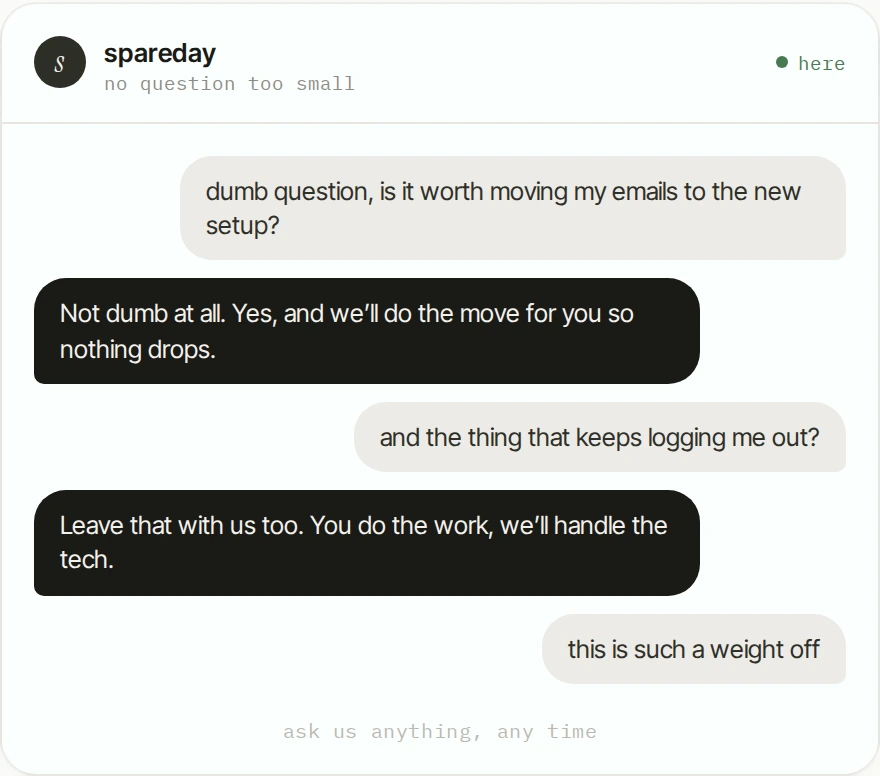
The reply matters as much as the fix. A reply that argues the contract confirms exactly what the reader was afraid of. A reply that says it should not have taken three visits and here is what changed does the opposite.
Not at sign-up, when they have committed to something and are slightly anxious about it. The moment is a few weeks in, when somebody has been consistently turning up and is quietly pleased with themselves.
That is when the gym has actually delivered. At six weeks a member has evidence, has usually made a friend, and can write something specific, which is the kind of review a nervous reader believes.
Asking at sign-up produces a review about the sales process from somebody who has not trained yet. It is honest, it is generic, and it does nothing for the next reader.
There is a second moment worth using and almost nobody does: the end of a challenge, a program block or a first competition. Something finished, and the member is proud of it.
A short message at a milestone, in the gym's own voice, with a link that opens the review box directly. Sent to every member at the same point rather than chosen by whoever is on the desk.
The voice is doing more work here than in any other industry in this set. A gym is chosen partly on how it talks, and a generic review request undoes the thing the gym has spent years building.
Automating it is what makes it fair. When the desk chooses, the ask goes to the confident members who are easy to talk to, and the review page ends up describing a gym for confident people, which is a marketing problem.
The last part is the reply. Gyms reply to reviews far less than restaurants and cafes do, and a profile where the owner responds to every review, including the difficult ones, reads as a place run by somebody who is paying attention.
If you do one thing after reading this, read your last five one-star reviews and count how many are about billing. If it is most of them, the fix is not a review campaign, it is your cancellation process, and it is worth more.
Related reading from us: Google Reviews For Dentists, the appointment that produces them, Local SEO For Gyms and missed call text back for gyms.
No. Any incentive breaches Google's policy and puts the reviews you have at risk.
Fix the process, then reply saying what changed. A reply that argues the contract confirms exactly what the next reader was worried about.
Around six weeks in, when they have a habit and can say something specific, or at the end of a challenge or program block.
No, that is gating and it breaches the policy. It also produces a page that reads as curated, which is the opposite of what a nervous reader is looking for.