
For Newcastle businesses
Facebook and Instagram ads
in Newcastle.
Put a clear offer in front of people and give them a useful next step.
Tell us about your business and what you need.

Facebook and Instagram ads at spareday
Start with an offer people can understand.
Facebook and Instagram advertising introduces your business while people browse. The picture, words and enquiry destination need to explain why the offer is relevant.
spareday manages Facebook and Instagram ads in Newcastle as part of the wider marketing work. We develop the offer and creative, prepare the page or form receiving enquiries and review campaign performance with you. Advertising spend is separate from the service fees.
What’s included
The ad, the destination and what happens next.
- A clear campaign offer
- The service being advertised, who it is for and what someone is being asked to do, agreed before creative work begins.
- Pictures, video and copy
- Advertisements developed from appropriate business material, with distinct ideas to assess. You confirm the facts and supply photographs or footage of the real work.
- A relevant enquiry destination
- A page or form matching the offer, with practical questions and a clear next step. We check where an enquiry arrives and who will respond.
- Campaign setup and management
- Audience, location, budget and campaign settings chosen for the agreed offer, with performance reviewed as useful information becomes available.
- Reporting and creative updates
- Enquiries and their quality reviewed alongside spend, with new material and changes based on what the campaign is showing.
A campaign needs more than a picture and a daily budget. The business also needs a clear service, suitable material and someone ready to follow up. Those details shape both the scope and the preparation.
How it works
Prepare the whole enquiry journey.
We start with the work you want to advertise and the people it suits. If you have run campaigns before, we review what you learned from the enquiries as well as the platform figures.
- Agree the offer and budget
- We establish the service, audience, location and next step. The management work and advertising spend are explained separately.
- Prepare the creative
- We write the advertisements and choose or prepare the pictures and video. Real business material helps show what the customer is actually considering.
- Check the destination and measurement
- The page or form should match the ad and send enquiries to the right place. We check the available tracking before the campaign runs.
- Review what the enquiries become
- We look at spend and response, then use your feedback about suitability and booked work to guide changes to the offer, creative or follow-up.
The pictures and words
Show the service behind the offer.
Useful material may include completed work, the people delivering it or a clear demonstration of the service. The best choice depends on what someone needs to understand before enquiring. A photograph that explains the work has a job beyond attracting attention.
We can test different ways to present an offer, such as a finished project, a common customer question or an explanation of the service. The claims still need to be true and supported by the business.
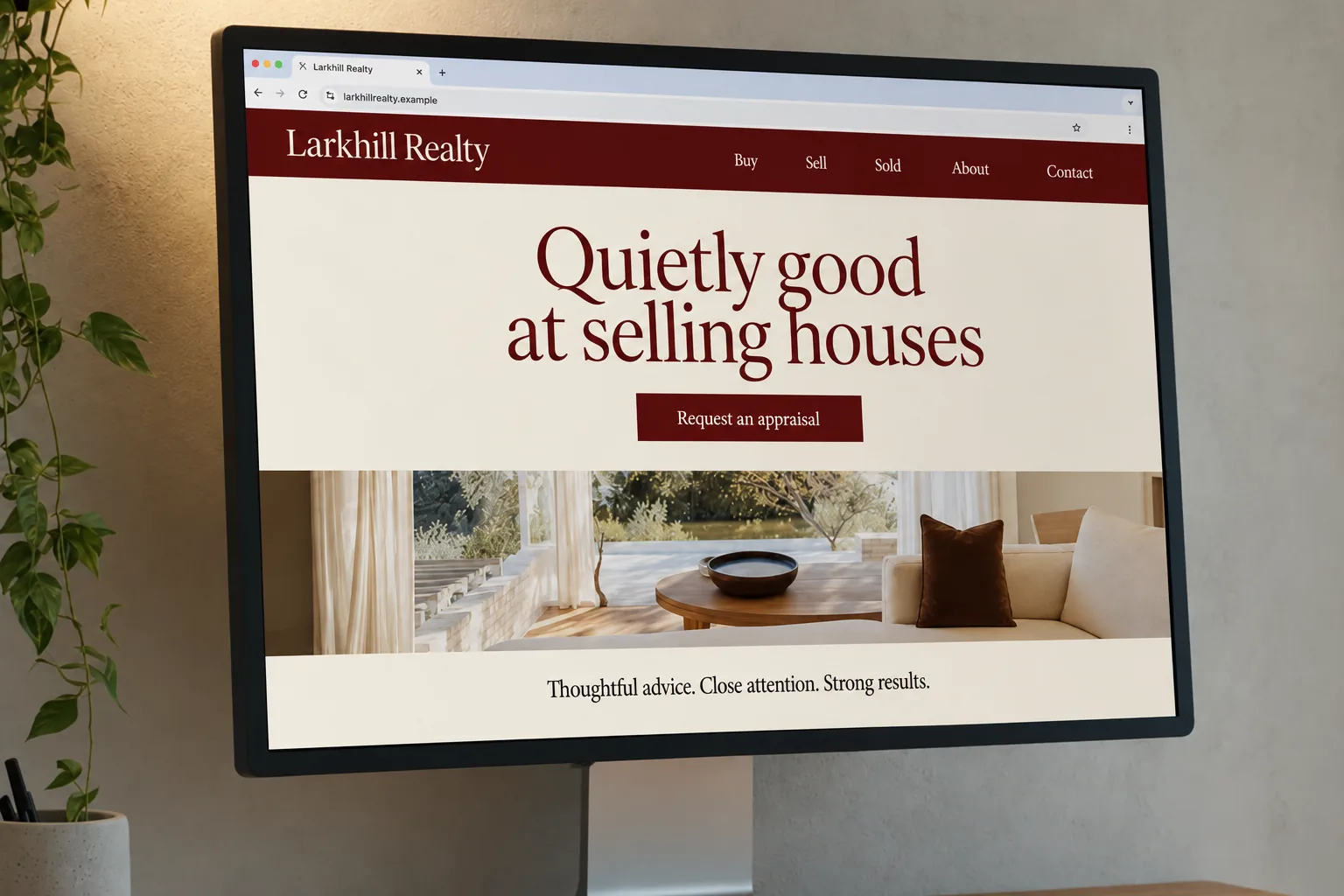
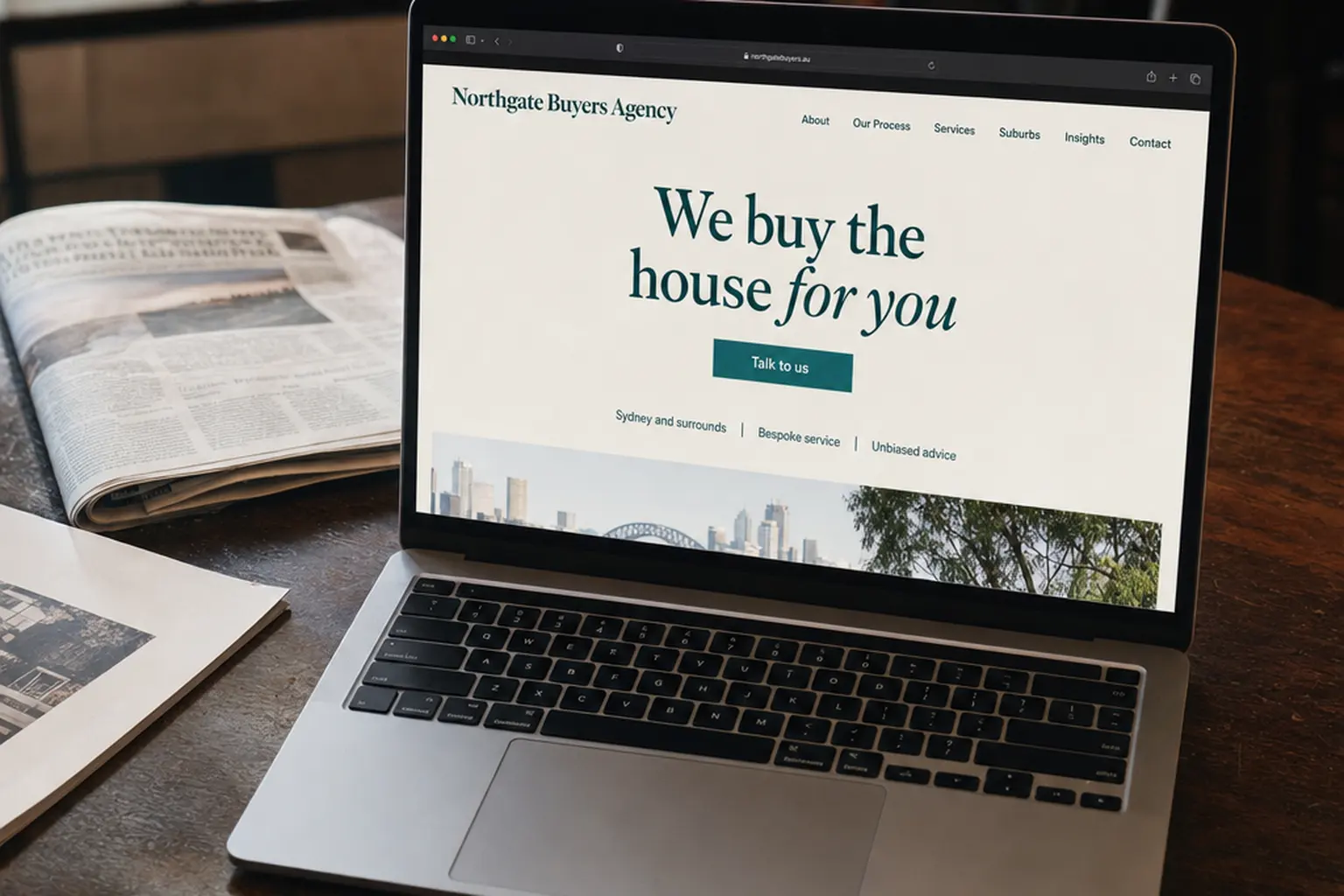
The destination should continue that explanation. A property service ad, for example, needs a page that makes the actual service and enquiry step clear. The website concepts shown here illustrate presentation; they are invented businesses, not campaign results.
Creative is ongoing work. Performance and customer feedback help decide when another idea is worth testing. Our guide to Facebook ads management costs explains why the creative and campaign scope matter to a quote.
Choosing the channel
Compare the campaign with the way customers buy.
A person seeing an ad in a feed may be discovering the service for the first time. Someone using Google search advertising has already typed a search. Both can be useful, but the message and the way you assess the response need to reflect that difference.
Location also needs care. We agree where the business wants enquiries from and check the controls available for the campaign. The separate guide to Google Ads for one location covers the search-advertising side of that decision.
A reported enquiry is not automatically a booked customer. We look at the source, whether the person is suitable and what happened after contact. Our Google Ads conversion-tracking guide explains measurement for search campaigns; Facebook and Instagram need their own appropriate setup.
Preparation, platform review and the amount of useful response all affect how soon a campaign can be assessed. We do not promise a fixed enquiry cost or a result by a particular day. The lead generation service covers the wider enquiry process, and our agency page explains how the work fits together.
From clients
What clients say about working with spareday
“Huge shoutout to Reece for building my website for Hughesys Painting Services. Since it went live my phone hasn’t stopped ringing.”

“He created a stunning website for us that captures and nurtures leads with an automated email marketing system, which has filled a huge gap in the business and saved a lot of time (and money!).”

“He didn’t just build me a great website, he created an easy-to-manage system that allows me to make updates myself whenever I need to. He has spared me so much time doing all of this myself!”
“He was able to take our rough ideas, from concept through to reality. The site has provided an influx of new members, helping to keep our club viable.”
Official guidance
For independent background, read the official guidance on advertising your business and planning your marketing.
A few practical details
Before we get started.
Do I need photographs or video before we start?
Existing business photographs and footage are useful. We review what you have and identify what else would help explain the service. You do not need to arrive with finished advertisements.
Is advertising spend included in the service fee?
No. Advertising spend is separate from the service fees. The quote and campaign discussion set out the work and the proposed budget so you can consider both.
Where should the ad send people?
To a destination that matches the offer and makes the next step clear. That may be a relevant website page or a form, depending on the campaign and the information needed.
How will I know whether the enquiries are useful?
We review campaign reporting alongside your feedback about suitability, bookings and customers. Low-cost form submissions alone do not establish that the advertising is worthwhile.
What do you need for a quote?
Your website, the service you want to advertise, areas you cover, available photographs or footage and any existing campaign reports. Tell us how enquiries are handled now and what you want to improve.

Who you’ll work with
Hi, I’m Reece.
I’m Reece, the person behind spareday in Newcastle. I’ll help connect the advertising with the website and follow-up, so you can discuss the whole enquiry process with one person.



Find us
spareday in Newcastle.
12 Grey Street, Wickham, Newcastle NSW 2293.
Your next step
Tell us what you want to advertise.
Share the service, your website and the material you already have. We’ll discuss the campaign and send a free growth plan, price included.
Or call 0485 017 387.