
For providers whose admin grew with the participants
The coordination that scales with participants, and what must never run alone.
A report on your own organisation, putting a number against each recurring coordination job in a full month.
 By Reece Rainer
spareday, Newcastle NSW
Last updated
13 September 2026
Read time
4 minutes
By Reece Rainer
spareday, Newcastle NSW
Last updated
13 September 2026
Read time
4 minutes
He was able to take our rough ideas, from concept through to reality. The site has provided an influx of new members, helping to keep our club viable.
A passion-driven, good-hearted and reliable service provider with the competency of a genius when it comes to software engineering, AI technology and marketing.
He created a stunning website for us that captures and nurtures leads with an automated email marketing system, which has filled a huge gap in the business and saved a lot of time (and money!).
An NDIS provider spends a large share of its week on paperwork that exists because the scheme requires it, not because it helps anybody.
This is which parts of that can run without a person, what must never be automated in disability services, and where to start.
Service agreements, rosters, progress notes, incident reporting, plan expiry tracking and claiming all sit on top of the actual support work. They are obligations rather than services, and they scale with participant numbers.
This is what makes providers different from most small businesses. The admin is not overhead that could be trimmed, it is a compliance requirement, and it grows in exact proportion to how many people you support.
The result is a familiar shape. A provider that grows from twenty participants to forty finds the coordination has more than doubled, because the scheduling and the follow-up interact with each other.
Almost none of that growth is billable. The support hours are billable, the chasing of a signature on a service agreement is not, and the second one grows just as fast.
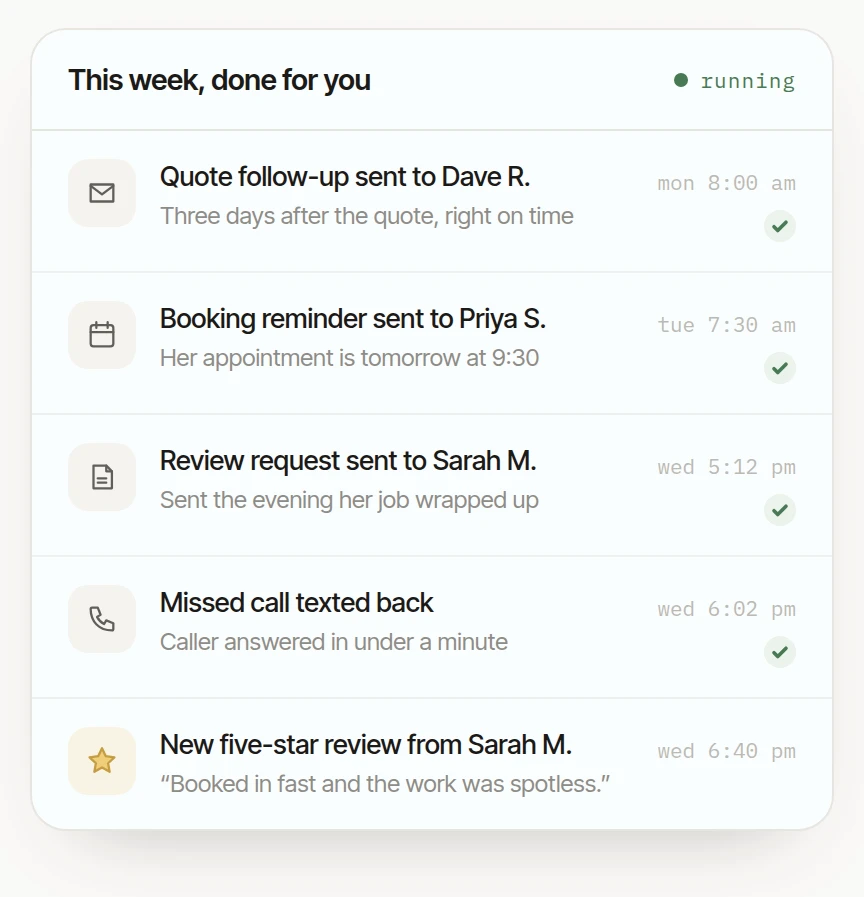
The scheduling reminders, the document chasing, the plan expiry warnings, the roster confirmations and the routine participant and family updates. All of them are date-driven and rule-based, and none of them touch support decisions.
The plan expiry work is the clearest case. A plan has an end date, a review has to be organised before it, and missing that has real consequences for a participant. It is a calendar problem being managed by memory.
Roster confirmation is the other big one. Confirming with support workers and with participants that a shift is happening, and knowing early when it is not, is a large volume of small messages that never needed a coordinator.
Anything clinical, anything about a participant's plan or funding, incident handling, and any communication where somebody may be at risk. Every one of those needs a person, immediately, and no exception is worth the efficiency.
The risk here is different in kind from other industries. A wrong automated message to a business owner is embarrassing. A wrong automated message to a participant or a family in a difficult moment causes harm, and it should be treated as that rather than as a service failure.
So the rule is that anything unusual stops and escalates rather than attempting an answer. Not a best guess, not a holding reply that sounds like an answer. It stops, and a person is told.
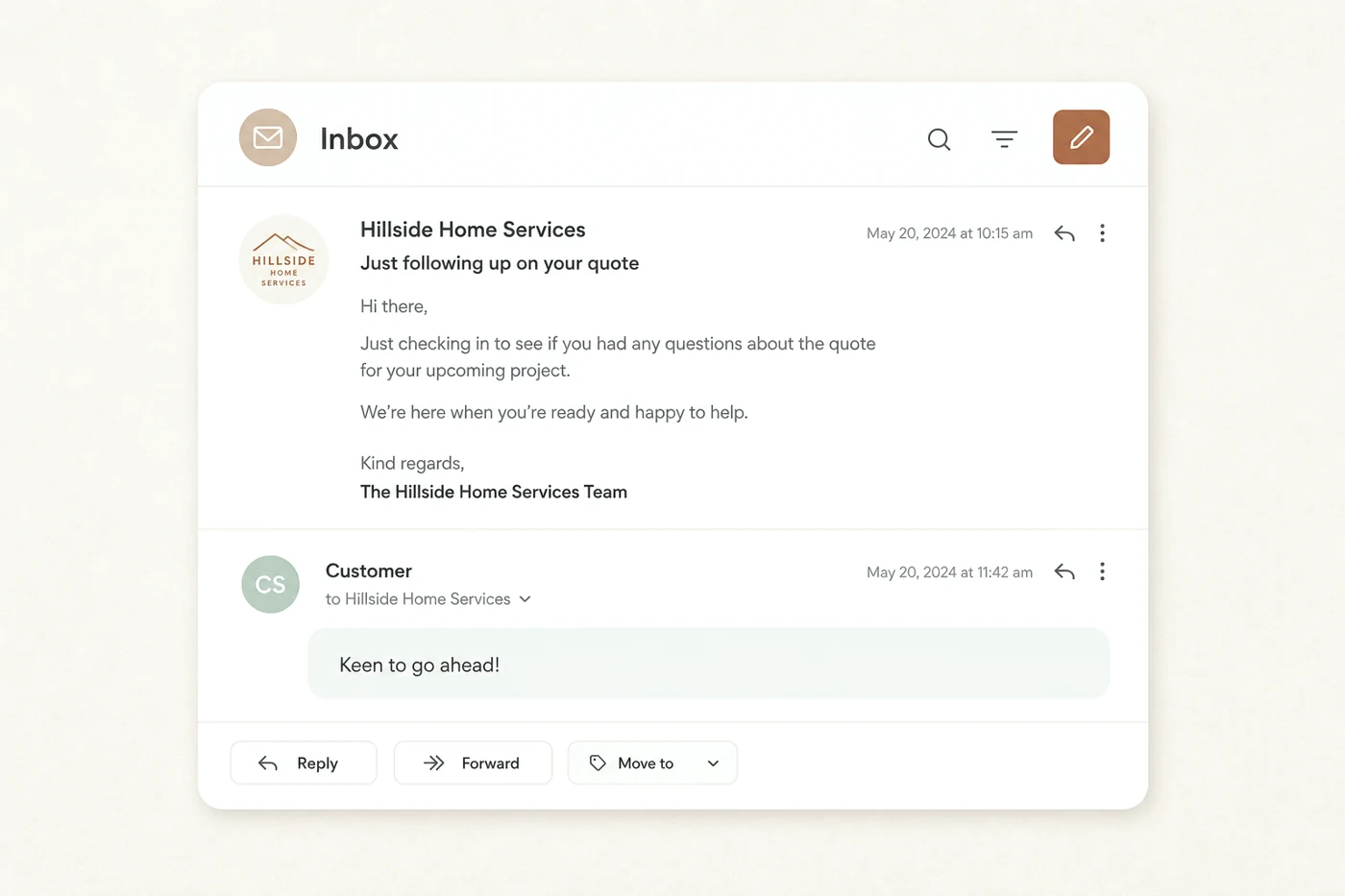
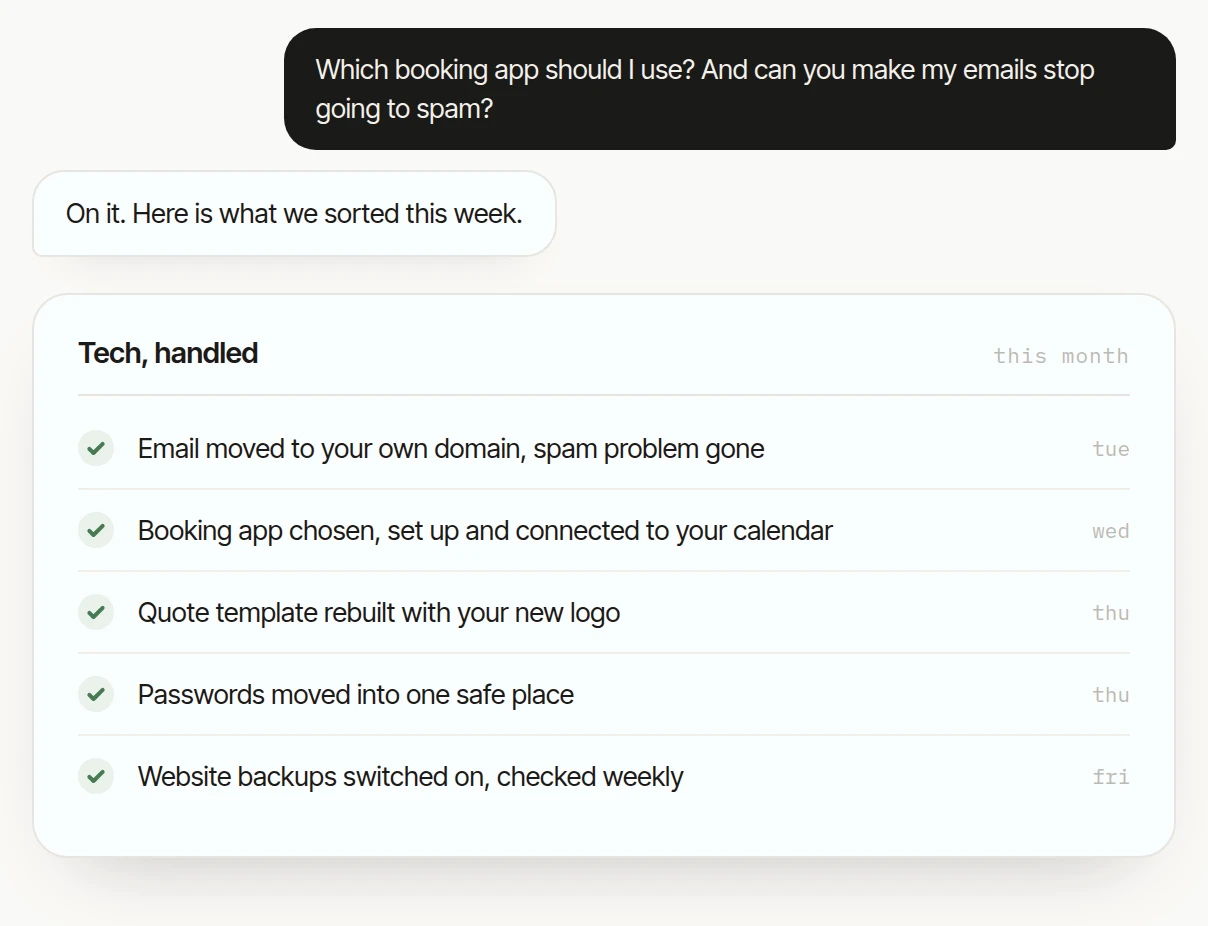
The coordination gets written down, the job consuming the most time goes first, the wording gets approved, it connects to the systems already in use, and it runs watched before it runs alone.
The writing down matters more here than in most sectors, because a lot of provider coordination is genuinely undocumented. It lives with whoever has been there longest, which is also a risk to the organisation independent of any of this.
The connecting works with what providers already run. The rostering and client management systems used in the sector can generally tell another system when something has happened, so nothing is replaced and no participant data moves anywhere new.
The watched period should be longer than in other industries. A fortnight is the minimum, and with participant-facing messages a slower start is the right call rather than a cautious one.
If you do one thing after reading this, check how many participant plans expire in the next ninety days and whether a review is organised for each one. That list is usually the fastest thing to fix and the one with the most at stake.
Related reading from us: jobs that run without you, AI Consulting Services Australia, Local SEO For NDIS Providers and missed call text back for NDIS providers.
No. Nothing clinical, nothing behavioural and nothing about a participant's plan or funding. All of it goes to a person.
It escalates to a person immediately and sends no automated reply. That is an absolute rule rather than a setting.
It stays inside systems you control. It is never handed to a public AI tool, and the handling is agreed in writing before anything is built.
Plan expiry tracking, because it is purely date-driven and the consequence of missing one falls on a participant.