
For providers ranking only where their office is
Two people searching in different words, and an office nobody visits.
A report on your service, showing where you appear across the areas you cover and which suburbs never see you.
 By Reece Rainer
spareday, Newcastle NSW
Last updated
13 September 2026
Read time
6 minutes
By Reece Rainer
spareday, Newcastle NSW
Last updated
13 September 2026
Read time
6 minutes
He was able to take our rough ideas, from concept through to reality. The site has provided an influx of new members, helping to keep our club viable.
A passion-driven, good-hearted and reliable service provider with the competency of a genius when it comes to software engineering, AI technology and marketing.
He created a stunning website for us that captures and nurtures leads with an automated email marketing system, which has filled a huge gap in the business and saved a lot of time (and money!).
A provider is found by two very different people: a participant or family searching for themselves, and a support coordinator with a shortlist to fill.
This is how each of them actually finds a provider, why a service that visits people needs a different listing to a shopfront, and what is worth doing about it.
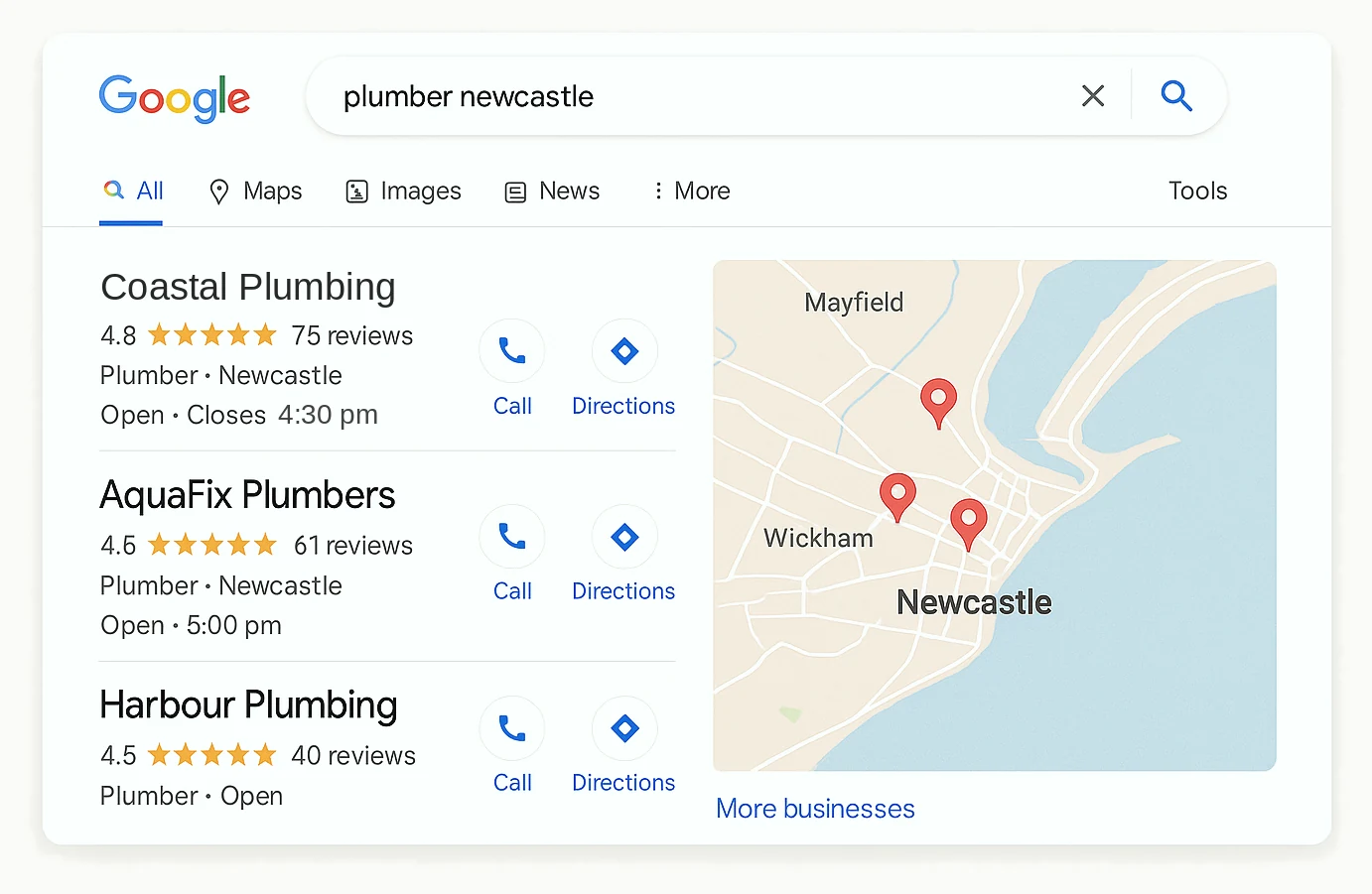
Coordinators search by service type and capacity, often at speed, and they will use Google as readily as the provider finder. Participants and families search in plain words for what they need help with, usually with a suburb attached.
The coordinator search is the higher value one and the one providers ignore. A coordinator placing four participants this month is doing a version of procurement, and the provider that is easy to find, obviously reachable and clearly says what it does is the one that gets rung.
The family search looks nothing like it. It is phrased as a problem rather than a category, and it is often made by somebody who has just been given a plan and does not yet know the vocabulary.
A listing has to work for both, which sounds harder than it is. Plain language serves the family and does not hurt the coordinator, while precise service names serve the coordinator and are ignored by the family.
Most providers deliver support in participants' homes and in the community, which makes the office address close to irrelevant to a participant and actively misleading in a listing that treats it as a shopfront.
Google handles this properly if it is set up properly. A business that travels to customers can hide the address and declare the areas it serves, and doing that changes which searches it can appear for across a whole region.
Providers get this wrong constantly, and in both directions. Some publish an office nobody visits and end up ranking only in that one suburb. Others declare a service area covering half the state, which dilutes everything and helps nowhere.
The honest version works best: the areas you genuinely have workers in, and no more. A listing claiming an area you cannot staff produces enquiries you have to turn down, which costs a coordinator relationship.
A description written in sector language is unreadable to a family in their first month. A description written entirely in plain words does not tell a coordinator whether you can take a complex participant. It has to do both, in that order.
The order matters because of who is more likely to give up. A coordinator will work out what you do from a poorly written listing because it is their job. A family will not, and they are the ones who leave.
Accessibility is part of this and it is not decoration. Plain sentences, no acronyms in the first line, and a phone number that is easy to find serve people who find phone calls or dense text difficult, which is a meaningful share of the audience.
What genuinely helps both audiences is being specific about who you support rather than about what you are called. Age groups, types of support, whether you take complex needs, and whether you have capacity right now.
Nothing about a participant, their supports or their circumstances goes on a website or a listing, including in reviews and replies. That constrains what can be published and it changes how a provider builds credibility online.
The obvious consequence is that the case study, which is the standard credibility device for every other service business, is largely unavailable. A story about a participant is information about a person's disability and their private life.
What replaces it is being unusually clear about process. How intake works, how long it takes, what happens if a worker cannot make a shift, how complaints are handled. Coordinators are reading for exactly that and almost nobody publishes it.
Reviews carry the same constraint. A provider cannot solicit reviews that describe a participant's supports, and a reply must never confirm that a reviewer is a participant.
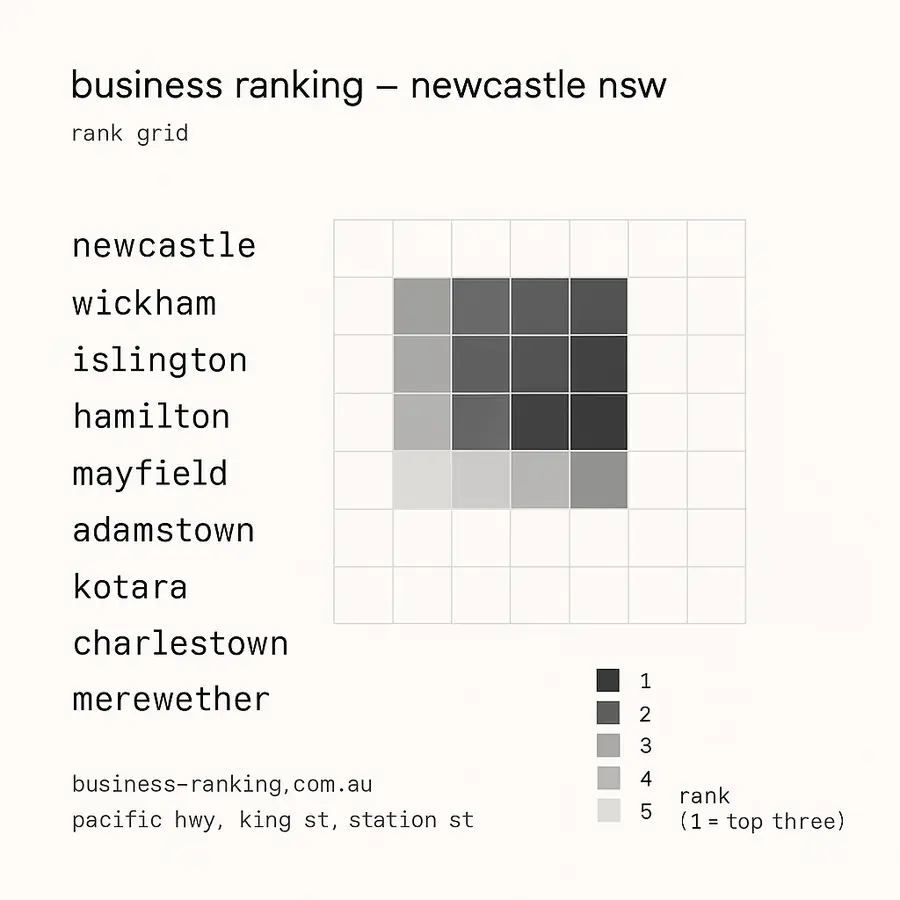
The listing is rebuilt as a service area business with real coverage and readable words, pages get written for the supports you actually deliver and the areas you actually staff, and it gets measured from a grid across the region rather than from your office.
The measuring point matters here more than in most industries, because a provider's office is often nowhere near where its participants live. Ranking well in the suburb your office sits in is close to worthless if your workers are all forty minutes north.
The pages come after the listing because they take longer to earn anything, and because a provider that has not yet written down what it does clearly has no material to build them from.
Then it runs slowly and gets re-measured. Local results move over months, and the useful measure is how much of your actual service area can see you, not whether you appear when you search from the office.
If you do one thing after reading this, check whether your listing shows an office address. If participants never come to it, that single setting is quietly limiting you to one suburb.
Related reading from us: local SEO for dentists, four clinics that look identical, AI Automation For NDIS Providers and missed call text back for NDIS providers.
If participants and families do not visit you, yes. A service area business ranks across the areas it serves rather than around a building nobody comes to.
Only the ones you can genuinely staff. Over-claiming produces enquiries you have to decline, which damages the coordinator relationships you most want.
No. Nothing identifying a participant or describing their supports gets published. Being clear about process is what replaces it, and coordinators value it more anyway.
Listing changes can show within weeks. Coverage across a region is months, and it is measured on a grid rather than by searching from your office.