
For providers whose office is one person doing five jobs
Coordinators, families and participants, and what a reply must never be used for.
A report on your service's number, showing how many calls went unanswered last month and when they came in.
 By Reece Rainer
spareday, Newcastle NSW
Last updated
13 September 2026
Read time
5 minutes
By Reece Rainer
spareday, Newcastle NSW
Last updated
13 September 2026
Read time
5 minutes
He was able to take our rough ideas, from concept through to reality. The site has provided an influx of new members, helping to keep our club viable.
A passion-driven, good-hearted and reliable service provider with the competency of a genius when it comes to software engineering, AI technology and marketing.
He created a stunning website for us that captures and nurtures leads with an automated email marketing system, which has filled a huge gap in the business and saved a lot of time (and money!).
A call to a disability provider is rarely a casual enquiry. It is a participant, a family member or a support coordinator with something that has to be sorted this week.
This is what happens when those calls ring out, what an automated reply must never be used for, and how it is built so nobody in difficulty is left holding a text message.
A provider's phone takes calls from participants, from families, and from support coordinators placing somebody. They want different things, they have different urgency, and one of the three decides where a lot of your work comes from.
The coordinator call is the one most providers underestimate. A coordinator with a participant to place is ringing several providers in an afternoon and writing down who had capacity. Not answering is the same as saying no.
The family call is often about something that has just gone wrong. A worker did not arrive, a plan has changed, or a review is due and nobody explained it. That call is emotional before it starts.
The participant call is the one that needs the most care and gets the least. Some participants find phone calls hard, some are ringing about something private, and almost none of them will leave a voicemail.
In most providers the people who could answer are supporting participants, driving between them, or writing notes about the last shift. Admin is one person, often part-time, and often the same person doing rostering.
The morning is the worst of it. Between seven and nine everything happens at once: shift changes, a worker calling in sick, a family ringing about that, and a new enquiry arriving in the middle of it.
Rostering is what actually swallows the phone. When a shift falls through, one person spends an hour making calls, and every incoming call during that hour rings out.
Providers rarely see it as a lost-enquiry problem because the enquiries they do get feel like enough. The ones that never landed are invisible, and coordinators do not ring back to say they placed somebody else.
A text back is for enquiries. It is not a response to a person in crisis, it is not a way to handle an incident, and it must never be the only thing that happens when somebody rings distressed and nobody picks up.
So the message says, in plain words, what to do if this is urgent or if somebody is unsafe, and it names the real alternative rather than implying that a reply to the text is the way through.
The wording matters more here than anywhere else in this set. It has to be short, plain and readable by somebody who finds text hard, without being childish about it. That is a drafting job, and the provider does it, not us.
The other thing it must not do is ask a participant to explain their situation in writing. Personal and health information should not be arriving as unmonitored inbound texts, and the message is written so it never invites that.
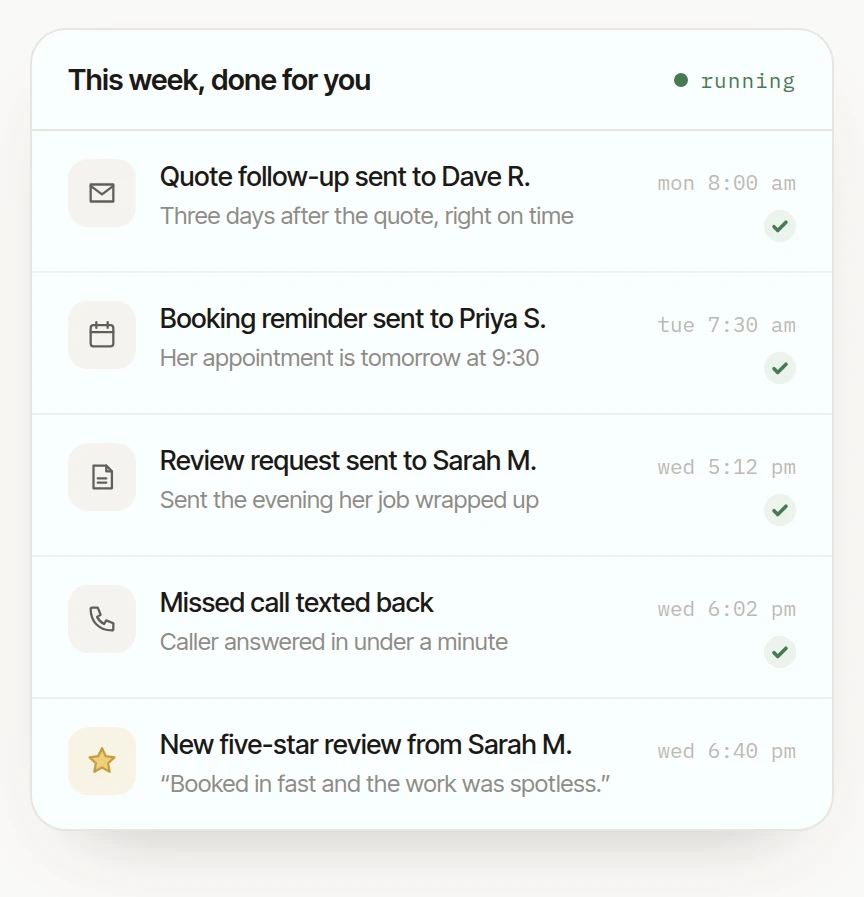
When a call to your number rings out, a short text goes back in seconds saying the call was missed, that somebody will ring back, and what to do if it cannot wait. Replies collect in one place so the callback list exists before anybody sits down.
For a coordinator ringing about capacity, that reply arriving inside a minute is often enough to keep you on the list while they finish their other calls.
For a family it does something simpler and just as valuable. It says a person exists at the other end of the number, which is not always obvious when a service is stretched.
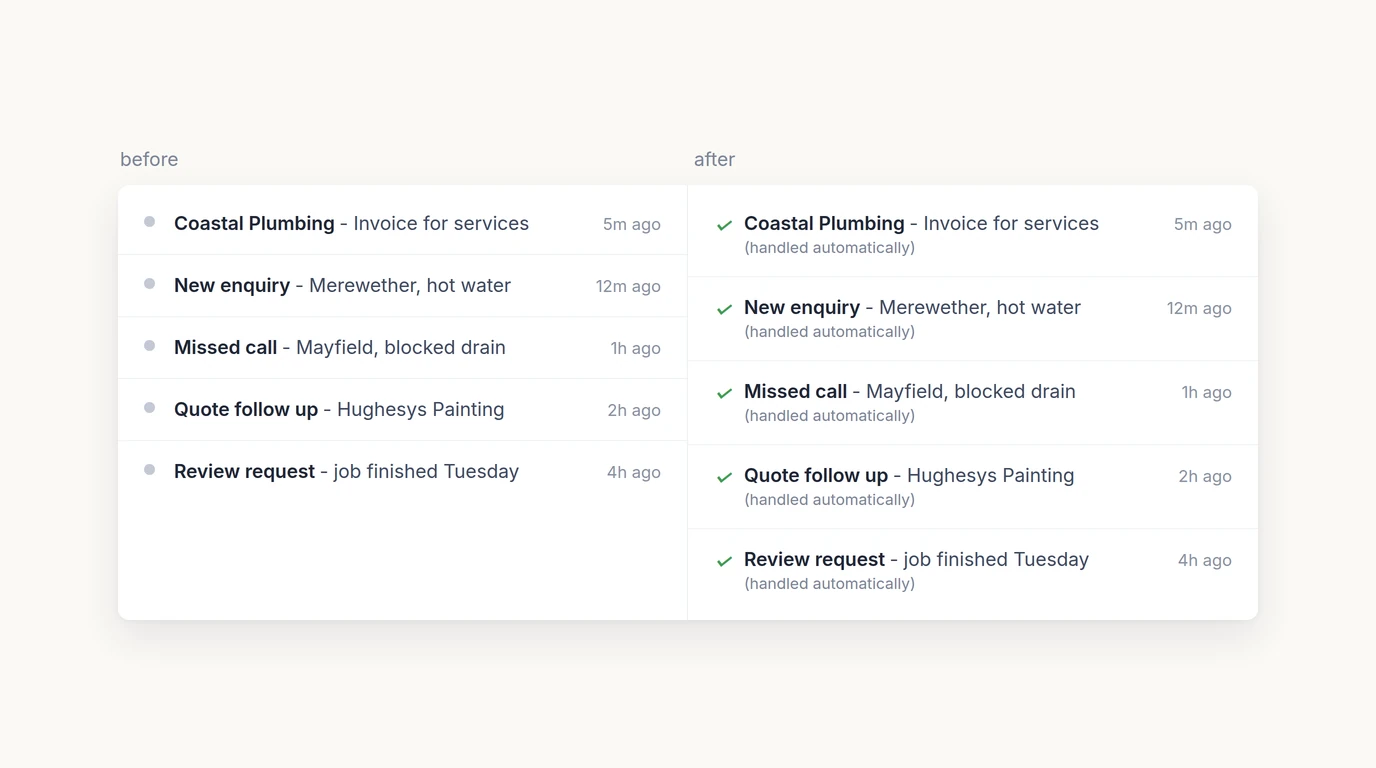
And for the office it turns the worst hour of the day into a list. Instead of nine unexplained missed calls at ten in the morning, there are nine names with times against them.
If you do one thing after reading this, look at your missed calls between seven and nine tomorrow morning and ask what each of them was. In most providers at least one of them was a coordinator who has already rung somebody else.
Related reading from us: missed call text back for real estate agents, Missed Call Text Back For Physios, AI Automation For NDIS Providers and local SEO for NDIS providers.
The message names, in plain words, what to do if it is urgent or somebody is unsafe. It is never presented as the response to a crisis, and a reply to it is never the route.
No. It asks for a name and a good time to call. Nothing about a plan, funding, supports or health is requested or sent.
You do. We build it, you write and approve it, because you know your participants and it goes out under your service's name.
Yes, and that is often where it earns its keep, though coordinators ringing from a landline are flagged to you directly rather than texted.