
For workshops a stranger has no way to judge
Why they decide it in this trade, and when to actually ask.
A report on your workshop, showing where you sit against the others nearby on rating, count and recency.
 By Reece Rainer
spareday, Newcastle NSW
Last updated
13 September 2026
Read time
4 minutes
By Reece Rainer
spareday, Newcastle NSW
Last updated
13 September 2026
Read time
4 minutes
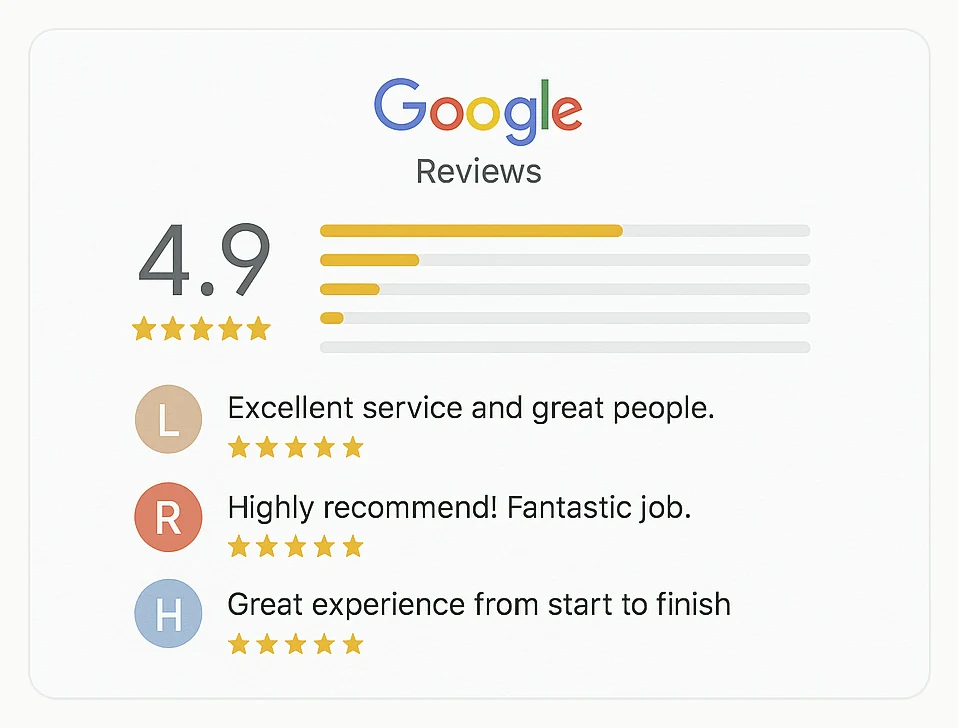
He was able to take our rough ideas, from concept through to reality. The site has provided an influx of new members, helping to keep our club viable.
A passion-driven, good-hearted and reliable service provider with the competency of a genius when it comes to software engineering, AI technology and marketing.
He created a stunning website for us that captures and nurtures leads with an automated email marketing system, which has filled a huge gap in the business and saved a lot of time (and money!).
Nobody trusts a mechanic they have not used, which makes a workshop's reviews the only thing standing between a stranger and the next workshop on the list.
This is why reviews decide it in this trade specifically, when to ask, and what will get them removed.
A driver choosing a workshop cannot judge the work and knows it. They cannot tell a good brake job from a bad one, so they judge the only thing they can read, which is what other people said about being treated fairly.
The fear is specific and it is always the same. Being overcharged, being sold work that was not needed, or being told the car is ready when it is not. Every review a workshop has is read against those three worries.
That is why the content matters more here than the count. A review saying the workshop rang before doing extra work does more for a stranger than ten saying great service.
It is also why a single bad review lands harder on a workshop than on most businesses. One review describing a surprise bill confirms the thing the reader was already afraid of.
The moment to ask is when the customer picks the car up and it is fixed. They are relieved, the bill matched the quote, and they are standing in front of you. It never happens again after that.
Every workshop knows this and almost none of them do it, for a simple reason. Handover is the busiest part of the afternoon, there are three other cars going out, and asking feels like it comes after taking their money.
There is a second moment that works nearly as well and is far easier to systematise, which is a short message a few hours later once the car has been driven and it is clearly fine.
You can ask every customer. You cannot discount a service in exchange, you cannot ask only the ones who did not complain, and nobody in the workshop can write them.
Discounting for a review is the version workshops reach for, often phrased as a thank you rather than a deal. It is against Google's policy either way, and the reviews can be removed months later when the profile is reassessed.
Asking only the happy customers is the other one, and in a workshop it feels almost reasonable. It is still gating, it is still against the policy, and it produces a page that does not read as genuine.
The one worth being careful about is the bad review from a customer who did not like the price. Reply once, briefly, without arguing the invoice in public. The reply is written for the next person reading it.
A short message a few hours after pick-up, from the workshop, with a link that opens the review box directly. Sent to every customer, on the day, without anybody in the office having to remember.
The timing is doing most of the work. A few hours later the car has been driven and the customer knows it is right, which is the moment they can honestly say so. A week later they have stopped thinking about it entirely.
The other half is that it goes out automatically. Every workshop that relies on somebody remembering at four in the afternoon ends up asking about one customer in ten, and it is always the ten percent who were chattiest.
If you do one thing after reading this, check the date on your workshop's most recent Google review. If it is older than a fortnight, nobody is asking, and in this trade that is the single cheapest thing to fix.
Related reading from us: Google Reviews For Tradies, what a client is frightened of, AI Receptionist For Mechanics, local SEO for mechanics and the phone in the drop-off rush.
No. Any incentive is against Google's policy and puts the reviews you already have at risk of being removed.
Reply once, briefly and calmly, without arguing the invoice in public. The reply is for the next person reading, not for the reviewer.
No. That is gating, it breaches the policy, and a page with no ordinary reviews on it does not read as genuine.
A few hours after pick-up, once the car has been driven. That is the point where the customer knows the job was done properly and can say so honestly.