
For workshops invisible outside their own street
A radius the car decides, and a specialisation nobody has written down.
A report on your workshop, showing where you appear across your catchment and which nearby suburbs never see you.
 By Reece Rainer
spareday, Newcastle NSW
Last updated
13 September 2026
Read time
5 minutes
By Reece Rainer
spareday, Newcastle NSW
Last updated
13 September 2026
Read time
5 minutes
He was able to take our rough ideas, from concept through to reality. The site has provided an influx of new members, helping to keep our club viable.
A passion-driven, good-hearted and reliable service provider with the competency of a genius when it comes to software engineering, AI technology and marketing.
He created a stunning website for us that captures and nurtures leads with an automated email marketing system, which has filled a huge gap in the business and saved a lot of time (and money!).
A workshop is chosen by somebody whose car is making a noise, from a phone, inside a radius they are willing to drive or be towed.
This is what actually decides which workshops a driver sees, why specialisation matters more than suburb here, and what is worth doing about it.
A driver with a service due will travel twenty minutes. A driver with a car that will not start is choosing from whatever is close enough to tow to, and that radius can be three kilometres.
So a workshop is really competing in two different markets that happen to share an address. The bookable, plannable work has a wide catchment and the urgent work has a tiny one, and they behave nothing alike.
The urgent search is where most workshops lose without knowing. Somebody stranded searches, taps the first workshop with reviews that is close, and rings. If you are four hundred metres further away than the one they picked, you were never in it.
The plannable work is the opposite and it is the half worth fighting for. People will drive past two workshops to reach one they trust for a logbook service, which means being findable outside your immediate suburb is worth real money.
Searches in this trade are rarely just for a mechanic. They are for a European car specialist, a diesel mechanic, a 4WD workshop, a transmission place, a pink slip. Each of those is a smaller field with far less competition.
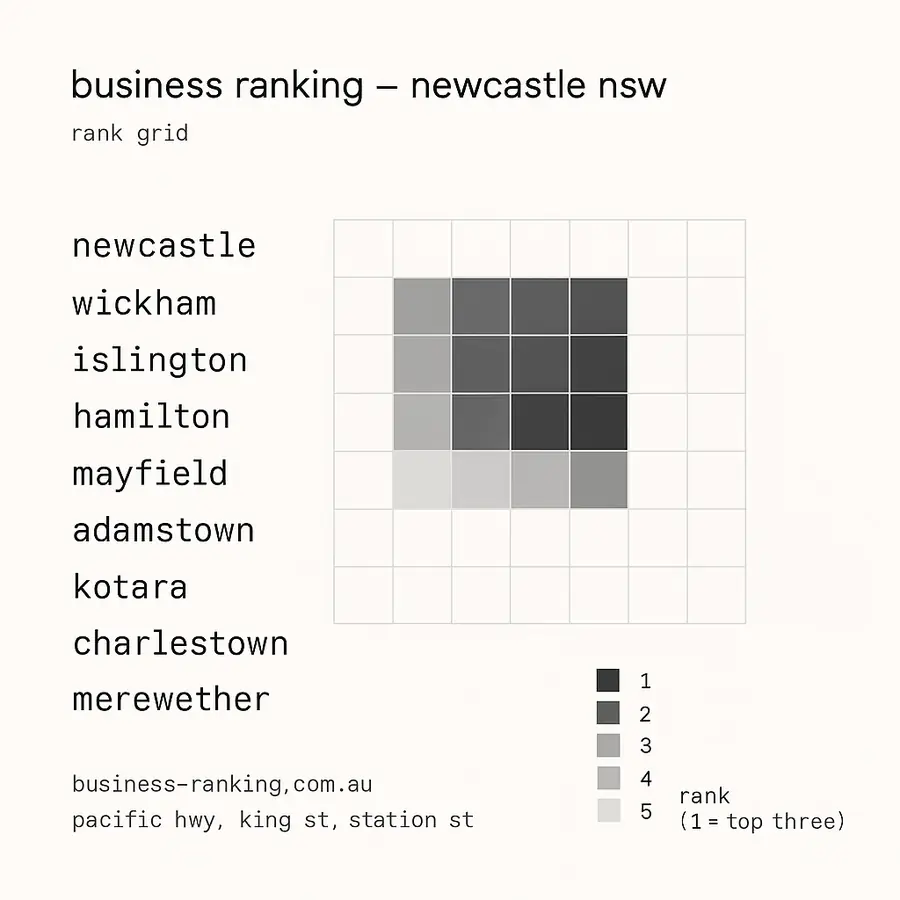
This is the most underused advantage in the industry. Half a dozen workshops in a suburb compete for the same general term, and the driver with a European car searching for somebody who works on it is looking at a much shorter list.
Specialisation also widens the radius, which is the useful part. Somebody with a diesel ute will drive thirty minutes to a workshop that knows diesel utes, and will not drive five minutes to a general workshop.
The catch is that this only works if the specialisation is genuinely on the listing, in the services, in the description and on the website. Most workshops know what they are good at and have never written it anywhere.
How close the workshop is to whoever is searching, whether the listing says what you actually do, and whether the reviews are recent and plentiful. Distance you cannot change. The other two are almost entirely unclaimed in this trade.
The listing is where the gap is widest. Most workshop listings say mechanic and give an address. Every service that is not listed is a search the workshop cannot appear for, and workshops typically list two of the twenty things they do.
Photographs matter more than owners expect and workshop listings almost never have them. A driver deciding where to leave their car for a day is reassured by seeing a clean workshop and a real person, and unnerved by a listing with no pictures at all.
Opening hours are the quiet one. A workshop showing as closed at the moment somebody searches falls down the results, and half the workshops in any town have hours that have not been touched since the listing was made.
The listing gets built out properly against what you really do, the website gets a page for each of the main services and the areas you draw from, the reviews get asked for consistently, and then it is measured from a grid of points rather than from your own phone.
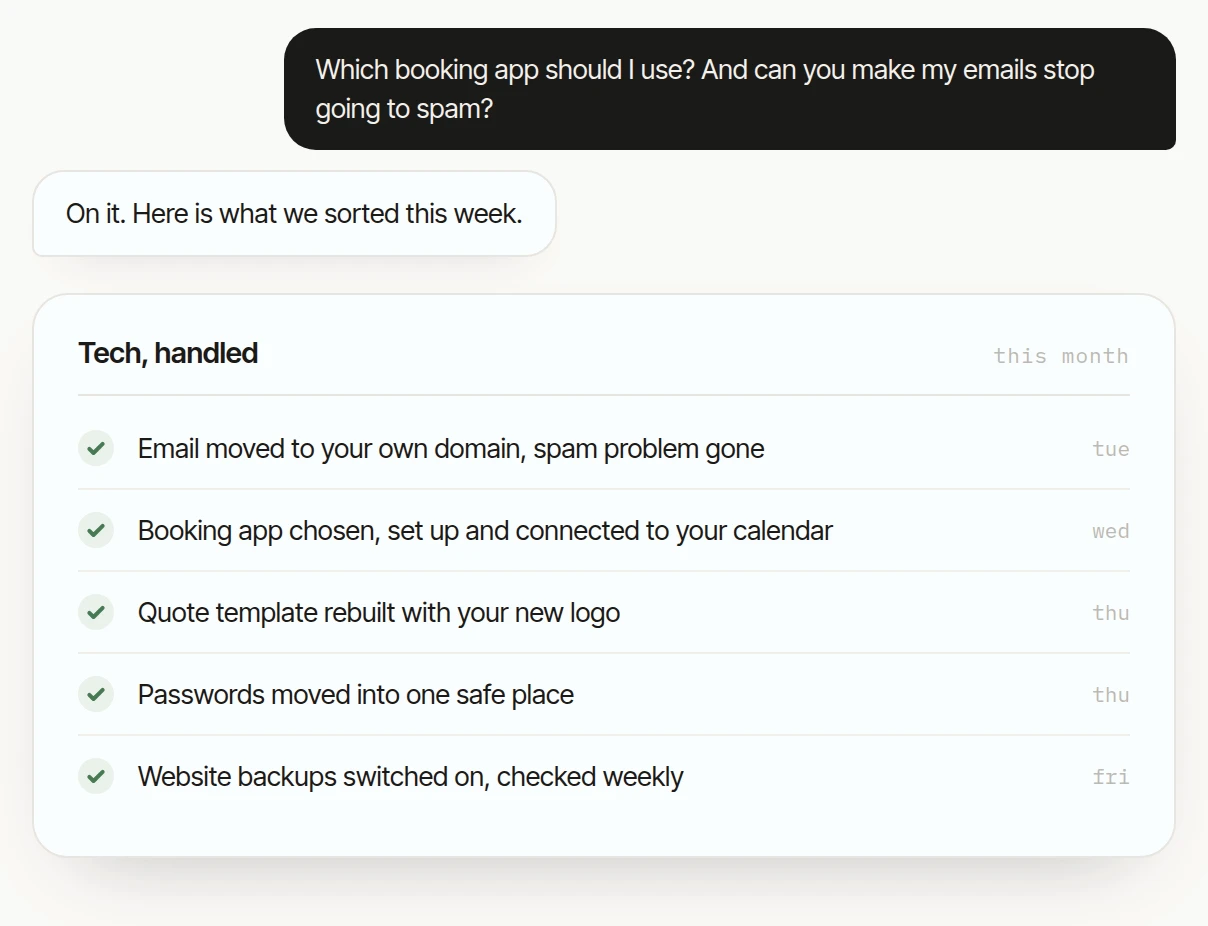
The grid is the part that matters, because a workshop searching for itself while standing in its own workshop always looks like it is winning. The question is what somebody sees from a suburb four kilometres away, and that is a completely different answer.
Then it is patient. Local rankings move over weeks and months, not days, and the useful measure is how many points on the map you appear in, not what one search on one phone showed on Tuesday.
The order matters too. Listing first, because it is free and it moves fastest. Reviews second, because they compound. Website pages third, because they take longest to earn anything.
If you do one thing after reading this, open your Google listing and count how many services are listed. If it is under ten, you are invisible for most of what you actually do, and that is a free fix.
Related reading from us: Local SEO For Plumbers, judged on where you have built, AI Receptionist For Mechanics, Google reviews for mechanics and the phone in the drop-off rush.
For urgent work, very. For servicing, people travel, which is why the specialisation and the service pages matter more than the address.
Usually not to start. Most of a workshop's early movement comes from the listing being complete and accurate for the first time.
Listing changes can show within weeks. Ranking across a whole catchment is months, and it is measured on a grid rather than by searching for yourself.
It is the largest advantage most workshops are not using. It shortens the competitive field and it widens how far people will drive.