
For cafes missing from the streets around them
A catchment measured in metres, and photographs doing most of the work.
A report on your own cafe, showing where you appear from a grid of points around it and which streets never see you.
 By Reece Rainer
spareday, Newcastle NSW
Last updated
13 September 2026
Read time
4 minutes
By Reece Rainer
spareday, Newcastle NSW
Last updated
13 September 2026
Read time
4 minutes
He was able to take our rough ideas, from concept through to reality. The site has provided an influx of new members, helping to keep our club viable.
A passion-driven, good-hearted and reliable service provider with the competency of a genius when it comes to software engineering, AI technology and marketing.
He created a stunning website for us that captures and nurtures leads with an automated email marketing system, which has filled a huge gap in the business and saved a lot of time (and money!).
A cafe is found by somebody standing within a few hundred metres of it, holding a phone, deciding where to eat in the next five minutes.
This is what decides whether your cafe is on that screen, why a website barely matters here, and what actually moves it.
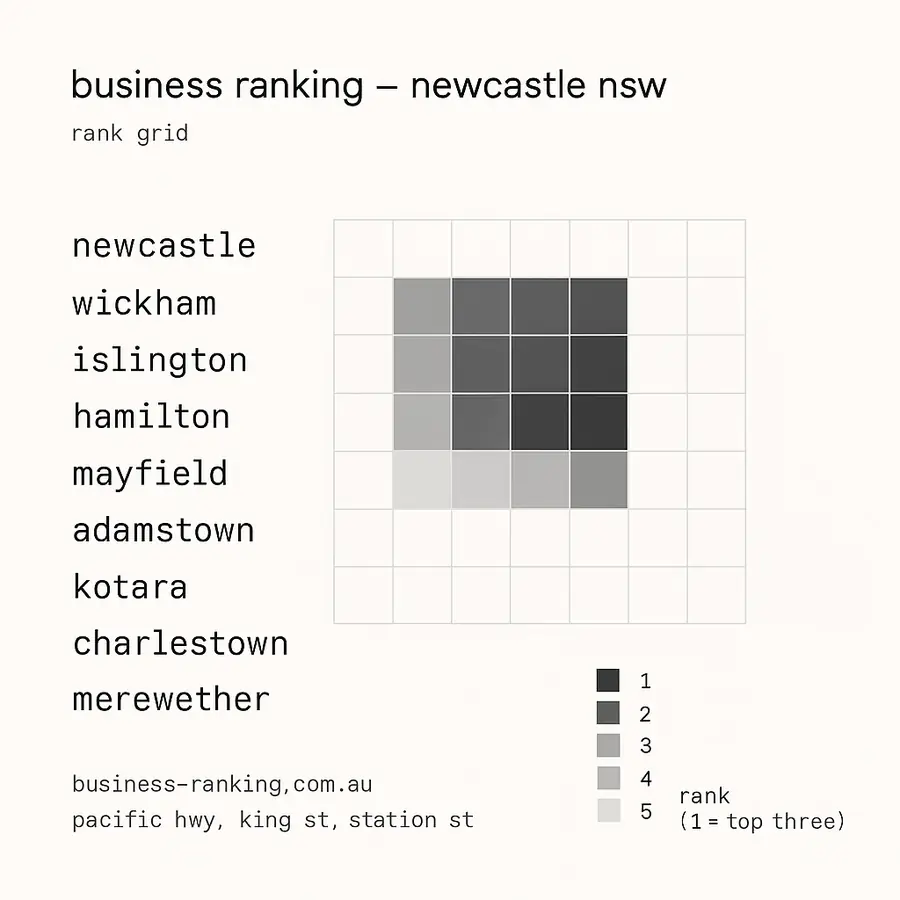
A cafe's search radius is the shortest of any local business. Somebody looking for coffee is not travelling. They are choosing between what is on the map within a few hundred metres of where they already are.
That makes the geography extreme. A cafe can be first from one end of a street and absent from the other, and both of those are happening at the same time to different customers.
It also means the competitive set is tiny and fixed. It is the other cafes on your block, not the ones across town, and they are the only businesses you are actually being compared against.
The upside of a small radius is that it is winnable. There is no realistic path to being the top cafe in a city, and there is a very realistic path to being the top result on your own street.
People choose a cafe from pictures. Not the rating alone, and certainly not the website. The photographs on the profile are doing more work for a cafe than any other element, and most cafes have left them to customers.
The set that matters is specific. The food as it actually arrives, the inside of the room, the front of the shop from the footpath so people can recognise it, and the coffee. In that order.
The shopfront photograph is the one nobody thinks about and it does real work, because a person walking towards you is matching what is on their screen to what is in front of them.
People search for what they want to eat, not for cafes. Vegan breakfast, gluten free, dog friendly, good coffee near me and best breakfast are all separate searches, and most cafes have never told Google they qualify for any of them.
The attributes on the profile are the mechanism and they are free. Outdoor seating, dog friendly, wheelchair accessible, takeaway, dine-in. Each one is a filter somebody is using, and being absent from a filter means being absent entirely.
The menu is the other half. A cafe with its actual menu items listed can appear for a dish, and a cafe without one cannot. This is close to the cheapest ranking work available to a cafe and hardly anybody does it.
Being honest about it matters. Claiming dog friendly to catch a filter and then turning somebody away with a dog produces exactly the review you do not want.
Photographs, attributes and menu first, because they are free and they move quickly. Reviews second, because they are the tiebreaker. A website last, and for a cafe it is genuinely optional.
The website point is worth stating plainly, because cafes get sold websites constantly. Almost nobody reads a cafe's website. They look at the map listing, the photographs and the rating, and they walk in.
What a cafe does need online beyond the profile is somewhere the menu lives and is current, and the ability to be found for its own name. That is a much smaller job than a website build.
If you do one thing after reading this, open your own Google listing and look at whose photographs are on it. If they are all customer snaps, you are letting other people decide what your cafe looks like to a stranger.
Related reading from us: a catchment three kilometres wide, Local SEO For Gyms and Google Reviews For Cafes.
Barely. The map listing, the photographs and the rating do almost all of it. A simple page with a current menu is usually enough.
They are the tick boxes on your profile like dog friendly or outdoor seating. People filter searches by them, and being unticked means being invisible to that search.
Every few months. It keeps the profile active and it stops the impression of the cafe going stale.
Yes, if your menu is actually listed. A cafe with no menu on its profile cannot appear for anything on it.