
For Australian businesses outside a capital city
What working with somebody in another city actually means, and where it makes no difference at all.
A report on your own week, showing which jobs only happen when somebody remembers, and what it costs you when they do not.
 By Reece Rainer
spareday, Newcastle NSW
Last updated
13 September 2026
Read time
8 minutes
By Reece Rainer
spareday, Newcastle NSW
Last updated
13 September 2026
Read time
8 minutes
A passion-driven, good-hearted and reliable service provider with the competency of a genius when it comes to software engineering, AI technology and marketing.
He was able to take our rough ideas, from concept through to reality. The site has provided an influx of new members, helping to keep our club viable.
Excellent in all facets of web design with particular expertise in SEO and email marketing. Online visibility has skyrocketed since working Reece which translates as flawless customer relations, new leads and new customers.
The usual worry about working with somebody in another city is that you will end up explaining your business to a stranger over email and getting something generic back. It is a fair worry, and it is worth answering before anything else.
The honest position is that some of this genuinely needs somebody in the room and most of it does not. What follows is which parts are which, what remote delivery actually looks like week to week, and where being somewhere else makes no difference at all.
Almost none of it. Watching how a job really happens needs a screen share and an hour, not a visit, because the work you are looking at happens on a screen anyway.
AI consulting in Australia is mostly done this way now, because the systems being worked on are already reachable from anywhere.
The parts of this that could benefit from being physically present are the parts where you are watching people rather than systems: how the counter actually works, what happens when three things arrive at once. Those are worth a conversation, and a conversation over video is a conversation.
The one thing distance genuinely changes is how easy it is to drop in unannounced, and that gets replaced by a fixed time every week rather than by nothing.
Your systems are already remote. The accounting, the bookings, the email and the files are all in a browser, reachable from anywhere, which is exactly why the work can be too.
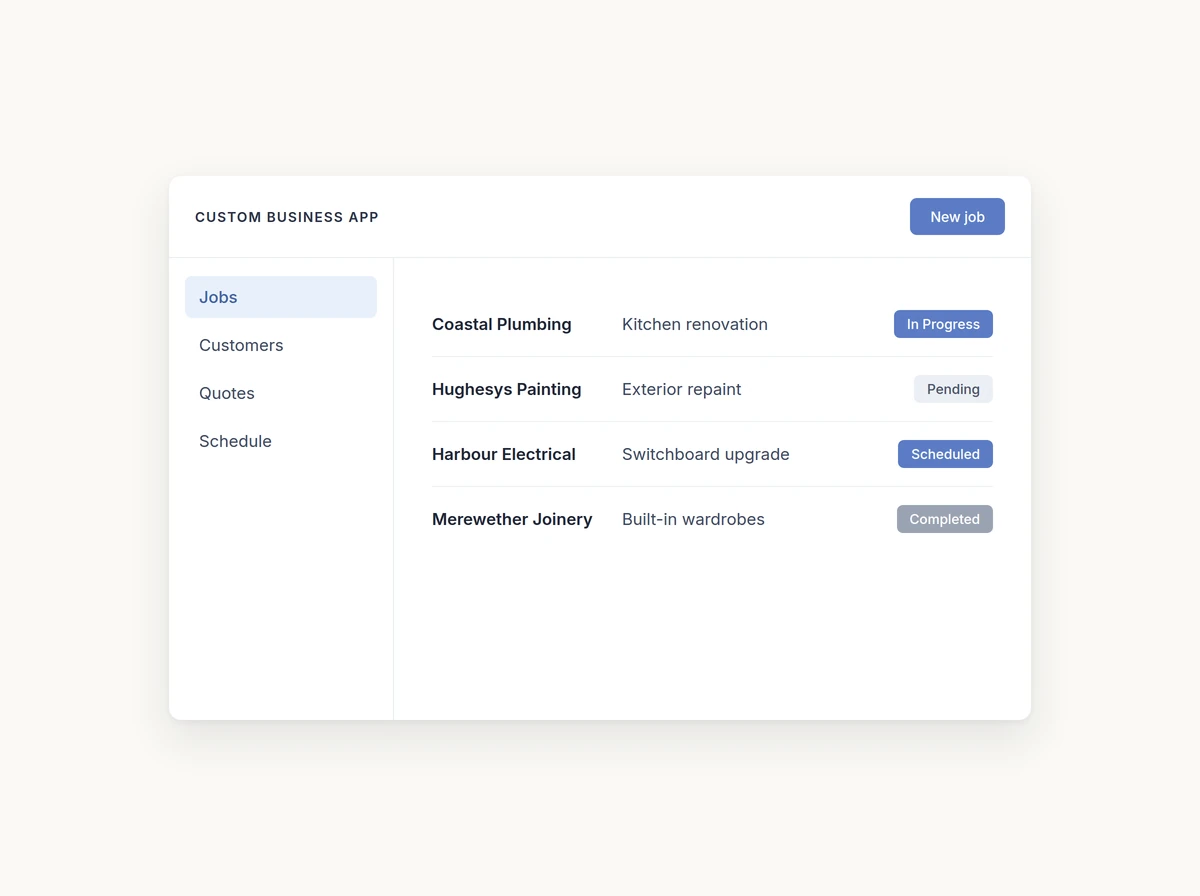
A decade ago this argument would have been weaker, because the software sat on a machine in the office. That has not been true for most businesses for years. The thing being worked on is already somewhere else, and everybody in the business is already reaching it over the internet.
What matters far more than distance is whether the person doing the work has understood how your business actually runs, and that is decided by how carefully they looked rather than by how far they drove.
The Australian government's own material on AI in business is written for businesses everywhere rather than for capital cities, because the jobs being automated look much the same wherever the business is.
A fixed time every week, a shared log you can read at any hour, and a document you mark up rather than a meeting you sit through. Most of it happens without either of you waiting on the other.
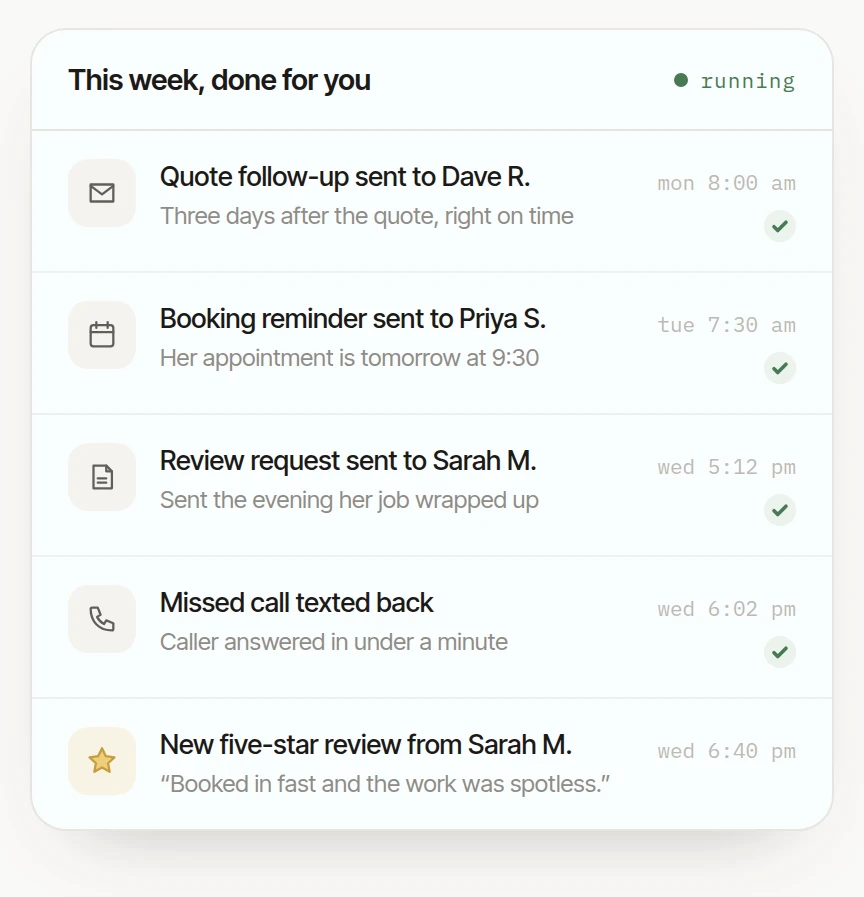
The pattern that works is not constant contact. It is one predictable time each week plus everything else being readable whenever you want it, so nothing depends on catching somebody.
None of that is unusual, and it is how most businesses already work with their accountant. The subject is software rather than tax.
It will not make a judgement call you would want to stand behind, it will not fix a process nobody has written down, and it will not know anything about your business that is not recorded somewhere.
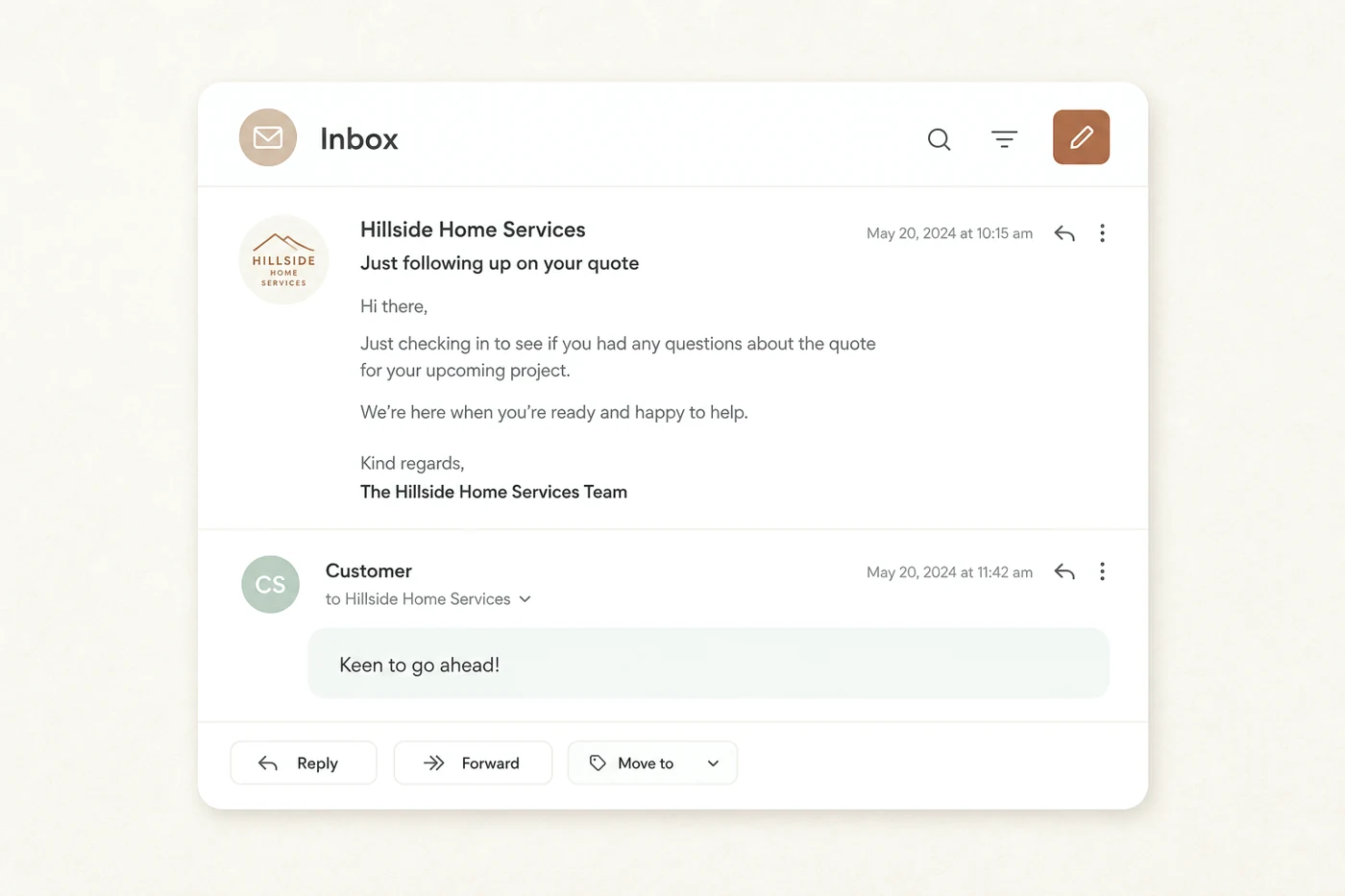
The limit is the same wherever the work is done. Anything requiring a decision that carries consequences stops and waits for a person, and being local would not change that.
Where the work is genuinely repeatable and written down, it runs. Where it is not, it stops and waits, and every run is logged so you can read what it did.
A week of the business gets watched over a screen share, the repeated jobs go on a list with a cost beside each, one comes off it first, and it runs watched before it runs alone.
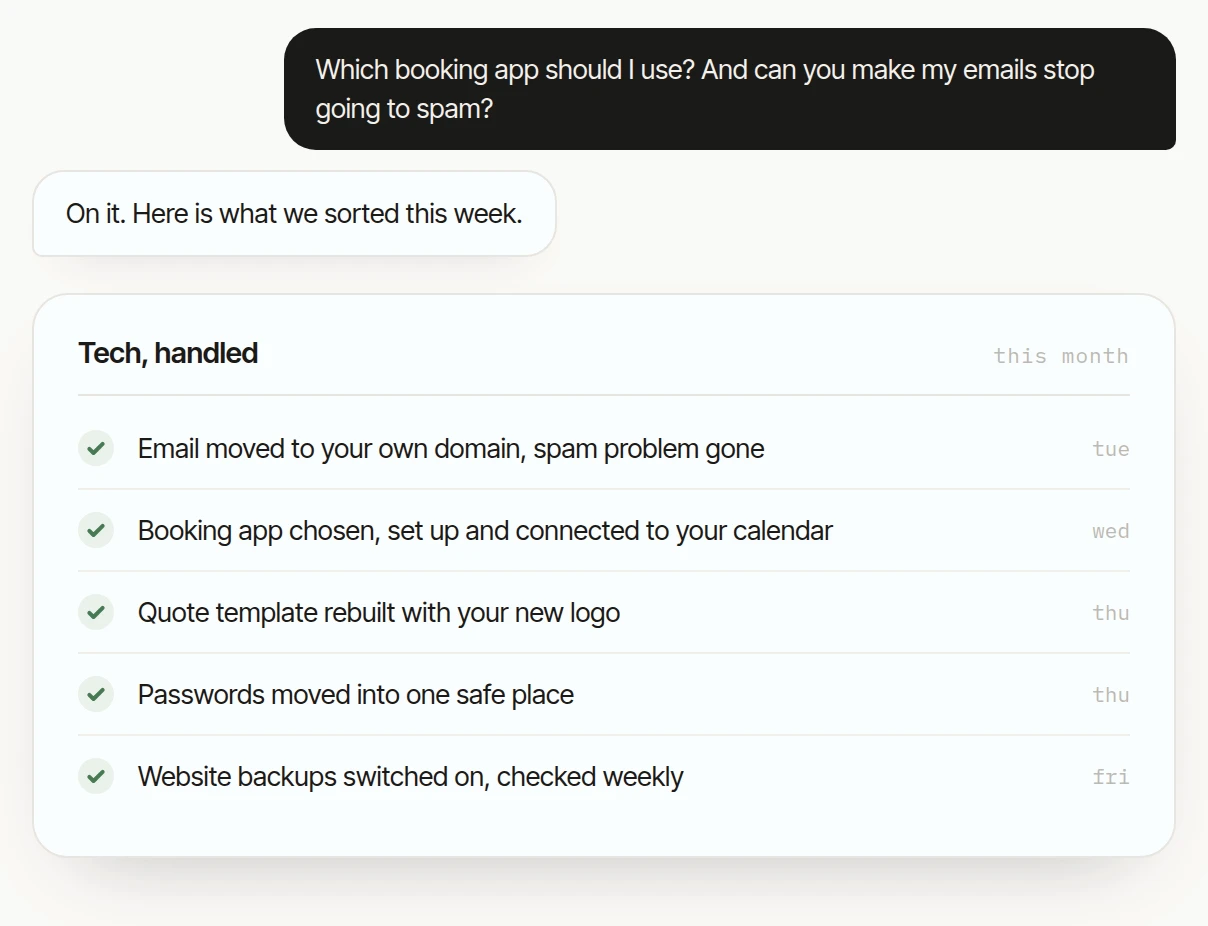
One job is set up and left running before the next starts, and the first one is the one costing the most rather than the one that demonstrates best.
Over a screen share while somebody does the job for real. An hour of that is where the list comes from.
A rough number beside each one, in hours or in lost work. That number decides the order rather than anybody's opinion.
What it is allowed to say, what it must never say, and what it does when something unexpected turns up. Written before anything is built.
In your name, from the start, so what happens if the arrangement ends is settled before there is anything to argue about.
For a fortnight, with a person approving each message. That fortnight finds the cases nobody predicted, in time to fix them.
A job is finished when nobody is thinking about it any more. That is the signal to start the next one, rather than a date on a plan.
The looking is short. Writing down how a job actually happens takes longer than anybody expects, and it is the part deciding whether the building works.
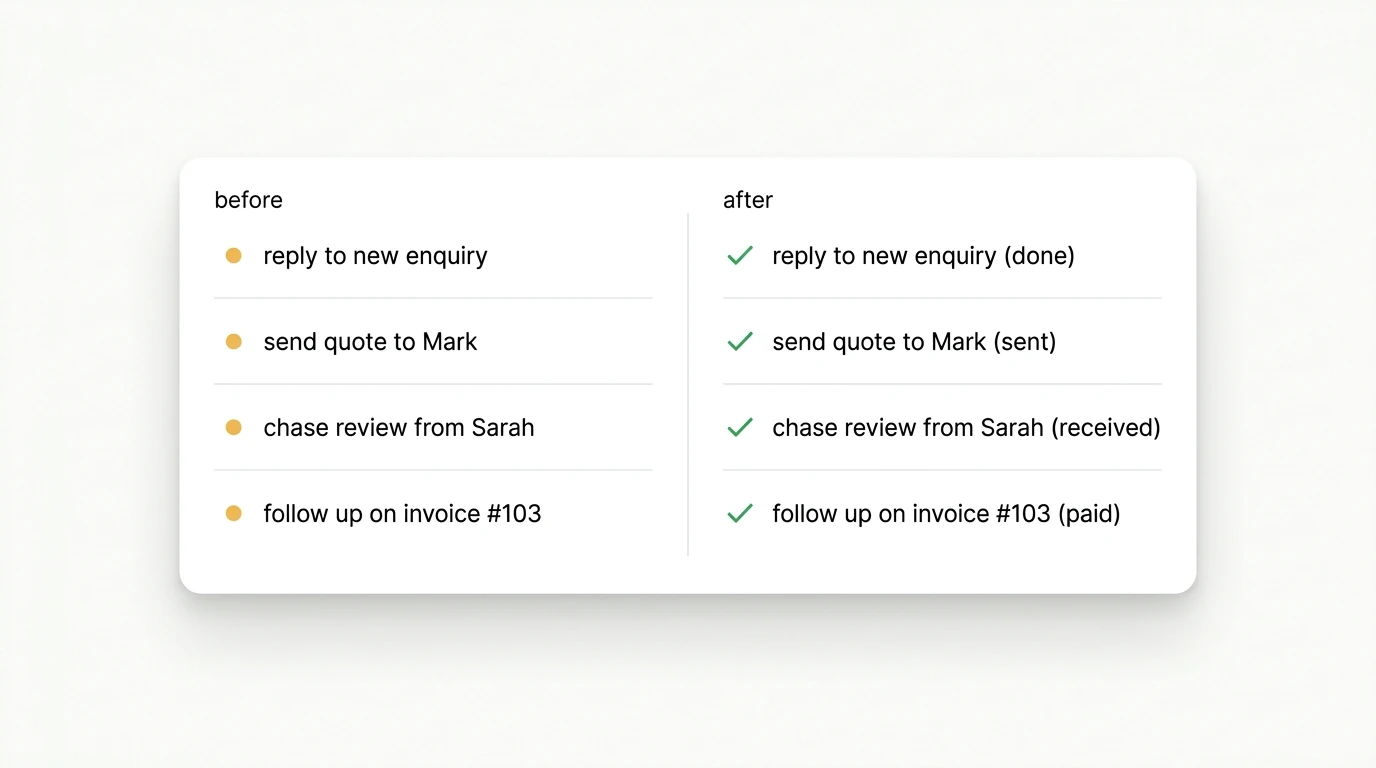
A single job takes about a week to build and a week to watch. A set of them takes a couple of months, and each one after the first is shorter because the connections already exist.
Ask how they will look at your business, who owns the accounts, what happens when something breaks, and how you reach somebody between times.
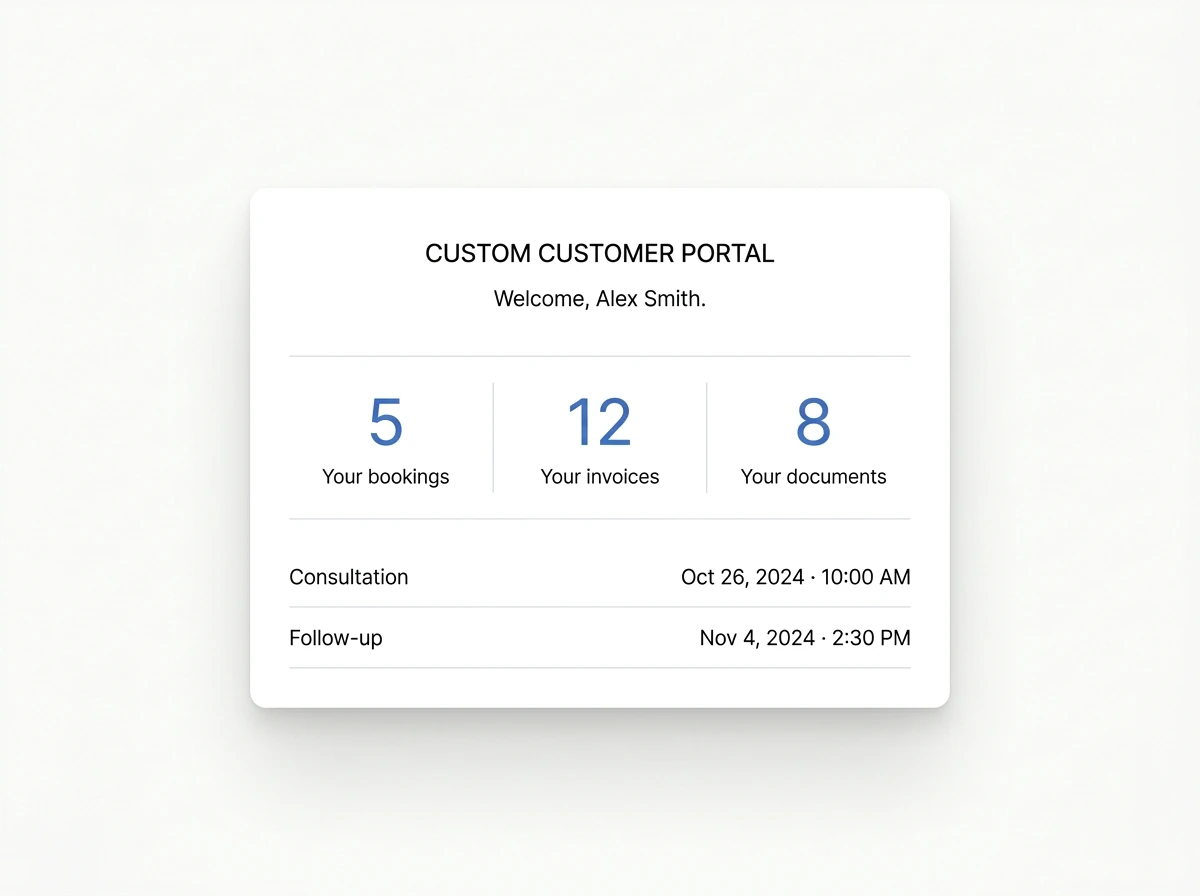
These are worth asking of anybody, including this one, so the answers given here sit under each question.
All of this can also be done in house, and plenty of businesses do it well. The six steps above are the same either way.
If you do one thing after reading this, write down the jobs in your week that only happen when somebody remembers, and put a rough cost beside each. That list is what a first call would ask for, wherever you are. Ask for the free report and it comes back with it.
Related reading from us: AI Automation Services Australia and AI development services.
No. The systems being worked on are already in a browser, so where anybody sits makes no difference to them. The business is based in Newcastle and works right across Australia.
Very little. Watching how a job really happens works over a screen share, because the work being looked at happens on a screen anyway.
One fixed time each week, whether or not anything is wrong, plus a log you can read at any hour and a way to reach somebody between times.
Probably, and that is a fair reason to choose them. What decides the outcome is how closely somebody looked at your work, not how far they drove.
The same way anybody in your own office would, on accounts in your name, with what is granted agreed in writing before anything is built.
Yes. It runs on your accounts, in your name, and it keeps running if the arrangement ends.
The job has to be written down, the information it needs has to exist somewhere, and somebody has to own reading what it does.
One monthly fee covering everything, month to month, with no lock-in contract. What it comes to depends on the business, so the number gets given on the call.