spareday

For Newcastle businesses whose newest review is a year old

Google review generation in Newcastle, NSW: more reviews every week.

How to ask without nagging, and what to do about the bad one.

★★★★★Newcastle and the Hunter

A report on your own business, showing how your reviews compare with the businesses ranking above you and where the gap is.

Reece Rainer By Reece Rainer spareday, Newcastle NSW Last updated 13 September 2026 Read time 8 minutes
A review request going out by text the afternoon a job finished, and the five star review it produced two days later
what clients say

What clients say

★★★★★

Since it went live my phone hasn’t stopped ringing.

Jye Hughesgoogle review
★★★★★

He didn’t just build me a great website, he created an easy-to-manage system that allows me to make updates myself whenever I need to. He has spared me so much time doing all of this myself!

Otua Olannagoogle review
★★★★★

Reece has been generous, reliable and knowledgeable in creating an online presence for our sporting club. He is good to work with and has good technical abilities.

Gary Robertsgoogle review

See them all on Google

Think about the last time you picked a business you had never used. You almost certainly read what other people said about it first, and you read the newest of those comments rather than the oldest.

On Google those comments are called reviews, and they do two jobs at once. A customer reads them before deciding, and Google counts them when it picks the three businesses shown on the map. What follows is when to ask, how to ask so people actually do it, what to do about a bad one, and the rules that get a listing in trouble.

01

What Google actually counts

How many reviews you have, how recent they are, what they say, and whether you reply. Recency is the part most businesses miss, because a burst last year does less than a trickle this month.

A reviews panel showing the star average, the number of reviews, and the dates of the most recent ones
the number, the average, and the dates. The dates are the part that fades

Reviews feed the well known half of how Google ranks a business locally, alongside mentions on other websites. Google names it in its guide to local ranking and it has not moved in years.

What is being weighed

  • How many of them there are.

    Measured against the businesses you are ranking beside, rather than against some target number somebody quotes.
  • How recent the newest ones are.

    A steady arrival reads as a business that is trading. A cluster from two years ago reads as one that was.
  • What the reviews actually say.

    Somebody reads the words in them. A review naming the job and the suburb says more than one saying great service.
  • Whether the business replies to them.

    Replying is counted, and it is also the part a customer reading them can see for themselves.

The customer half matters as much as the Google half. Somebody choosing between two businesses on a map is reading the reviews, and the most recent ones sit at the top.

Get my free reportA report on your own business, showing how your reviews compare with the businesses ranking above you and where the gap is.
02

What it is worth to a Newcastle business

In a market this size, reviews are the closest thing to a word of mouth reputation written down. They are also the one ranking factor that arrives out of work already finished.

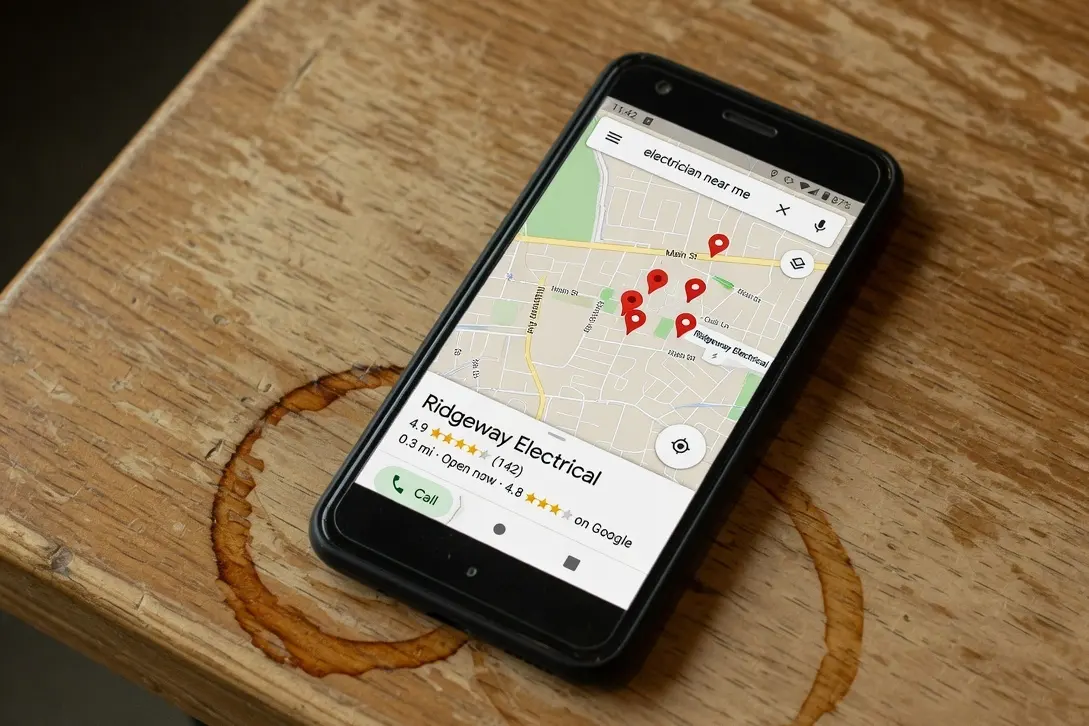
A map pack for a Newcastle search showing three businesses with their star ratings and review counts side by side
three businesses, and the first thing compared is the number under the stars

Newcastle is small enough that reputation travels anyway. Reviews are that reputation in a form a stranger can read, and in a form Google can count.

Everything else in local search is work that has to be added. Reviews come out of jobs already finished and customers already happy. That makes them the cheapest thing on the list, and the most commonly skipped.

The gap on most Newcastle listings is a good rating sitting on a small number of reviews, with the newest of them a year or two old.

Get my free reportA report on your own business, showing how your reviews compare with the businesses ranking above you and where the gap is.
03

How to ask so people actually do it

Ask the same day the job finishes, by text, with a direct link that opens the review box. Every step between the ask and the box is a place where people drop out.

The businesses collecting reviews steadily are not asking harder than anybody else. They are asking sooner, and they have removed the steps in between.

What makes the difference

  • The timing of the ask matters most.

    The evening the work finishes, while the customer is still pleased with it. A week later is a different customer in a different mood.
  • The channel the ask arrives on.

    People read a text message. An email joins a queue, and a card left behind goes out with the packaging.
  • A link straight to the review box.

    Not a link to the listing. Google gives every business a review link from inside the profile for exactly this.
  • It has to happen without anybody remembering.

    Sent automatically when a job is marked finished, because the owner has already started the next one.

The wording matters less than everything above. Thank them, say it takes a minute, and send the link. Asking specifically for a five star review is the one thing to avoid, and the reason is below.

Get my free reportA report on your own business, showing how your reviews compare with the businesses ranking above you and where the gap is.
04

The rules, and what to do about a bad review

Buying reviews, offering anything in exchange, and filtering out the unhappy customers are all against Google's rules. A bad review deserves a calm public answer, and it does less damage than a page of perfect ones.

Google's contributor policies cover what is allowed. Three of them catch businesses out, and they are worth knowing before buying a shortcut.

What is against the rules

  • Buying reviews outright is banned.

    Google removes them, and it can suspend the listing with them. They also read as bought to anybody who looks at the dates.
  • Offering anything in exchange for one.

    A discount, a voucher, entry into a draw. The rule covers incentives of every kind, not only cash.
  • Filtering down who you ask.

    Sending the request only to the happy customers is called gating, and it is not allowed. Everybody gets the same ask.

A bad review is worth answering rather than fighting. Reply once, in public, briefly, without arguing the detail, and offer to sort it out away from the listing. The reply is written for the next person reading, not for the reviewer.

A run of nothing but perfect reviews is its own problem. People do read a rating of exactly five with suspicion, and one honest average review usually sits there making the rest believable.

Get my free reportA report on your own business, showing how your reviews compare with the businesses ranking above you and where the gap is.
05

How the work actually runs

Find the review link, choose the moment in the job that triggers the ask, and let the message send itself. After that every review deserves a reply, and somebody notices when one disappears.

A weekly list for a business showing review requests sent automatically after each finished job, with replies logged
the whole thing, running without anybody remembering to send it

The setup takes one afternoon. Everything after it runs on its own, which is the only version that survives a busy month.

1. The review link gets found

Google gives every business a direct link from inside the profile. It opens the review box straight away, so fewer people give up before leaving one.

2. The moment gets chosen

The point in the work where a customer is most pleased. Job marked finished, invoice paid, keys handed back. It has to be a specific event rather than a mood.

3. Let the ask send itself

Triggered by that event, sent by text, with the link in it. Nobody in the middle of a busy week remembers to send these, which is the only reason most businesses have so few.

4. Ask every customer

Never a filtered list. Gating is against the rules, and it also removes the feedback that would have told the business something worth knowing.

5. Every review gets a reply

Short replies are perfectly fine. Google counts the reply, and the next customer reads it.

6. Notice anything that disappears

Google removes reviews sometimes, including genuine ones. A listing quietly losing them is worth asking about rather than assuming.

Get my free reportA report on your own business, showing how your reviews compare with the businesses ranking above you and where the gap is.
06

How long it takes

The setup takes an afternoon. Reviews then arrive at the rate you finish jobs, and the effect on the map builds as the recent ones stack up.

The order it happens in

  • First the link and the trigger get set up.

    One sitting, and nothing has been asked for yet at this point.
  • Then the requests start going out.

    One goes with every finished job, automatically. The arrival rate follows the job rate rather than a schedule.
  • Then the recent ones start stacking up.

    This is the part feeding the map, and it is why the routine does what a one off push does not.

A business that asks after every job and then stops is back where it started within a year, because recency fades. The routine is the product here, not the burst.

Get my free reportA report on your own business, showing how your reviews compare with the businesses ranking above you and where the gap is.
07

What should you ask before paying anyone?

Ask whether every customer gets the same ask, whether anything is offered in exchange, whose number the messages send from, and what happens to the system afterwards. The first two are the ones that put a listing at risk.

A business card in Google search showing its star rating and the number of reviews behind it
the count, the average and how recent they are

These are worth asking of any agency, including this one, so the answers given here are underneath each question.

  • Does every customer get the same ask?

    Every one of them does, here. Filtering down to the happy ones is against Google's rules and it hides the feedback worth having.
  • Is anything offered in exchange?

    Nothing at all is offered. Incentives are against the rules whether they are cash or a voucher or a prize draw.
  • Whose number do the messages send from?

    The business's own number, so a reply reaches the business rather than an agency.
  • What happens if I stop?

    The link, the messages and the customer list stay yours. They are set up in the client's own accounts from the first day.

This is one of the easier things to run in house once it has been set up, and plenty of Newcastle businesses do exactly that.

Asking by text the day a job finishes is the version that gets replies, and review requests by text covers the timing and the rules.

Get my free reportA report on your own business, showing how your reviews compare with the businesses ranking above you and where the gap is.

If you do one thing after reading this, look at the date on your most recent Google review. On most Newcastle listings the rating is fine and the newest review is older than the owner expects. Ask for the free report and that date comes back beside the businesses above you.

Related reading from us: spareday Newcastle NSW and the jobs that run themselves.

Common questions

What is a Google review?

It is a comment and a star rating a customer leaves on your free Google listing. It is public, and it is one of the things Google weighs when it ranks the map.

How many reviews do I need?

There is no target worth quoting. What matters is how you compare with the businesses you are ranking beside, and how recent yours are.

What does recency mean here?

It means how new your newest reviews are. A steady trickle this year counts for more than a burst two years ago.

Can I offer a discount for a review?

No, and that includes vouchers and prize draws. Google's policies cover incentives of any kind, and Google removes reviews collected that way.

Can I only ask the happy customers?

No, that is called gating and it is against the rules. It also removes the feedback that would have told you something useful.

What do I do about a bad review?

Reply once, in public, briefly, without arguing the detail, and offer to sort it out away from the listing. The reply is for the next person reading.

Why did a review disappear?

Google removes reviews it reads as breaching its policies, and it sometimes removes genuine ones by mistake. It is worth noticing when a listing quietly loses them.

What does it cost?

One monthly fee covering everything. What it comes to depends on the business, so the number gets given on the call.

What else we do

See how your reviews compare with
the Newcastle businesses ranking above you

Call 0485 017 387