
For cleaning businesses with no handover to ask at
A key, a house, and nobody home, and no handover to ask at.
A report on your business, showing where you sit against the other cleaning businesses nearby on rating, count and recency.
 By Reece Rainer
spareday, Newcastle NSW
Last updated
13 September 2026
Read time
6 minutes
By Reece Rainer
spareday, Newcastle NSW
Last updated
13 September 2026
Read time
6 minutes
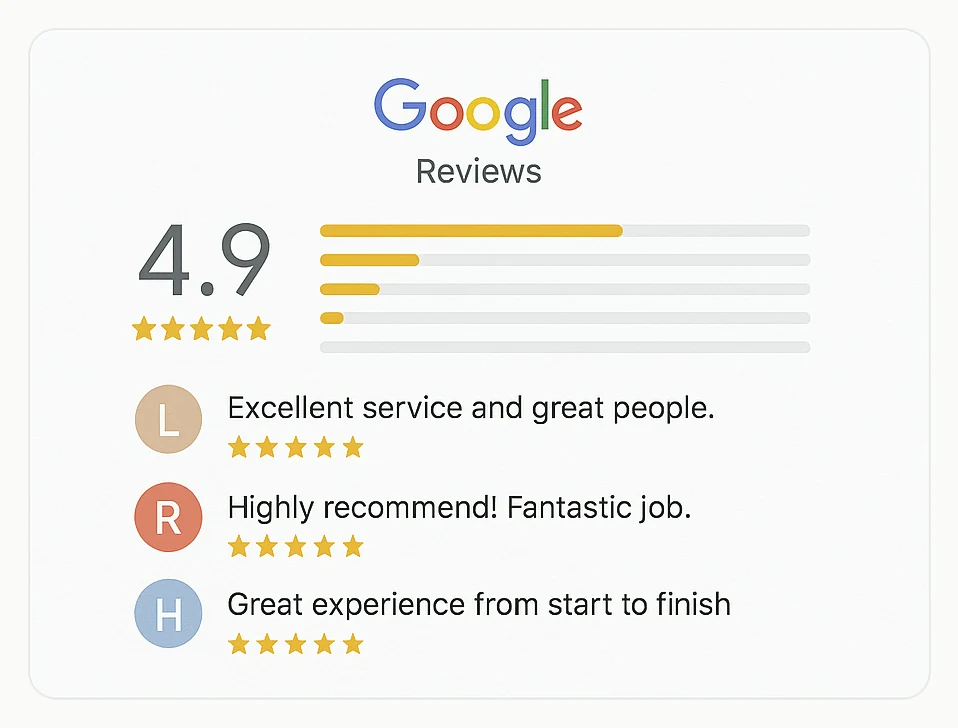
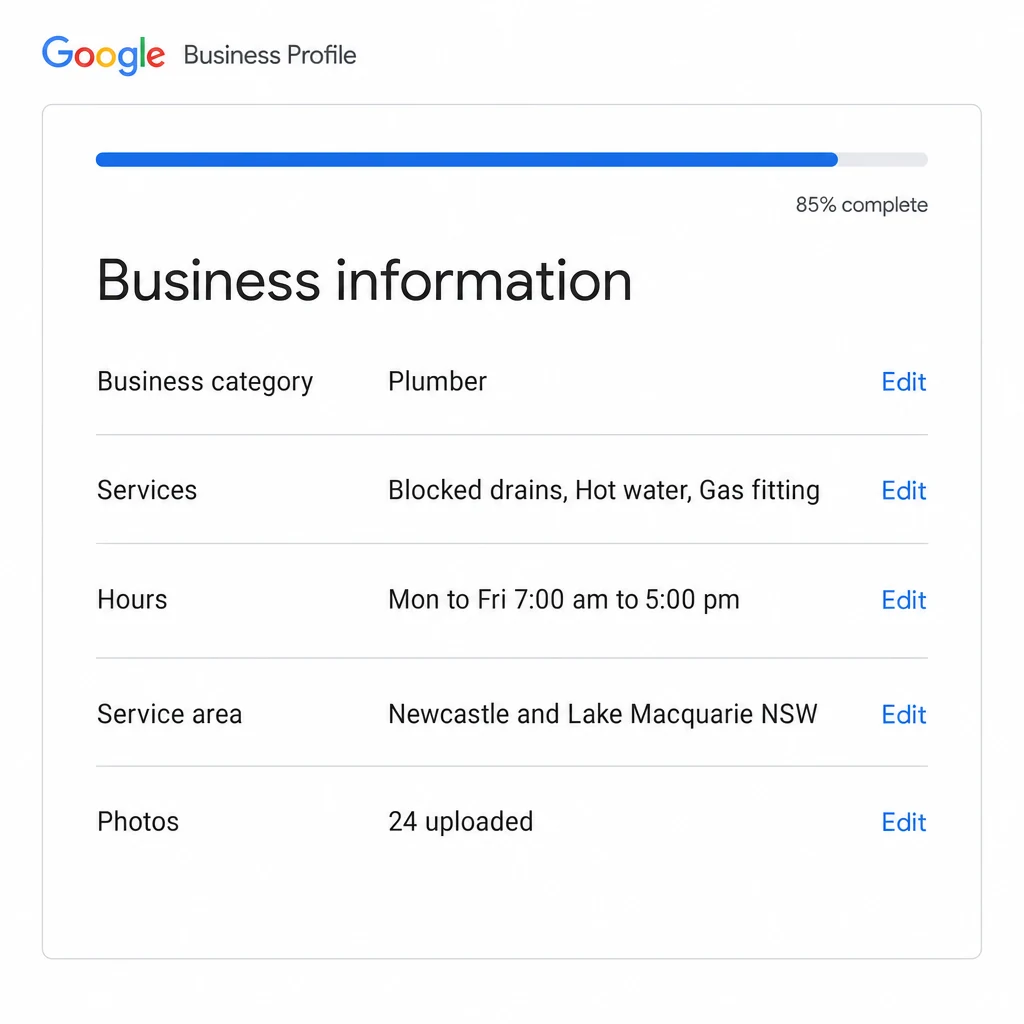
He was able to take our rough ideas, from concept through to reality. The site has provided an influx of new members, helping to keep our club viable.
A passion-driven, good-hearted and reliable service provider with the competency of a genius when it comes to software engineering, AI technology and marketing.
He created a stunning website for us that captures and nurtures leads with an automated email marketing system, which has filled a huge gap in the business and saved a lot of time (and money!).
A cleaning client is deciding whether to give a stranger a key to their house and then not be there.
This is what that reader is actually looking for in a cleaner's reviews, why staff turnover quietly wrecks a review page, and how to ask when nobody ever meets the customer.
Price is checked and then set aside. What the reader is really deciding is whether they are comfortable with somebody in their home while they are at work, and there is no way to test that in advance.
This is why cleaning reviews read differently to every other local service. The good ones say honest, trustworthy, and I never worry, which are strange things to say about a service and exactly the point.
It is also why the reviews mentioning small things carry so much weight. Somebody who wrote that the cleaner locked up properly and left the key where they agreed has answered the reader's real question without either of them naming it.
Commercial clients are deciding the same thing with different words. An office manager giving out an alarm code and after-hours access is making a security decision, and they read reviews for evidence about reliability rather than about quality.
Clients form a relationship with a cleaner, not with a cleaning business. When that cleaner leaves, the reviews on the profile are describing somebody who no longer works there, and the next reviews are about the disruption.
This is the pattern that shows up in almost every cleaning business's profile: a run of warm reviews naming a person, then a gap, then two lukewarm ones about a change of cleaner. It is the single most common shape in the industry.
Businesses handle it badly by trying to keep the reviews impersonal, which fails, because the client is going to name their cleaner and there is nothing wrong with that.
What works is asking often enough that the profile always reflects the current team. A page whose newest review is fourteen months old is describing a business that may not exist any more, and readers notice.
A cleaner leaves an empty house. There is no moment where somebody says thank you at the door, no invoice handed over, and no obvious point to ask, which is why cleaning businesses have so few reviews relative to how much work they do.
The two moments that do exist are worth using. The first is after the third or fourth clean of a new recurring client, when they have decided this is working and before it becomes invisible background.
The second is the end of a one-off, and it is the strongest one in the industry. Bond cleans, end of lease and post-build cleans finish with a genuinely dramatic result and a client who is relieved, and they will say so if asked that day.
Long-running recurring clients are the hardest and the most valuable. They have nothing to react to, so the ask has to be occasional, personal and honest about why it is being asked.
No incentive, no asking only the clients who never complain, and nobody in the business writing them. The one specific to cleaning is asking a client to review while a cleaner is standing in their kitchen.
That last one is not a policy breach, it is a conversion problem and a decency problem. A client asked to their face by somebody they are about to be alone with is not free to say no, and the review that comes out of it reads exactly like that.
The incentive version in cleaning usually appears as a discount on the next clean. It is against Google's policy, it is easy for Google to detect at scale, and the reviews can come off months later.
The one worth being careful about is a bad review from a client who was unhappy about something a cleaner did in their home. Reply briefly, do not describe the client's house, and take it to a phone call.
A short message the same day for one-off jobs, and a milestone-based ask for recurring clients, both from the business, both with a link that opens the review box in one tap.
For a bond clean the same day is essential, because the client is doing a handover with an agent and the relief is at its peak. A week later they have moved and forgotten it entirely.
For recurring work the point is that somebody decides the rule once. After the fourth clean, then once a year. Left to memory it never happens, because there is no natural prompt anywhere in the schedule.
The message should sound like the person the client deals with, which in a cleaning business is usually the owner. Clients pick a cleaning business because of one person's manner on the phone, and the review request is part of that.
If you do one thing after reading this, look at the newest review on your profile and check whether the cleaner it names still works with you. That answers whether your page is describing your business or a previous version of it.
Related reading from us: asked for on the day the job finishes, Google reviews for fencing contractors, Local SEO For Cleaners and missed call text back for cleaners.
No. It is an incentive under Google's policy and the reviews can be removed later.
No. The client cannot comfortably say no, and reviews collected that way read as extracted rather than offered.
Ask on a schedule rather than a whim, be straightforward about why you are asking, and expect a good response. Most have simply never been asked.
Reply briefly, never describe their house or their situation, and move it to a phone call. The reply is written for the next reader.