
For brokers whose diary swallows the phone
The enquiry that landed mid-appointment, held without going near credit advice.
A report on your number, showing how many calls went unanswered last month and which hours they landed in.
 By Reece Rainer
spareday, Newcastle NSW
Last updated
13 September 2026
Read time
5 minutes
By Reece Rainer
spareday, Newcastle NSW
Last updated
13 September 2026
Read time
5 minutes
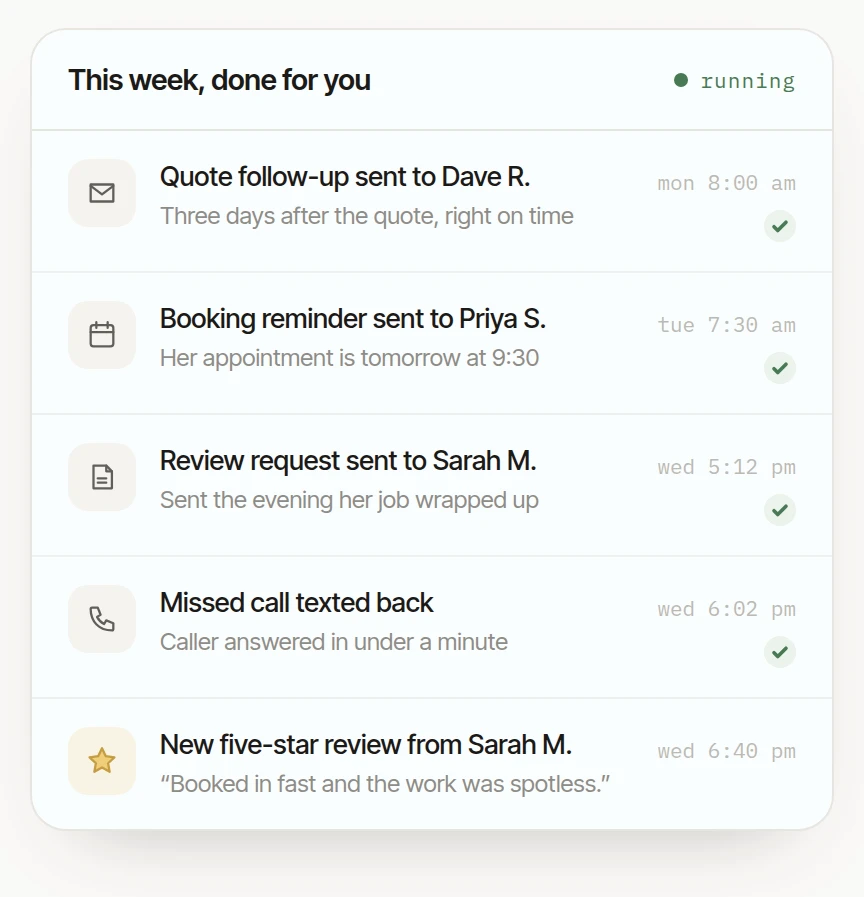
He was able to take our rough ideas, from concept through to reality. The site has provided an influx of new members, helping to keep our club viable.
A passion-driven, good-hearted and reliable service provider with the competency of a genius when it comes to software engineering, AI technology and marketing.
He created a stunning website for us that captures and nurtures leads with an automated email marketing system, which has filled a huge gap in the business and saved a lot of time (and money!).
A broker spends most of the working day in an appointment, and the enquiries arrive during exactly those hours because that is when everybody else is at work too.
This is what happens to the calls that ring out, what a text back can say without going near credit advice, and whether a brokerage needs one.
A broker's day is blocks of forty-five to ninety minutes with a client in front of them or on a video call. Those blocks cover the same hours a borrower can talk, so the calls and the appointments compete for one person.
Nobody schedules their way out of this. The gaps between appointments are used for lender follow-ups, document chasing and the four things that changed on a file since yesterday, so the gaps are not really free either.
It gets worse the better the brokerage is doing. More settlements means more in-flight files, and an in-flight file generates more calls than a new enquiry does, so growth quietly starves the new business phone.
The result is a business that spends money getting the phone to ring and then cannot pick it up, which is a strange arrangement that almost every brokerage is in.
People do not ring a broker on an ordinary Tuesday for no reason. They ring the day a rate moves, the day a pre-approval expires, the day an offer is accepted or the day their own bank says no. All four have a deadline attached.
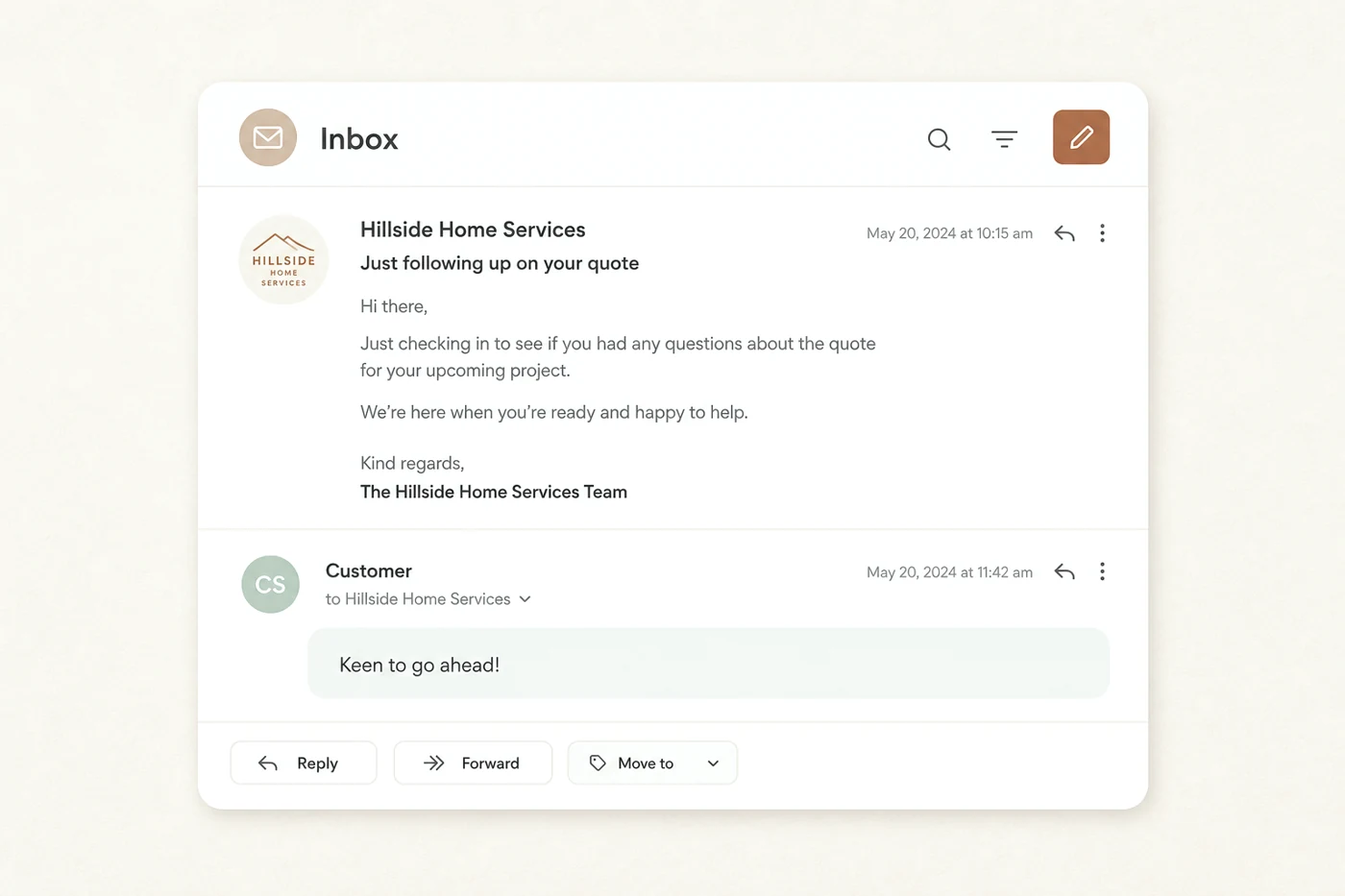
That is why a callback tomorrow is worth so much less than a text in ten seconds. The caller with an accepted offer has a finance clause with a date on it, and they are not waiting to see who rings first.
Rate announcements produce the clearest version of it. A broker gets a week of enquiries in two days, entirely during business hours, and it is the same week their existing clients are all ringing to ask the same question.
There is also a caller who behaves differently and is easy to lose: the one who is embarrassed. Somebody declined by their own bank does not want to explain it to a voicemail, and will not.
A text sent on a brokerage's behalf cannot say anything about rates, borrowing capacity, products, eligibility or what a lender is likely to do. Anything in that territory is credit advice, and it does not stop being credit advice because software sent it.
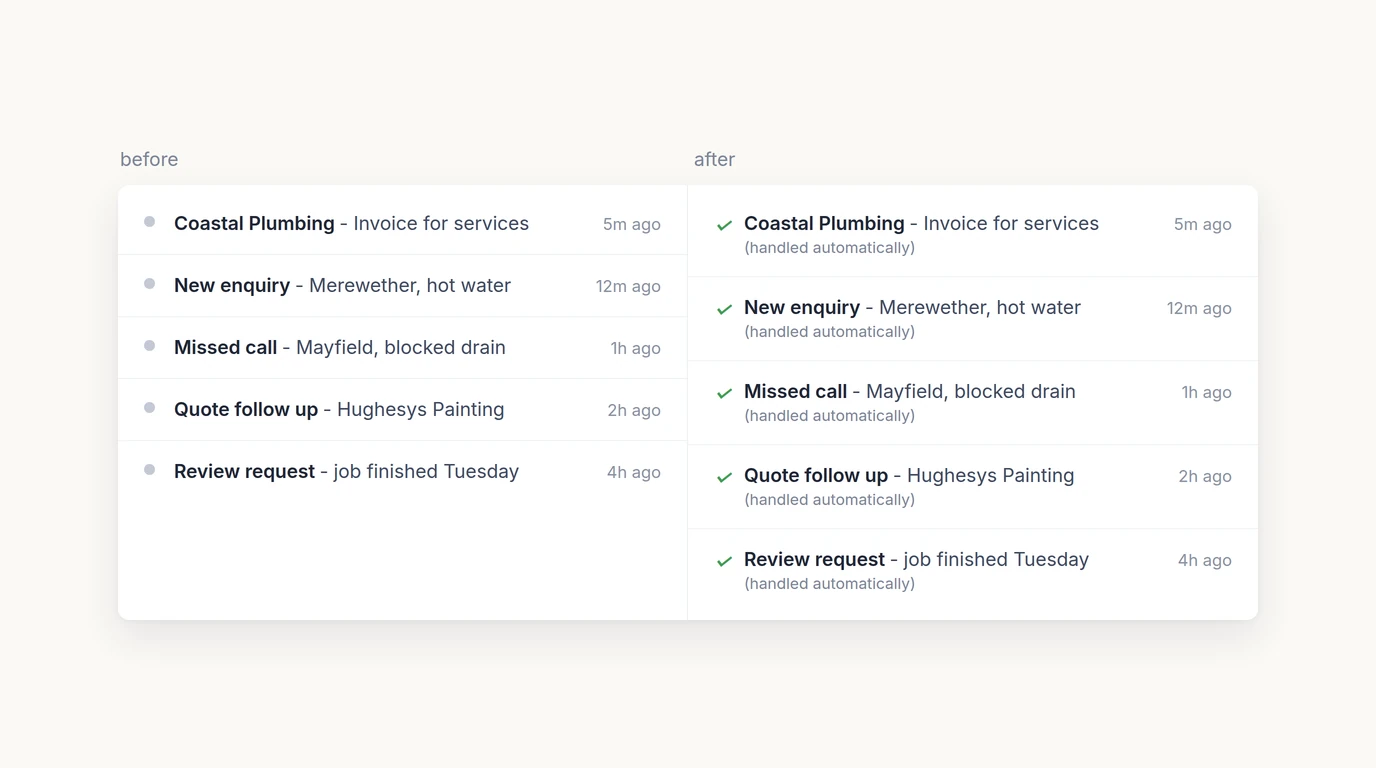
This constrains the message far more than it constrains the same thing in a trade, and that is the right outcome. The message exists to hold the enquiry, not to start the conversation.
The second constraint is the file. Anything a borrower sends becomes information the brokerage holds about somebody's finances, so the message never asks for figures, employment, deposits or a lender name.
What is left is genuinely useful and genuinely safe. Who is calling, roughly what it is about in the caller's own words, and when they can talk properly. That is enough to prioritise the callback list.
A call to your number rings out and a text goes back within seconds in the brokerage's own words: the call was missed, somebody will ring back, and when suits. Replies collect in one place so the callback list is written before you come out of an appointment.
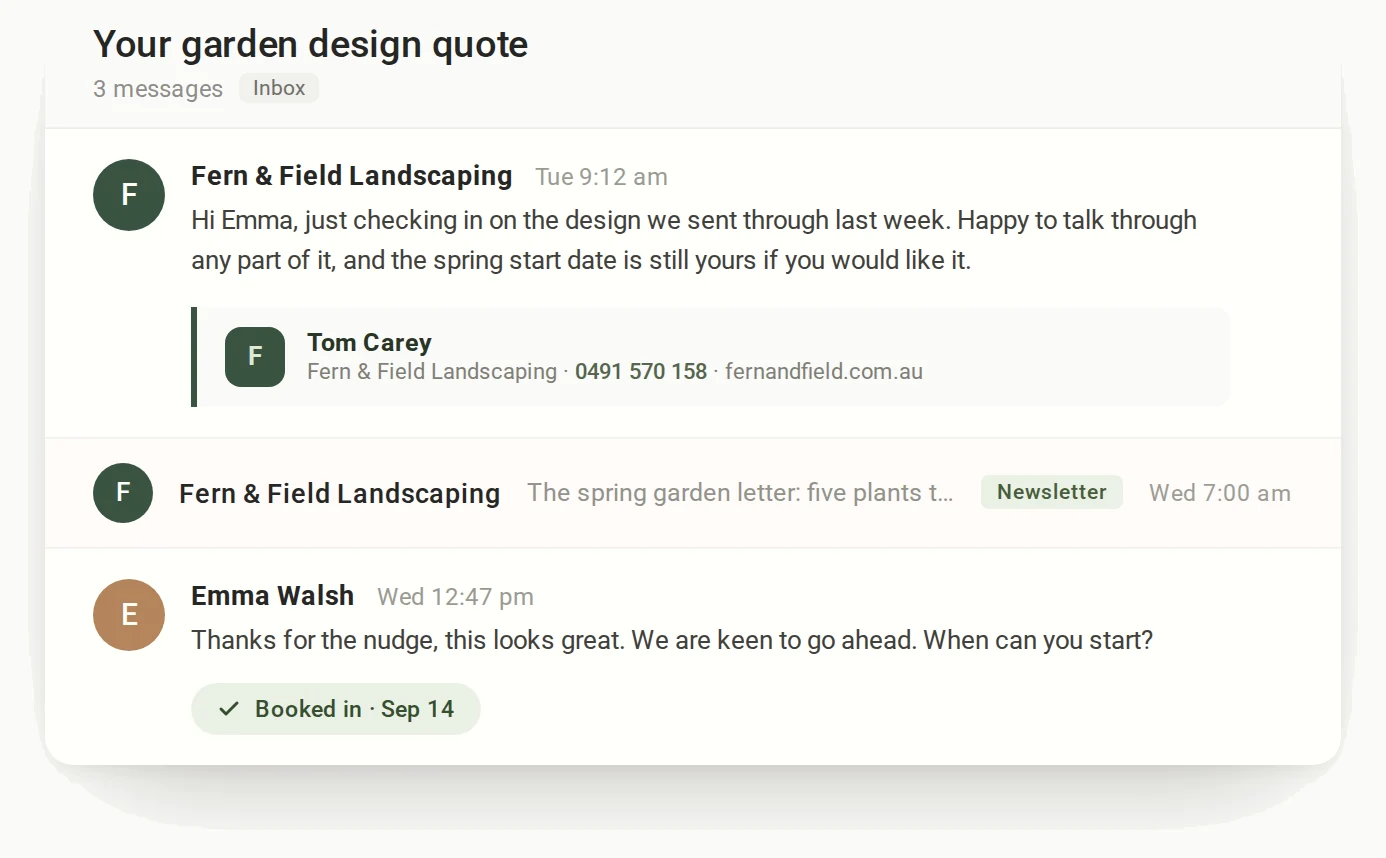
The practical effect is that the ninety minutes you were unreachable stop costing you the enquiry. The borrower has been answered, has told you when they can talk, and has stopped scrolling.
It also changes the shape of the callback. Instead of ringing five numbers blind between appointments and reaching two, you ring people at times they nominated, which is a much better use of the only gap in the day.
For existing clients mid-file it takes the edge off the anxious call. Being told the call was seen is most of what they wanted, and the substantive answer can wait until you are at a desk.
If you do one thing after reading this, look at your last rate-change week and count how many calls came in against how many you spoke to. Nobody who has done that exercise has been comfortable with the result.
Related reading from us: Missed Call Text Back For Real Estate Agents, the call that came in during handover, AI For Mortgage Brokers, AI lead follow up for mortgage brokers and asked for in the week it settles.
No. Anything about rates, products, lenders or whether a deal is doable counts as credit advice, and it stays out of an automated message entirely.
No. It asks for a name and a good time to talk. It never asks for income, deposit, purchase price or debts.
The wording is written by you and approved before anything is built, precisely so that what goes out under your licence is something you have read and agreed to.
Landline calls cannot be texted, so those are flagged to you directly instead, which is usually the faster route anyway.