
For firms whose phone is answered by a fee earner
The call nobody leaves a message on, and what a firm can safely send back.
A report on your firm's number, showing how many calls rang out last month and the hours they arrived in.
 By Reece Rainer
spareday, Newcastle NSW
Last updated
13 September 2026
Read time
5 minutes
By Reece Rainer
spareday, Newcastle NSW
Last updated
13 September 2026
Read time
5 minutes
He was able to take our rough ideas, from concept through to reality. The site has provided an influx of new members, helping to keep our club viable.
A passion-driven, good-hearted and reliable service provider with the competency of a genius when it comes to software engineering, AI technology and marketing.
He created a stunning website for us that captures and nurtures leads with an automated email marketing system, which has filled a huge gap in the business and saved a lot of time (and money!).
The person ringing a law firm for the first time has usually been putting it off for weeks, and they will not leave a voicemail about it.
This is what happens to those calls when nobody picks up, what a text back can safely say on a firm's behalf, and where it has to stop.
Somebody ringing a solicitor about a separation, a dismissal or a deceased estate has rehearsed the call. If it goes to a recorded message they hang up, and the courage it took does not rebuild by the afternoon.
This is the part that separates a firm from a trade. A blocked drain caller rings the next number in a mildly annoyed way. A person ringing about their marriage has to work themselves up to it once, and a machine is a reason to stop.
What they do next is not ring back later. They go to the search results, tap the next firm, and if a human answers there the matter belongs to that firm from that second onwards.
Firms rarely see this happening because there is nothing to see. The enquiry never became a file, never got a conflict check, and never appeared in any number the practice looks at.
In a small practice the phone lands on a solicitor who is drafting, in a meeting or in court. Every call taken is billable time interrupted, and every call not taken is a matter that went elsewhere.
The arrangement most firms end up with is the worst of both. Calls interrupt the fee earners often enough to wreck a morning, and still go unanswered often enough to lose work.
Court and settlement days make it sharper. There are whole days where nobody in a two-partner firm can pick up a phone at all, and those days look no different from the outside than a firm that has closed.
The other quiet cost is the existing client ringing about their own matter. When they cannot get through they email, and the email arrives at the same person, with more to read.
It must not give advice, must not comment on a matter, must not invite the caller to write out their situation, and must not say anything that could look like the firm has accepted a retainer. That leaves it a short, careful message.
The risk here is not theoretical and it is not about tone. An automated message that responds to what somebody describes is on the wrong side of a line that a practising certificate depends on, and it is also creating a record before any conflict check exists.
There is a second problem that is easy to miss. If a caller replies with the details of their matter and nobody reads it for a day, the firm now holds unread confidential information from a person who thinks they have been heard.
So the message is deliberately thin. It confirms the firm exists, that the call was seen, and that somebody will ring back, and it says what to do if the matter is urgent. Nothing else.
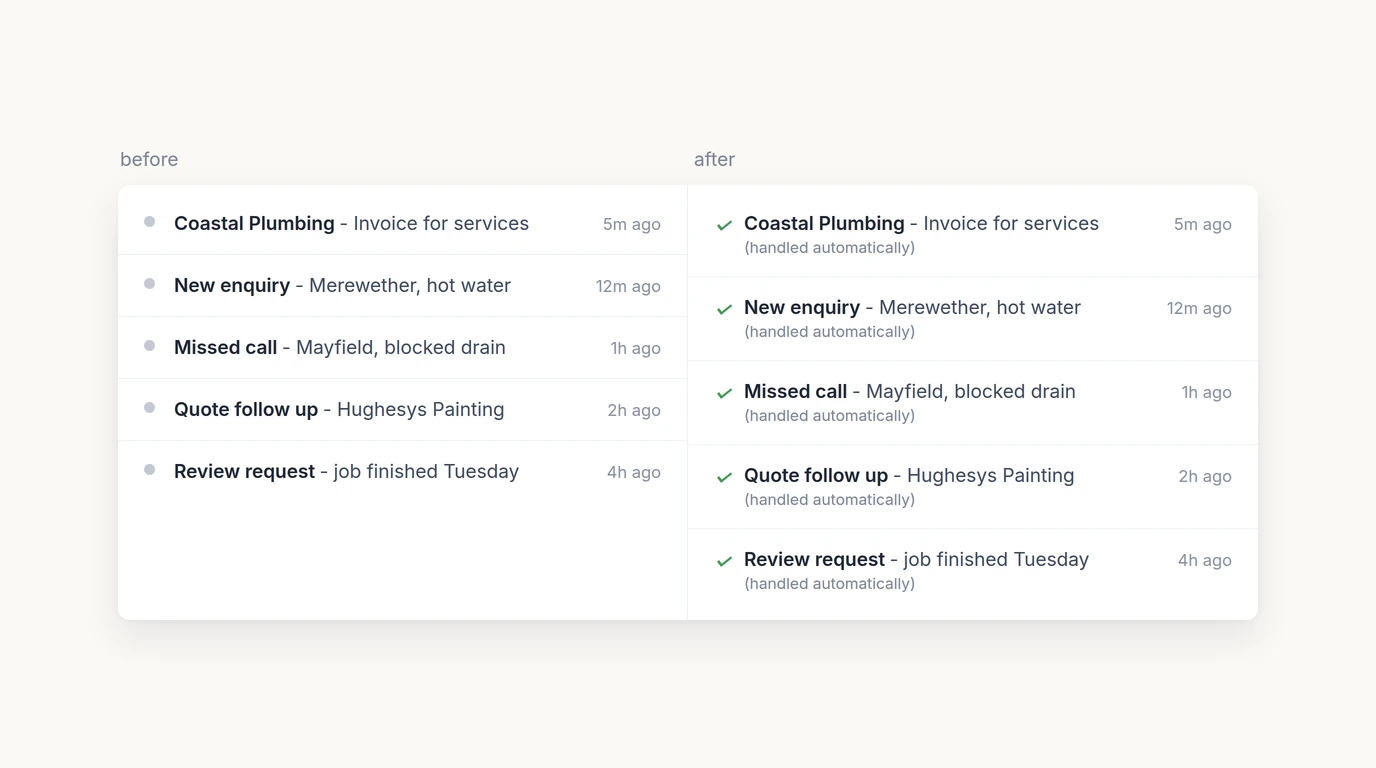
When a call to the firm's number rings out, a short text goes back within seconds in the firm's own words, confirming the call was missed and asking for a name and a good time. Replies land in one place for whoever handles new enquiries.
The whole value is in the first minute. A person who has just hung up on a recorded message gets a message from the firm before they have opened the next set of search results, and the reason they were about to ring somebody else disappears.
For existing clients the effect is different and just as useful. They get an acknowledgement, which is most of what they were ringing for, and the callback happens at a time the firm chooses rather than in the middle of drafting.
It runs on the number the firm already publishes, so nothing changes on the letterhead, the profile or the front door.
If you do one thing after reading this, ask whoever answers the phone how often it rings while they are with a client, and how many of those ever ring back. In most practices nobody has ever been asked that question, and the answer is the whole argument.
Related reading from us: the buyer who rang from the sign, missed call text back for mortgage brokers, AI For Lawyers, AI receptionist for lawyers and what a client can actually judge you on.
No. It confirms the call was missed and asks for a name and a good time to ring back. Nothing about the matter, the law or costs is in it.
The message does not invite it, and replies go to one place a person actually watches, so nothing sits unread. Whether to read it before a conflict check is the firm's own procedure.
It answers them the same way, and the wording tells a caller with something genuinely urgent what to do rather than leaving them waiting.
Yes. It runs on the number you already publish, the account is in the firm's name, and it all stays with you if you stop.