
For fencers quoting an hour away for the same rate
The drive is the margin, and two searches nobody has claimed.
A report on your business, showing where you appear across your area and whether you own the ring you actually want.
 By Reece Rainer
spareday, Newcastle NSW
Last updated
13 September 2026
Read time
5 minutes
By Reece Rainer
spareday, Newcastle NSW
Last updated
13 September 2026
Read time
5 minutes
He was able to take our rough ideas, from concept through to reality. The site has provided an influx of new members, helping to keep our club viable.
A passion-driven, good-hearted and reliable service provider with the competency of a genius when it comes to software engineering, AI technology and marketing.
He created a stunning website for us that captures and nurtures leads with an automated email marketing system, which has filled a huge gap in the business and saved a lot of time (and money!).
Fencing work is priced per metre and quoted on site, so every job you win has a driving cost attached before you have earned anything.
This is why the radius decides the profitability of a fencing business, how customers actually search for a fence, and what moves it.
A fencing business quoting an hour away spends half a day on a job it might not get, on a price per metre that does not change with distance. The economics only work inside a radius, and the radius is tighter than most fencers admit.
Which makes local rankings unusually direct in this trade. Ranking further out does not just bring more work, it brings work that costs more to win and more to deliver, and some of it is worth turning down.
The useful goal is therefore not maximum reach. It is owning a tight ring where the drive is twenty minutes, the crew is not sitting in traffic, and materials come from a supplier nearby.
Fencers usually discover this the wrong way round, by taking distant jobs in a quiet month and finding the quiet month was more profitable. The search work should follow the same logic deliberately.
The searches are colorbond fencing, timber paling fence, glass pool fencing, aluminium slat fencing, retaining walls, gates and automation. Each is a different customer with a different budget and a different set of competitors.
Pool fencing is the clearest example of why this matters. It is compliance work with an inspection attached, the customer has a legal obligation and a deadline, and it competes against a completely different set of businesses to a back fence.
Retaining walls are similar and often better. They are engineered, they are expensive, they need approval above a certain height, and far fewer businesses write anything about them.
A fencing business with one services page saying fencing is competing in the widest, cheapest, most crowded term available, and is invisible for the four searches that would have paid properly.
Fencing enquiries cluster after storms and through the warmer months. Rankings take months to move, so work started when the phone goes quiet is what produces enquiries when it gets busy.

This is the timing mistake almost every seasonal trade makes. The decision to do something about the marketing arrives in the quiet season and the work gets started in the busy one, which is exactly backwards.
Storm damage is the other pattern and it is worth being ready for rather than reacting to. After a big blow there is a fortnight of urgent searching, and the businesses that appear are the ones that were already ranking the week before.
Insurance work sits alongside it and is largely unclaimed. Homeowners searching about a storm-damaged fence and an insurance claim are a distinct, valuable audience and there is almost nothing written for them.
Boundary fences are shared with a neighbour and usually cost-shared, which means every job has two households with an interest and a street full of people who watch it go up.

This makes fencing unusually contagious along a road, and the marketing should use it rather than ignore it. One good fence in a street produces enquiries from the same street for a year.
Practically that means the suburb pages have to be real. A page about fencing in a suburb where you have done nine jobs, with photographs of some of them, is a page that earns its ranking and converts the people who saw the work.
It also means asking the neighbour is worth more here than in most trades, because the neighbour has three other boundaries and knows what your work looks like from ten metres away.
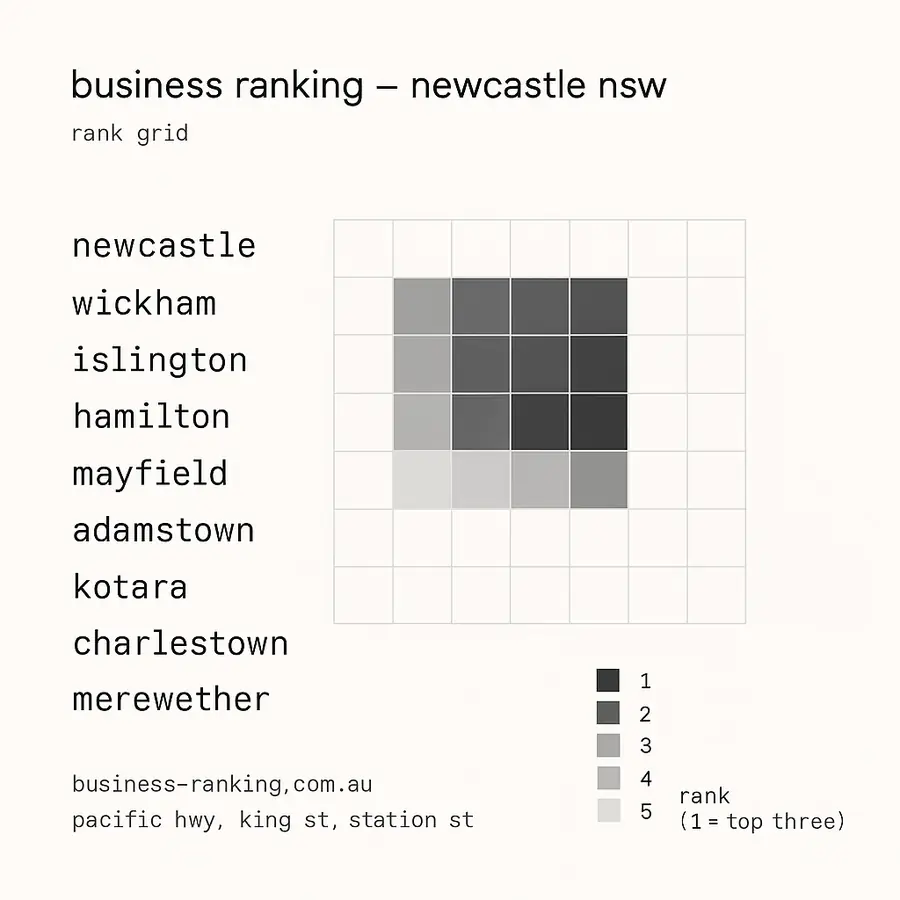
The listing gets built out with every fence type as a service, a page gets written for each material and each suburb you genuinely work, and it is measured from a grid across the ring you actually want.
The listing is first as usual, because it is free and because most fencing listings say fencing contractor and nothing else, so every material and every specialty is a search the business cannot currently appear for.
The material pages come next, starting with the ones that pay best rather than the ones with the most searches. Pool fencing and retaining walls are usually the two worth doing first.
The suburb pages come last and only for suburbs with real jobs behind them, which is why they get better as the business gets older rather than being something to write all at once.
If you do one thing after reading this, open your Google listing and check whether pool fencing and retaining walls are listed as services. Those are the two highest-paying searches in the trade and most fencers are not on either of them.
Related reading from us: Local SEO For Plumbers, decided months before the heatwave, Google Reviews For Fencing Contractors and missed call text back for fencing contractors.
Tight enough that the drive to quote and the drive to build do not eat the margin. Owning a twenty minute ring beats appearing thinly across a city.
In the quiet months. Rankings move over months, so work started in the off season is what produces enquiries in the busy one.
Only where you have done real jobs. A page with photographs of fences you built in that street works. A list of postcodes does not.
Pool fencing and retaining walls, in most markets. Both are less contested and both carry higher prices than a standard boundary fence.