
For Newcastle businesses
AI consulting
in Newcastle.
Work out where AI fits your business, what your existing tools can already do and which changes are worth building.
Tell us about your business and what you need.



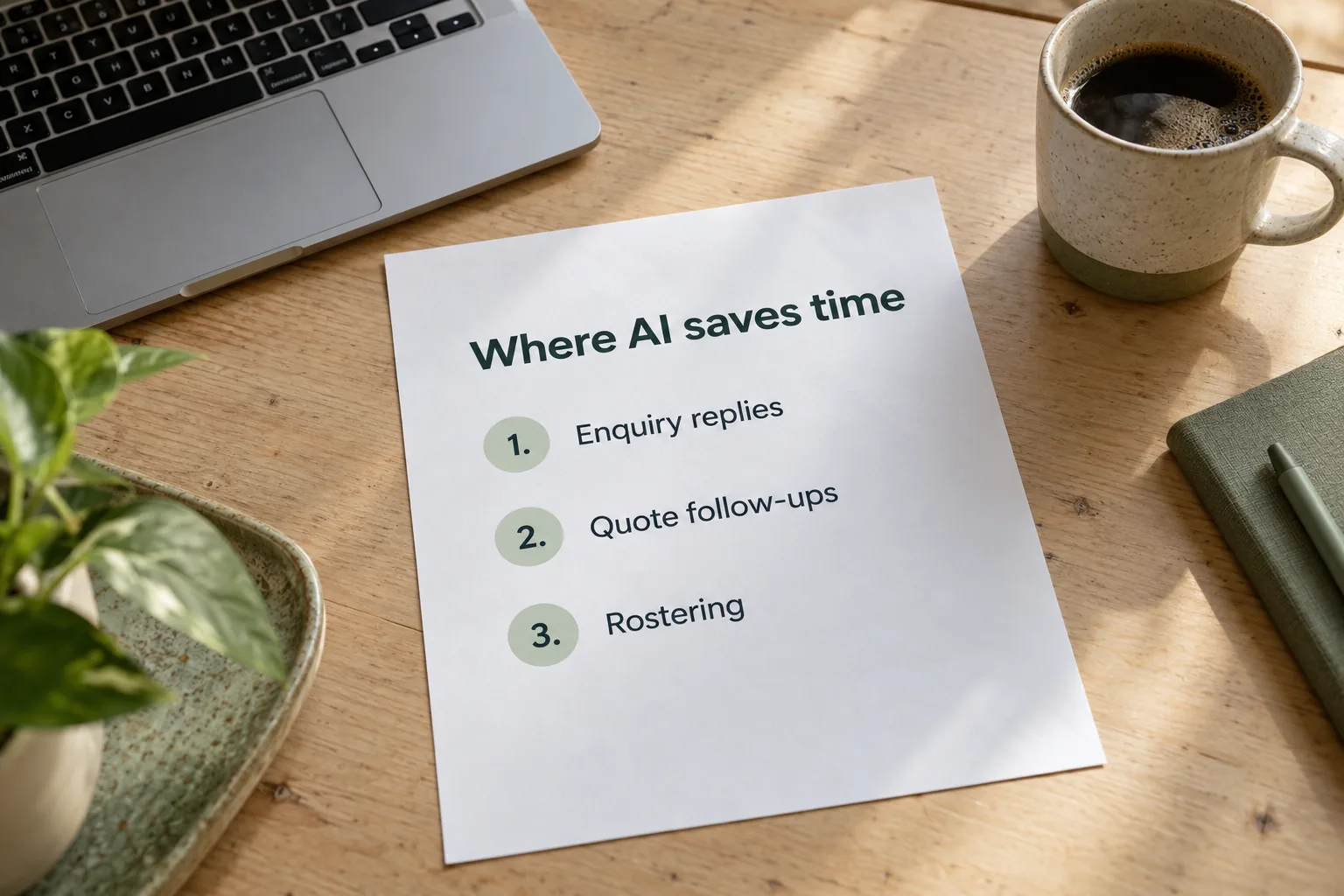
How spareday helps
Make a clear decision before choosing a tool.
AI consulting in Newcastle helps you assess a business task, the information it uses and whether software can handle part of it reliably.
spareday starts with the people doing the work. We look at the steps they repeat, the decisions they make and the tools they use. The result is a practical recommendation you can weigh against the effort and cost of changing the process.
What’s included
A recommendation grounded in your business.
The review covers the job and its requirements before comparing ways to do it. The scope is agreed around the processes you want examined.
- Current process review
- Describe the work as it happens, including spreadsheets, approvals and the steps that exist only in someone’s memory.
- Suitable uses for AI
- Identify steps where interpreting text or preparing a draft may help, alongside steps that simply need consistent rules.
- Existing software review
- Check whether a feature or connection in a product you already use can do the job.
- Readiness and limits
- Identify missing business information, access requirements and decisions that stay with staff.
- Priorities and next actions
- Explain what to start, what needs preparation and what to leave as it is. Any proposed build has its own agreed scope.
How it works
Look at the work, then compare the options.
Bring examples of the task rather than a long software shortlist. They make it easier to assess what would help.
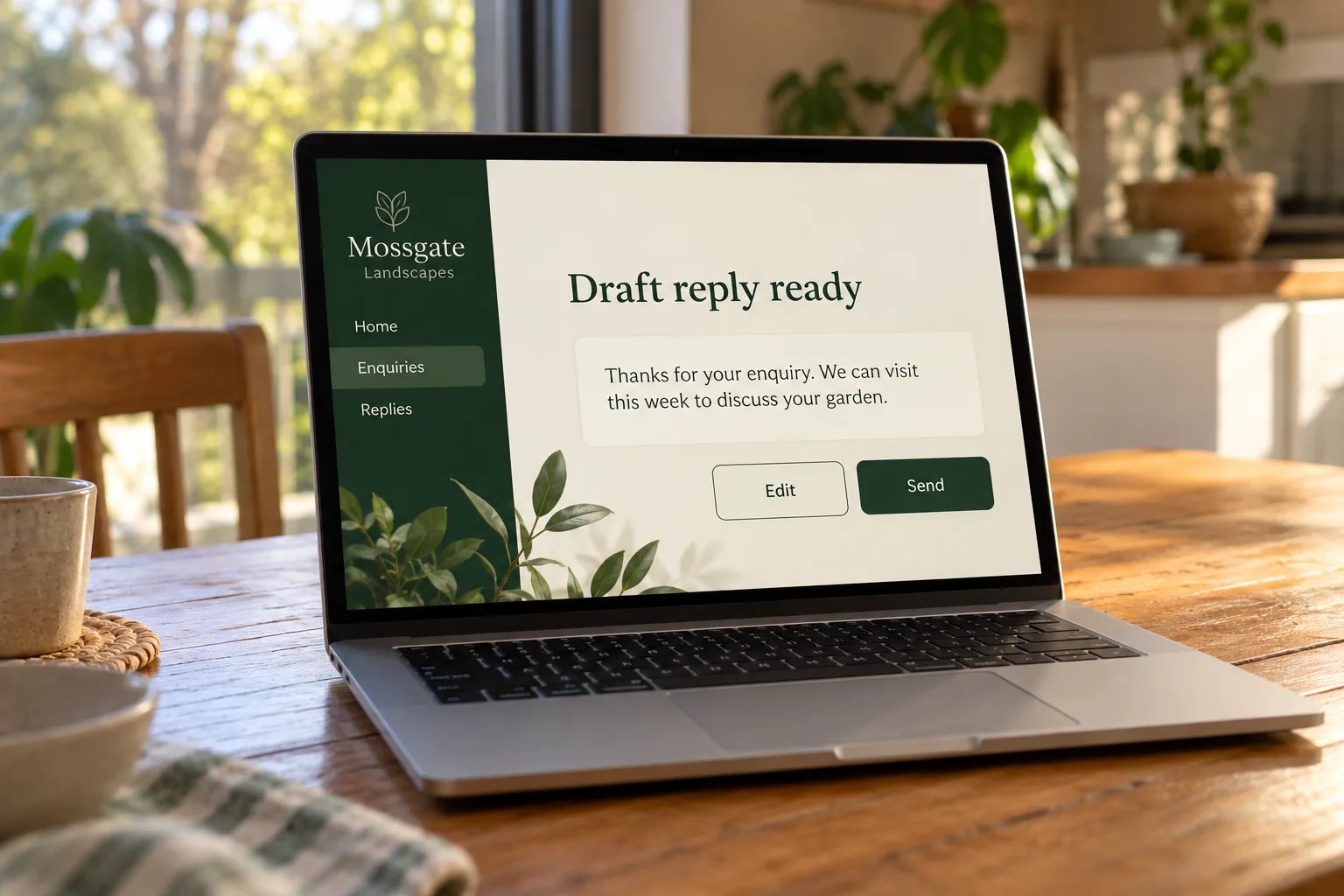
- Understand the current job
- The people doing it explain the steps, frequency and exceptions. We check the difference between the written process and everyday practice.
- Assess the options
- Compare a clearer manual process, existing software features, ordinary automation and AI-assisted work.
- Check what each option requires
- Identify the information, connections, approvals and ongoing attention needed to make it usable.
- Agree a useful next step
- You receive the recommendation and its reasoning. We can discuss implementation if there is a suitable project to build.
What you need to bring
Examples are more useful than technical knowledge.
You do not need a software specification. Bring a description of the task, examples of the inputs and the result you want. Remove private customer details from examples used in the first conversation.
It also helps to know who approves changes, which products you already pay for and who would check the output. A workflow that depends on an undocumented judgement may need a staff decision before software can take any part of it over.
From advice to implementation
Choose the depth of planning the job needs.
One clear task may need a focused review. Several connected projects may need AI strategy consulting to set priorities and show which tasks depend on others. Our AI consulting services also support businesses working remotely.
For example, an AI receptionist needs approved business facts, a route to a person and a checked booking connection if appointments are in scope. A tool demonstration alone does not establish that it will fit your calls.
spareday can advise on and build suitable systems. Recommendations should make that proposed work clear, with the alternatives and ongoing responsibilities explained before you commit.
For independent background on choosing and checking AI tools, see the Australian Government’s AI in business guidance.
From clients
What clients say about working with spareday

“He created a stunning website for us that captures and nurtures leads with an automated email marketing system, which has filled a huge gap in the business and saved a lot of time (and money!).”

“He didn’t just build me a great website, he created an easy-to-manage system that allows me to make updates myself whenever I need to. He has spared me so much time doing all of this myself!”
“He was able to take our rough ideas, from concept through to reality. The site has provided an influx of new members, helping to keep our club viable.”

“Huge shoutout to Reece for building my website for Hughesys Painting Services. Since it went live my phone hasn’t stopped ringing.”
Official guidance
For independent background, read the official guidance on AI in business and choosing digital tools.
A few practical details
Before we get started.
How is consulting different from automation?
Consulting decides what is useful and practical. Automation implements an agreed process. They can form part of the same project, with the scope of each made clear.
Do we need to buy new software?
That depends on your current tools and the task. We check existing features and connections before proposing an additional product or custom build.
Can AI make decisions for our staff?
The review identifies which decisions need a person. For suitable tasks, AI may prepare information or a draft for staff to check; its role and limits are agreed before implementation.
What if there is nothing worth building?
The recommendation can be to keep the current process or improve it without a build. The review should explain the reason and any preparation that would change that decision.
How do we get a quote?
Tell us which processes you want reviewed, who uses them and what tools are involved. We’ll discuss the scope and send a free growth plan, price included.

Who you’ll work with
Hi, I’m Reece.
I run spareday from Newcastle. Tell me what your business needs and what is already in place. I’ll work through the scope with you and explain the proposed work before you decide.

Find us
spareday in Newcastle.
12 Grey Street, Wickham, Newcastle NSW 2293.
Your next step
Make sense of the options for your business.
Tell us what your team spends time on and what you would like to improve. We’ll discuss the review and send a free growth plan, price included.
Or call 0485 017 387.