
For air conditioning businesses with nothing recent on the profile
A year of enquiries in six weeks, and a profile built in the quiet months.
A report on your business, showing where you sit against the other air conditioning businesses nearby on rating, count and recency.
 By Reece Rainer
spareday, Newcastle NSW
Last updated
13 September 2026
Read time
5 minutes
By Reece Rainer
spareday, Newcastle NSW
Last updated
13 September 2026
Read time
5 minutes
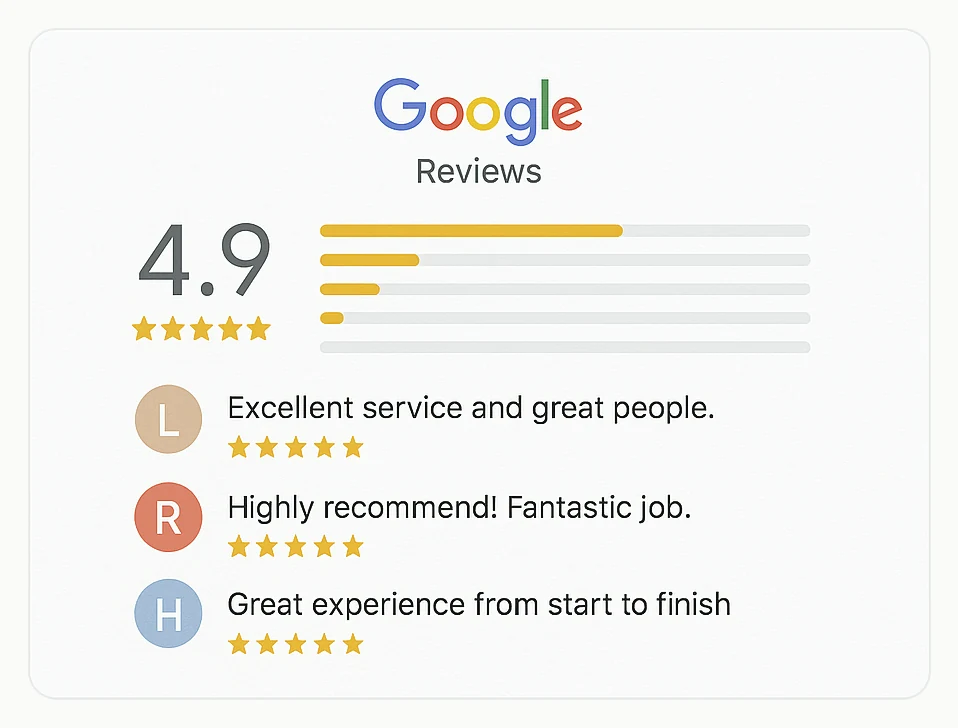
He was able to take our rough ideas, from concept through to reality. The site has provided an influx of new members, helping to keep our club viable.
A passion-driven, good-hearted and reliable service provider with the competency of a genius when it comes to software engineering, AI technology and marketing.
He created a stunning website for us that captures and nurtures leads with an automated email marketing system, which has filled a huge gap in the business and saved a lot of time (and money!).
An air conditioning business gets most of its year's enquiries in about six weeks, from people who are hot, uncomfortable and in a hurry.
This is what those callers are reading in your reviews, why the quiet months are when the profile actually gets built, and how to ask across two completely different kinds of job.
In the first hot week people are not comparing brands or reading about inverter efficiency. They want somebody who will come, who will not gouge them because it is thirty-eight degrees, and who will not disappear after the install.
That third one is the quiet fear and it drives more of the decision than price. Air conditioning is a four-figure purchase with a warranty on it, and everybody has heard of somebody whose installer could not be found when the unit failed.
So the reviews that convert in a heatwave are the ones about the business coming back. A review from somebody whose unit was serviced three summers after the install is worth more than any review about the install itself.
The other thing they scan for is whether they were upsold. Customers know they are in a weak negotiating position in a heatwave and they are looking for evidence you did not exploit it.
During the rush nobody in the business has a spare minute to ask for anything, so the busiest six weeks of the year generate almost no reviews. The profile then sits still for ten months.
That is the pattern on nearly every HVAC profile: a handful of reviews clustered oddly, long gaps, and nothing recent when the next hot week arrives and everybody starts searching.
The fix is not asking harder in January. It is that the ask has to be automatic, because a business installing four units a day in a heatwave is never going to do it by hand.
The quiet months are worth using differently. Autumn and winter are when service and maintenance customers exist, and those are the customers whose reviews prove the business is still there years later.
An install customer needs a couple of days to use it before they can honestly say anything. A breakdown customer is most grateful the moment the air comes back on. Asking both the same way at the same time gets a poor result from one of them.
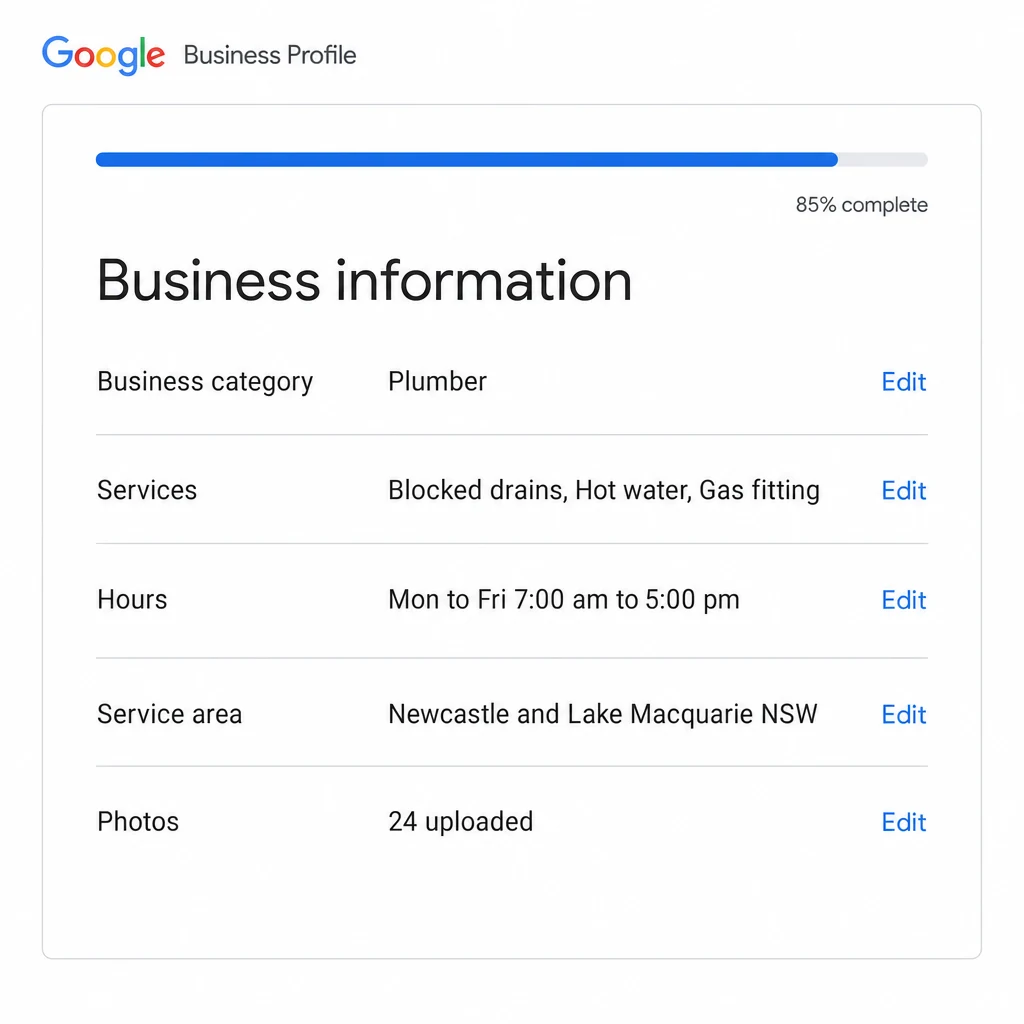
For an install, a few days is right. They have run it overnight, worked out the remote, and noticed whether the house actually gets cold. That is when they can write something specific rather than confirming a unit is on a wall.
For a breakdown or a service call, the same day is right, and the same afternoon is better. The relief is enormous and short-lived, and by tomorrow the customer has stopped thinking about the last two days entirely.
The commercial side is different again. A building manager or a shop owner on a maintenance agreement does not review a supplier, and they need to be asked directly, in person, usually around renewal.
An automatic message on a delay that suits the job type, from the business, with a link that opens the review box in one tap, plus a deliberate ask of the maintenance customers in the quiet months.
Automatic is the whole point in this trade. Any process that depends on somebody remembering fails in exactly the weeks it matters, and those are also the weeks with the most customers to ask.
The wording should mention something specific to ask about: whether the install was clean and tidy, whether the quote held, whether somebody explained how to actually run the thing. Customers respond better to a specific question than to a general request.
And replies matter more here than in most trades because of the warranty fear. A profile where the business responds to reviews, including two-star ones about a unit that failed, is evidence that the business answers its phone after the invoice is paid.
If you do one thing after reading this, count how many reviews you got during last summer's busiest fortnight. For most air conditioning businesses it is close to none, and those were the most grateful customers of the year.
Related reading from us: Google reviews for tradies, Google Reviews For Landscapers, Local SEO For HVAC Contractors and missed call text back for HVAC contractors.
No. It is an incentive under Google's policy and it puts the reviews you already have at risk.
About three days, once they have run it overnight and know the house actually gets cold.
Reply, say what you did about it, and make it clear you came back. That reply answers the fear every reader in a heatwave has.
They are the best reviews you can get and they will not write one unprompted. Ask in person, around renewal, once a year.